How to Start the Most Overlooked $10K/Month Washer and Dryer Rental Business
TL;DR
Start a washer-and-dryer rental business by posting a realistic Facebook Marketplace listing to validate demand, securing an interested renter, and only then buying the equipment. Kyler’s $50-per-month listing received about 30 messages, and he purchased his first set after a renter requested next-day installation. Read on for his sourcing, installation, billing, and scaling lessons.
Transcript
Would it be possible to start this business with literally zero dollars? Yes. The worst case scenario was that I would make my money back. It's zero risk if you do it that way. Really, anywhere there's people, this business will work. There's a lot of ways to get free stuff. Would you guys take a minute and look at this freaking 23-year-old g... Read More
Key Insights
- Demand validation is the first step in Kyler’s rental process. He posted rental ideas on Facebook Marketplace before purchasing the products, using the resulting messages to determine whether enough people wanted an item before he committed money to inventory.
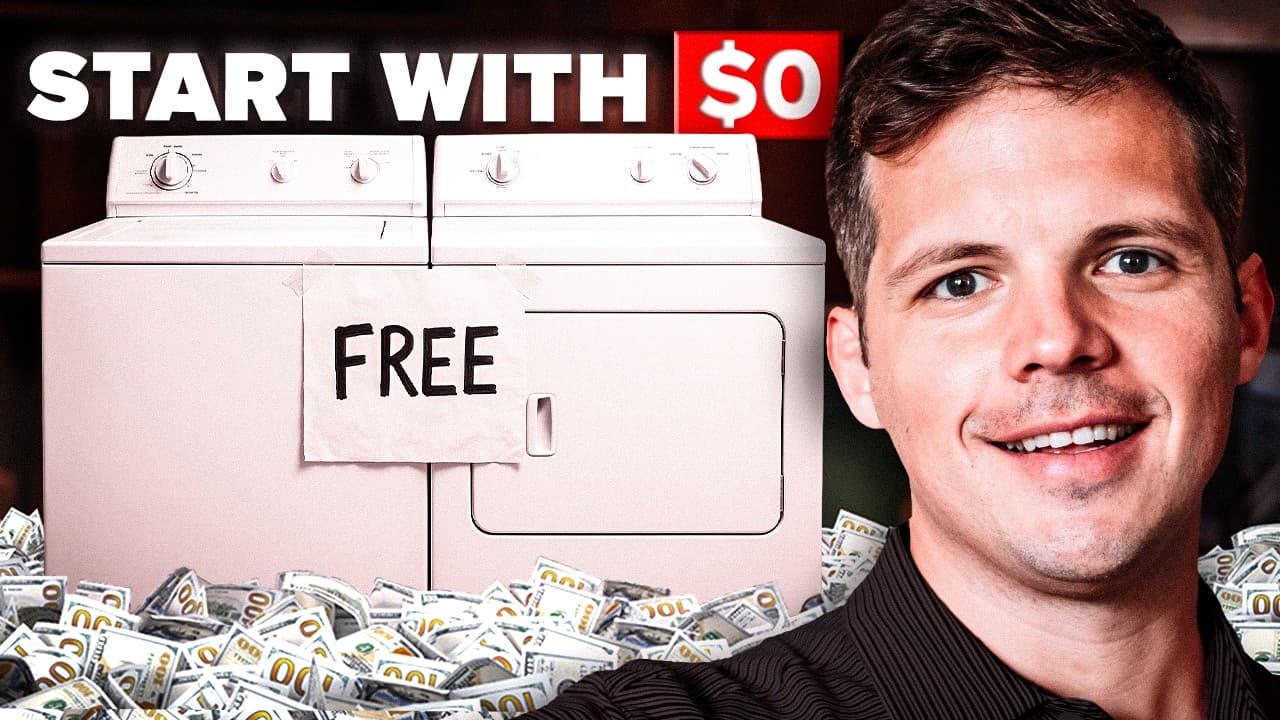
- Realistic listing photos are important for attracting Facebook Marketplace responses. Kyler found that blurry screenshots appeared less credible to either users or the platform’s algorithm, while a washer-and-dryer image that looked sufficiently real generated about 30 messages despite his slow responses.
- Washer-and-dryer rentals provide year-round demand because households use these appliances during both hot and cold seasons. Kyler preferred this model over boats, paddle boards, and other seasonal rentals that can lose demand for several months each year.
- The rental model becomes relatively passive after installation because each appliance set stays in the customer’s home. Kyler contrasted this arrangement with paddle-board rentals, which required frequent meetings and cleaning, while installed appliances could continue producing monthly payments without daily exchanges.
- Purchasing after securing a renter reduces the initial inventory risk. Kyler bought his first set only after a Marketplace contact asked for installation the following day, although he soon invested about half of his life savings and bought three new sets costing about $1,000 each.
- Installation problems can extend beyond the appliances themselves. Kyler’s first dryer stopped because the home’s vent was filled with lint, prompting him to buy cleaning equipment and clear it before eventually making customers contact their landlords about vent-related problems.
- Automated billing is essential when the number of rentals grows. After receiving the first customer’s payment through Cash App, Kyler adopted Stripe so he could create subscriptions, process credit cards, and avoid manually texting every renter with a monthly payment reminder.
- Wholesale sourcing can improve appliance acquisition costs after demand is established. Kyler contacted wholesale businesses throughout Utah, requested quotes for a large number of sets, and later committed $30,000 to inventory after the business had begun producing multiple installations.
Install to Summarize YouTube Videos and Get Transcripts
Explore YouTube Video Summarizer or Get YouTube Transcript Extractor
Questions & Answers
Q: How do you start a washer and dryer rental business?
Post a realistic rental listing on Facebook Marketplace before purchasing any appliances. Kyler listed a set for about $50 per month, received roughly 30 messages, and bought his first set only after a renter requested installation the next day.
Q: How can you validate demand for washer and dryer rentals?
Create a believable Facebook Marketplace listing and measure how many respondents are genuinely prepared to rent. Kyler’s listing produced about 30 messages, although only three or four people appeared seriously interested.
Q: Why are washers and dryers suitable for a rental business?
Washers and dryers are used year-round and remain installed inside the customer’s home. Unlike paddle boards, they do not require frequent handoffs and cleaning, so they can produce recurring monthly payments with less ongoing work.
Q: Can a washer and dryer rental business be started with zero dollars?
Kyler said it is possible because there are ways to obtain free items, including free or broken appliance sets. His own approach reduced risk by securing a renter before spending money on the first set.
Q: How much did Kyler spend on his first washer and dryer sets?
Kyler bought three new sets for about $1,000 each, including roughly $450 for each washer, $450 for each dryer, and tax. The purchase totaled about $3,000, which he described as half or more of his life savings at the time.
Q: What happened during Kyler’s first appliance installation?
The first installation took about two hours, and the dryer stopped because the home’s vent was filled with lint. Kyler bought cleaning supplies and cleared the blockage, but he later made renters contact their landlords about household vent problems.
Q: How did Kyler automate monthly rental payments?
His first renter paid through Cash App on the fifteenth of each month. Kyler later used Stripe subscriptions to process credit-card payments automatically instead of texting every renter with monthly reminders.
Q: How did Kyler source cheaper appliances as the business grew?
Kyler contacted wholesale appliance businesses throughout Utah and requested quotes for a large order. After comparing suppliers and establishing demand, he committed $30,000 to a larger appliance inventory.
Summary & Key Takeaways
-
Kyler discovered the business by testing rental listings on Facebook Marketplace before owning the advertised equipment. A washer-and-dryer listing generated about 30 messages while he was away on a cruise. After confirming that one person wanted installation the next day, he purchased his first appliance set and completed the rental.
-
The appeal of washer-and-dryer rentals is their year-round use and relatively passive operating model. Unlike paddle boards and other seasonal equipment, appliances remain inside the customer’s home and produce monthly payments. Kyler considered the downside limited because he expected that selling the appliances could recover his purchase cost if rentals failed.
-
Early operations exposed practical challenges, including installation delays and a lint-filled dryer vent that prevented the first dryer from working. Kyler resolved that initial problem but later made landlords responsible for vent issues. He also adopted Stripe subscriptions to automate card payments and contacted wholesalers to obtain appliances more cheaply as demand increased.
Read in Other Languages (beta)
Share This Summary 📚
Summarize YouTube Videos and Get Video Transcripts with 1-Click
Try YouTube Summary with ChatGPT & Claude or YouTube Transcript Generator
Explore More Summaries from Chris Koerner on The Koerner Office Podcast 📚






Summarize YouTube Videos and Get Video Transcripts with 1-Click
Try YouTube Summary with ChatGPT & Claude or YouTube Transcript Generator