Why Did Bitcoin Fall Below $90,000 Again?
TL;DR
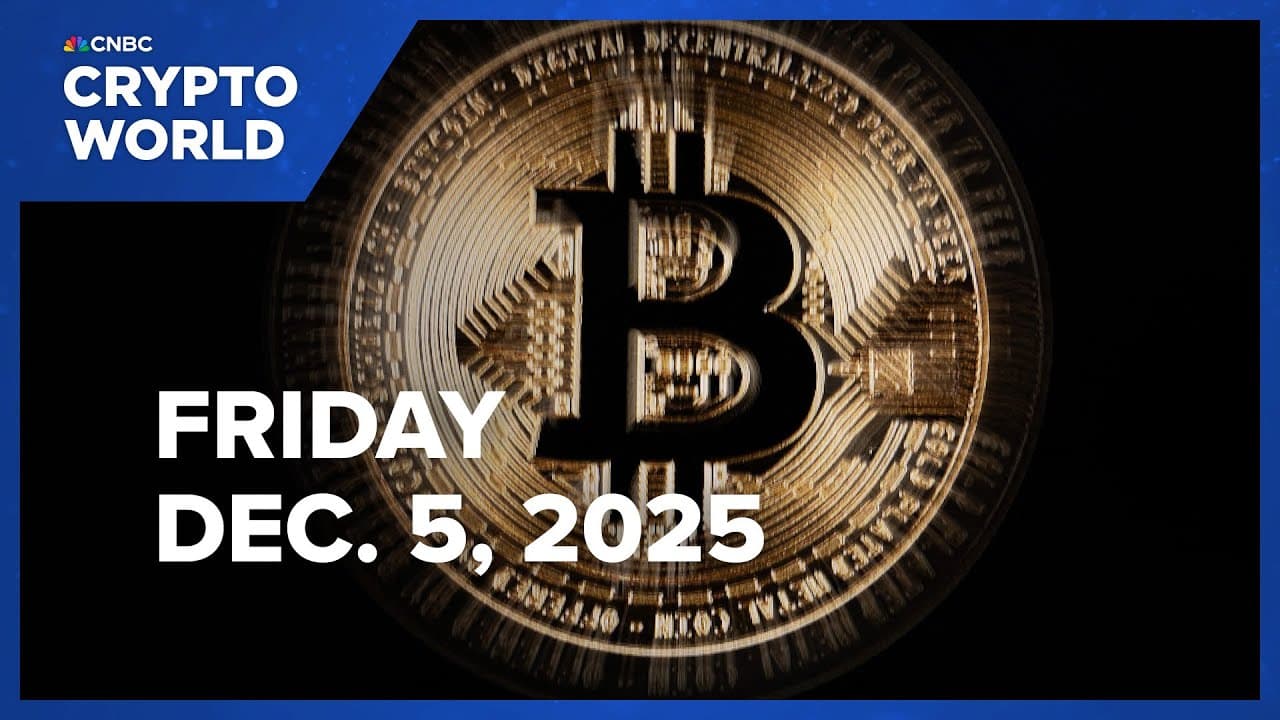
Bitcoin fell below $90,000 after spending three days above the level, ending the week 2.5% lower as major cryptocurrencies traded in the red. The market absorbed fresh inflation data, while attention also turned to record November outflows from BlackRock’s spot Bitcoin ETF and bipartisan efforts to advance federal digital asset market structure legislation in 2026.
Transcript
Today, Bitcoin falls below the $90,000 level to end the week. And Blockchain Association CEO Summer Mercinger previews the policy summit, which kicks off on Monday. Welcome to CNBC's Crypto World. I'm Mackenzie Sagalos. Crypto prices are in the red to end the week. In contrast with the S&P 500, which actually rose as traders digested inflation data... Read More
Key Insights
- Bitcoin’s weekly decline was 2.5%, producing its fifth losing week in the previous six. The cryptocurrency slipped below $90,000 after holding above that price for three days, while the broader crypto market ended the week under pressure.
- Major cryptocurrencies recorded sharp daily losses, with Ether falling nearly 4.5% and XRP declining more than 5%. For the full week, Ether lost less than 1%, while XRP dropped 7% for its fourth weekly decline in five weeks.
- Core PCE inflation was reported at a 2.8% annual rate for September, below the 2.9% Dow Jones estimate. The delayed Commerce Department release provided the Federal Reserve’s final view of inflation before its Wednesday rate decision.
- BlackRock’s spot Bitcoin ETF recorded $2.69 billion in net outflows during November. The outflow from IBIT was described as its largest monthly withdrawal since inception, adding another notable indicator of pressure surrounding the cryptocurrency market.
- Prosecutors recommended a 12-year prison sentence for Terraform Labs founder Do Kwon after he pleaded guilty to fraud charges in August. His lawyers had requested no more than five years, and his sentencing was scheduled for Thursday.
- Federal digital asset legislation remains focused on market structure, tax modernization, and regulatory clarity. The Blockchain Association said staff from the Senate Banking and Agriculture Committees were conducting bipartisan negotiations intended to produce a bill capable of advancing through the Senate.
- Crypto policy legislation is expected to reach the Senate floor in 2026, according to Summer Mersinger. She acknowledged that funding disputes, a potential government shutdown, and the midterm elections could slow progress, but cited the issue’s importance and bipartisan support.
- CFTC approval allows registered US derivatives exchanges to offer leveraged spot crypto transactions. Mersinger argued that bringing activity currently occurring offshore into federally regulated US markets could strengthen market protections, consumer protections, oversight, and market integrity.
Install to Summarize YouTube Videos and Get Transcripts
Explore YouTube Video Summarizer or Get YouTube Transcript Extractor
Questions & Answers
Q: Why did Bitcoin fall below $90,000 again?
Bitcoin fell below $90,000 as the broader cryptocurrency market traded in the red while processing a new slate of economic releases. It had spent the previous three days above that threshold. By noon Eastern, Bitcoin was below $90,000 and headed toward a 2.5% weekly decline, its fifth weekly loss during the previous six weeks.
Q: How did Bitcoin, Ether, and XRP perform during the week?
Bitcoin ended the week 2.5% lower, recording its fifth weekly loss in six weeks. Ether lost less than 1% for the full week, although it dropped nearly 4.5% during the reported trading day. XRP declined 7% for the week, marking its fourth weekly loss in five weeks, and fell more than 5% during the day.
Q: What did the September core PCE inflation report show?
The Commerce Department’s delayed September core PCE price index showed an annual inflation rate of 2.8%, below the 2.9% Dow Jones estimate. The report also showed a 2% rise for the month, which was described as matching expectations. It was the Federal Reserve’s final view of inflation before its scheduled Wednesday rate vote.
Q: What happened to BlackRock’s spot Bitcoin ETF in November?
BlackRock’s spot Bitcoin ETF, IBIT, experienced $2.69 billion in net outflows during November. According to the report, that was the fund’s largest monthly outflow since its inception. The figure was highlighted alongside Bitcoin’s return below $90,000 and the weekly declines across major cryptocurrencies, providing another measure of pressure within the crypto market.
Q: What sentence did prosecutors recommend for Do Kwon?
Prosecutors recommended a 12-year prison sentence for Terraform Labs founder Do Kwon. The recommendation was more than double the punishment requested by his legal team, which had asked the judge in November for a sentence of no more than five years. Kwon pleaded guilty to fraud charges in August, and sentencing was scheduled for Thursday.
Q: What are the Blockchain Association’s main policy priorities?
The Blockchain Association identified federal digital asset market structure legislation, tax modernization, and regulatory clarity as its major priorities. CEO Summer Mersinger said these topics would be central to the organization’s Washington policy summit. She also reported record summit attendance, the association’s largest membership to date at 146 members, and strong participation from bipartisan lawmakers and industry leaders.
Q: When could US digital asset market structure legislation pass?
Summer Mersinger expects digital asset market structure legislation to cross the finish line in 2026. She said bipartisan discussions were continuing among members and staff of the Senate Banking and Agriculture Committees, with the goal of producing a strong bill and moving it to the Senate floor. A potential government shutdown and midterm elections could slow that process.
Q: How could CFTC-approved spot crypto trading affect US markets?
The CFTC approval permits registered US derivatives exchanges to offer leveraged spot crypto transactions. Summer Mersinger argued that this could bring transactions, trading volume, and markets currently operating offshore into the United States. Under federal regulatory oversight, those markets could receive stronger market protections, consumer protections, and integrity safeguards while supporting the domestic crypto industry.
Summary & Key Takeaways
-
Bitcoin traded below $90,000 at noon Eastern after remaining above that threshold for the previous three days. It finished the week 2.5% lower, marking its fifth weekly loss in six weeks. Ether declined nearly 4.5% during the day, while XRP fell more than 5% and ended the week down 7%.
-
Fresh economic data offered the Federal Reserve its final inflation reading before Wednesday’s rate vote. September’s delayed core PCE price index showed a 2.8% annual rate, below the 2.9% Dow Jones estimate, while the reported 2% monthly rise matched expectations. Crypto nevertheless declined as the S&P 500 rose.
-
Blockchain Association CEO Summer Mersinger said the organization’s policy summit would emphasize digital asset market structure, tax modernization, and regulatory clarity. She expects bipartisan negotiations in the Senate Banking and Agriculture Committees to continue into 2026, when legislation could reach the Senate floor despite shutdown and midterm election risks.
Read in Other Languages (beta)
Share This Summary 📚
Summarize YouTube Videos and Get Video Transcripts with 1-Click
Try YouTube Summary with ChatGPT & Claude or YouTube Transcript Generator
Explore More Summaries from CNBC Television 📚




Summarize YouTube Videos and Get Video Transcripts with 1-Click
Try YouTube Summary with ChatGPT & Claude or YouTube Transcript Generator