How to boost cognitive fitness with daily reading?
TL;DR
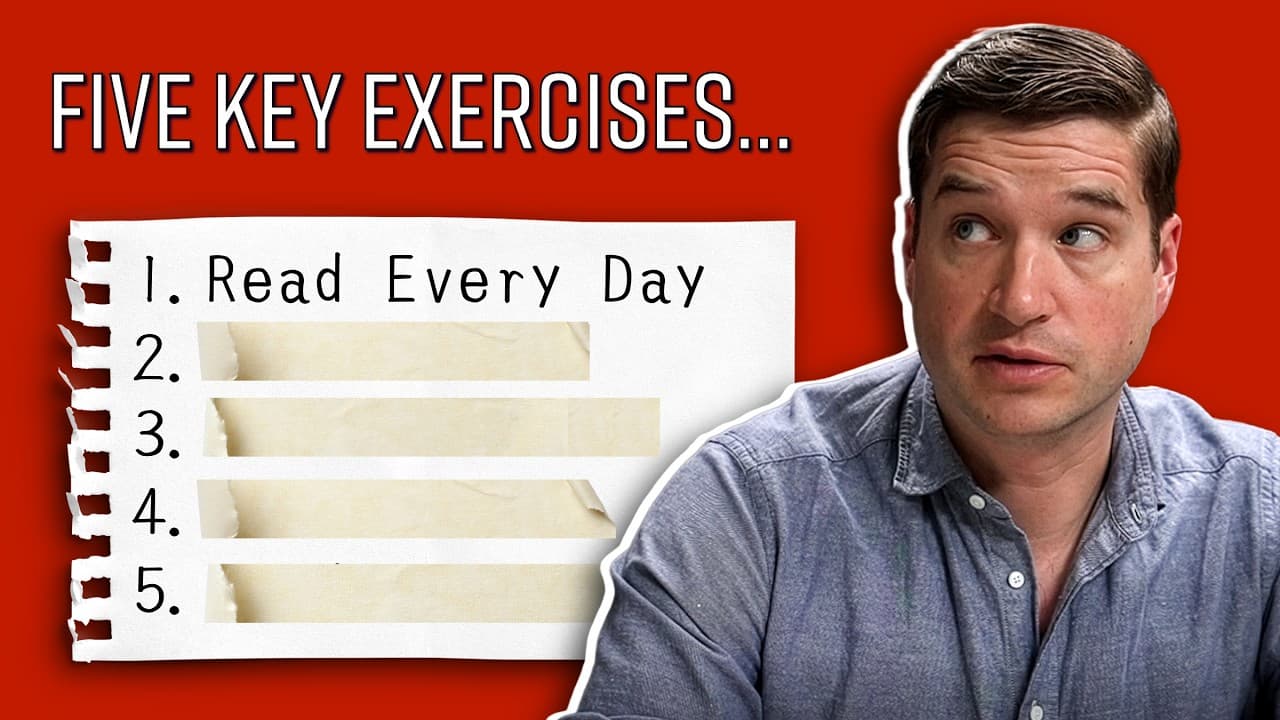
Daily reading is proposed as a base exercise for cognitive fitness, rewiring the brain to support smarter thought and better attention control. The plan includes five components with reading as the first, followed by sustained writing, disciplined practice, and progressively challenging reading material, plus practical integration into daily life to resist digital distraction.
Transcript
Not long ago, I published a splashy op-ed for the New York Times. It was titled, "There's a good reason why you can't concentrate." Now, it argues that technology is rapidly diminishing our ability to think, and that this is a major problem for both the individual as well as the success of our society more broadly. In it, I propose that the solutio... Read More
Key Insights
- Reading daily rewires the brain and increases the complexity of understanding by engaging deep reading processes.
- Daily reading trains the mind to focus on internal targets, sharpening attention control and internal visualization.
- One third of reading should be dedicated to hard books to progressively elevate comprehension and analytical capability.
- Writing is emphasized as something to do rather than avoid, countering modern tendencies to delegate writing to AI.
- The cognitive fitness plan includes five components, each justified and explained with practical steps for implementation.
- Starting with enjoyable reading lowers barriers to consistency and helps establish a sustainable habit.
- Progressively hard reading, like increasing book difficulty, accelerates cognitive gains and adaptability.
- Consistency and habit formation are crucial, with specific tactics such as reading at lunch or before bed to hit daily targets.
Install to Summarize YouTube Videos and Get Transcripts
Explore YouTube Video Summarizer or Get YouTube Transcript Extractor
Questions & Answers
Q: How can daily reading act as a base for cognitive fitness and why is it compared to physical activity in the video?
Daily reading functions as a base for cognitive fitness by regularly engaging brain networks involved in decoding symbols, sustaining attention, and integrating information across regions. The analogy to physical activity comes from the idea that just as 7 to 10 thousand steps a day builds physical health, consistent reading builds cognitive health by creating a stable reading habit and strengthening neural pathways involved in thought and insight.
Q: What is meant by hard books in the plan, and how should a learner balance easy and hard material?
Hard books are non fiction or challenging fiction that present sophisticated ideas or complex narrative structures. The plan recommends reading one hard book for every three books read that are easier. Balancing easy and hard material helps maintain motivation while gradually increasing cognitive load, improving comprehension, and strengthening the ability to extract insight from dense material.
Q: Why is writing emphasized as a component of cognitive fitness in a world of AI writing tools?
Writing is emphasized because it exercises the brain by forcing organization, precision, and argument construction, which strengthens cognitive control and clarity of thought. Even with AI tools, disciplined writing practice keeps the user engaged in the production of original ideas, helps resist passive consumption, and trains the mind to articulate internal thoughts more effectively.
Q: What practical tips are given for starting a daily reading habit, especially for those not already readers?
Practical tips include choosing material you are excited to read to lower initial friction, starting with 15 to 20 pages per day, and using convenient times like lunch or before bed to build consistency. The idea is to establish a baseline habit that can scale to 30 to 50 pages, then gradually incorporate harder books as reading endurance grows.
Q: How does the Five-Component cognitive fitness plan justify itself, and what are the five components?
The plan claims a five component framework that adds up to a basic cognitive fitness routine suitable for most people. While the transcript details the first two components in depth (daily reading and writing), it outlines that the five components will be justified with rationale and practical steps, and are intended to form a sustainable program to counter digital distraction.
Q: What is the role of gradual progression in reading difficulty, and how is it compared to running mile times?
Gradual progression in reading difficulty is used to illustrate increasing cognitive endurance. The speaker compares it to running mile times: as you train, you can handle harder material and still progress. This approach helps calibrate effort, ensures steady gains, and reduces burnout, enabling long term improvement in comprehension and analytical ability.
Q: How does the speaker suggest integrating reading into daily life to maintain momentum?
Integration tips include identifying habitual windows in the day such as lunch breaks or pre bedtime, choosing engaging material, and maintaining a daily quota that rises gradually. The strategy prioritizes consistency over intensity, helping the brain form a durable habit that compounds cognitive gains over time.
Q: What potential benefits are highlighted for society if individuals adopt cognitive fitness routines?
Adopting cognitive fitness routines is framed as a way to resist the declining concentration associated with hyperactive digital environments. Benefits include improved individual thinking, deeper insight, and a collective shift toward more thoughtful engagement with information, potentially enhancing productivity and societal problem solving by keeping minds sharper amid technological change.
Summary & Key Takeaways
-
Reading daily builds a neural base by rewiring brain regions, supporting deeper, more nuanced thought.
-
Writing regularly strengthens thinking by forcing organization of ideas and attention to clarity, countering a tendency to rely on AI for low stakes text.
-
The full program combines five components, practical tips, and gradual increases in difficulty to sustain long term cognitive gains.
Read in Other Languages (beta)
Share This Summary 📚
Summarize YouTube Videos and Get Video Transcripts with 1-Click
Try YouTube Summary with ChatGPT & Claude or YouTube Transcript Generator
Explore More Summaries from Cal Newport 📚



Summarize YouTube Videos and Get Video Transcripts with 1-Click
Try YouTube Summary with ChatGPT & Claude or YouTube Transcript Generator