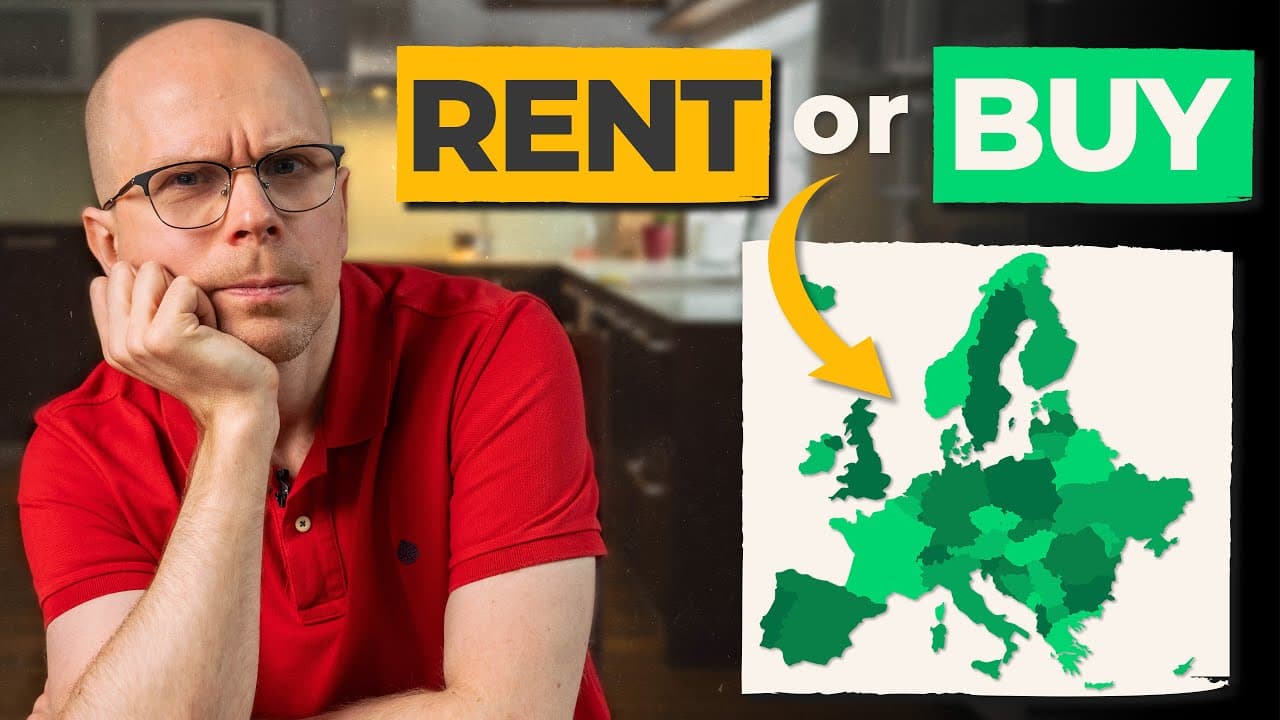
Should You Rent or Buy in Europe? A Professional Investor Explains
TL;DR
Renting or buying in Europe depends on the full ownership cost, expected length of stay, and lifestyle needs, not simply whether rent exceeds the mortgage. In the case study, hidden expenses raise a €1,000 mortgage to €1,595 per month before accounting for equity. Buying favors stability and a long stay, while renting favors mobility and fewer repair responsibilities; read on to compare the overlooked costs and risks.
Transcript
is it better to rent or buy here in Europe so you're thinking about buying a house or apartment your friends say paying rent is throwing away money and owning your home feels like an important life goal but it's a big commitment you're not sure if you can afford it and you don't want to make an expensive mistake that you will regret I asked 17 of m... Read More
Key Insights
- A mortgage payment is not directly comparable with rent because homeowners also pay for maintenance, property taxes, insurance, purchasing expenses, and the time required to manage repairs. These additional costs can turn an apparently cheaper mortgage into a total monthly cost similar to or greater than rent.
- Mortgage payments partly build home equity, but the early payments contain a large share of interest. Ownership therefore becomes less attractive when a buyer may move after only a short period, since relatively little equity may accumulate before another expensive property transaction becomes necessary.
- A primary home should not automatically be treated as an investment because property returns are often amplified through borrowed money. Leverage can magnify gains when prices rise, but it can also produce severe losses when prices fall, making simple comparisons with unleveraged stock investing misleading.
- A long expected stay generally strengthens the case for buying because upfront expenses and recurring ownership costs can be spread over a longer period. Renting becomes more compelling when relocation is reasonably likely, particularly if career, family, relationship, or geopolitical circumstances remain uncertain.
- Concentration risk arises because a homeowner commits substantial resources to one specific property, neighborhood, and city. Broad real estate prices may rise over long periods while an individual property or location struggles, so general market performance does not guarantee a favorable outcome for every owner.
- Life event risk can disrupt even a carefully planned property purchase. A growing family may need more space, a divorce may require a sale, and changing safety concerns may encourage relocation, potentially forcing the owner to sell before the financial benefits of long-term ownership emerge.
- Lifestyle flexibility is a central advantage of renting because tenants can move more easily and rely on landlords for many repairs. Buying offers different benefits, including permanence, a garden, space for a large dog, and a stable family home that supports meaningful activities and long-term roots.
- Low-cost renting can support wealth building when it allows an ambitious young person to save and invest more money. Many wealthy people described in the transcript delayed buying their own homes until ownership was easily affordable, allowing lifestyle preferences rather than financial pressure to guide the decision.
Install to Summarize YouTube Videos and Get Transcripts
Explore YouTube Video Summarizer or Get YouTube Transcript Extractor
Questions & Answers
Q: Is it better to rent or buy in Europe?
Neither option is always better; the choice depends on local prices, rent levels, financing, hidden ownership costs, and how long you expect to stay. Renting offers flexibility and transfers many repair responsibilities to the landlord, while buying can suit someone seeking long-term stability and control over a home.
Q: How should I compare the cost of renting and buying?
Compare rent with the mortgage plus maintenance, property taxes, insurance, upfront transaction expenses, and the value of time spent managing the property. Then account for the part of each mortgage payment that builds equity. This provides a fairer comparison than placing rent beside the mortgage payment alone.
Q: What hidden homeownership costs should buyers include?
Buyers should include maintenance, property taxes, insurance, taxes and fees paid during purchase, and the time required to handle repairs. In the case study, these hidden costs add €595 to a €1,000 mortgage, producing a total ownership cost of €1,595 per month before accounting for equity.
Q: How much should homeowners budget for maintenance?
The transcript says studies suggest budgeting between 1 and 2% of the property price each year for maintenance. Its case study uses 1 and a 1/2%, equal to €3,000 per year or €250 per month on a €200,000 apartment.
Q: When does buying become more attractive?
Buying becomes more attractive when you expect to remain in the home for the long term. A longer stay spreads upfront costs across more time and allows more mortgage payments to build equity, whereas moving after only a few years can weaken the financial case.
Q: Why can moving early make homeownership less attractive?
During the first few years of a mortgage, most monthly payments can go toward interest rather than equity. Selling early also means the purchase expenses were spread across a shorter stay, and another property transaction may be necessary.
Q: Should I treat my primary home as an investment?
The professional investor recommends not treating your own house or apartment as an investment because property purchases commonly use borrowed money. Leverage magnifies gains when prices rise but also magnifies losses: in the example, a decline from €200,000 to €180,000 loses half of the €40,000 initial investment.
Q: How should lifestyle affect the rent-or-buy decision?
Renting suits people who value mobility and want a landlord to manage many repairs. Buying can better support permanence, a garden, pets, family needs, hobbies, and putting down roots. These lifestyle considerations can matter alongside the financial calculation.
Summary & Key Takeaways
-
The financial comparison between renting and buying must include maintenance, property taxes, insurance, transaction expenses, and the value of the owner’s time. Mortgage payments also build some equity, although much of the payment during the early period can represent interest rather than ownership of the property.
-
Buying can become more appealing when someone expects to remain in the same home for many years. Moving earlier than planned can undermine the financial case because transaction costs are spread across a shorter period, while changes involving family, relationships, work, or geopolitical conditions may force an unexpected sale.
-
Lifestyle preferences can outweigh a narrow financial calculation. Renting provides mobility and shifts repair responsibilities to a landlord, while ownership supports putting down roots, keeping pets, gardening, and adapting a home to family needs. Young wealth builders may prefer inexpensive rent while saving and investing their remaining income.
Read in Other Languages (beta)
Share This Summary 📚
Summarize YouTube Videos and Get Video Transcripts with 1-Click
Try YouTube Summary with ChatGPT & Claude or YouTube Transcript Generator
Explore More Summaries from Tom Crosshill 📚





Summarize YouTube Videos and Get Video Transcripts with 1-Click
Try YouTube Summary with ChatGPT & Claude or YouTube Transcript Generator