What Are the Pros and Cons of TailwindCSS for Beginners?
TL;DR
TailwindCSS offers significant productivity boosts by allowing rapid styling directly within HTML and provides excellent responsive design capabilities. However, beginners may struggle with long class names, which complicate debugging and readability, and understanding CSS fundamentals is essential for its effective use. The framework's reliance on utility classes can lead to code duplication and challenges for collaboration with non-developer designers.
Transcript
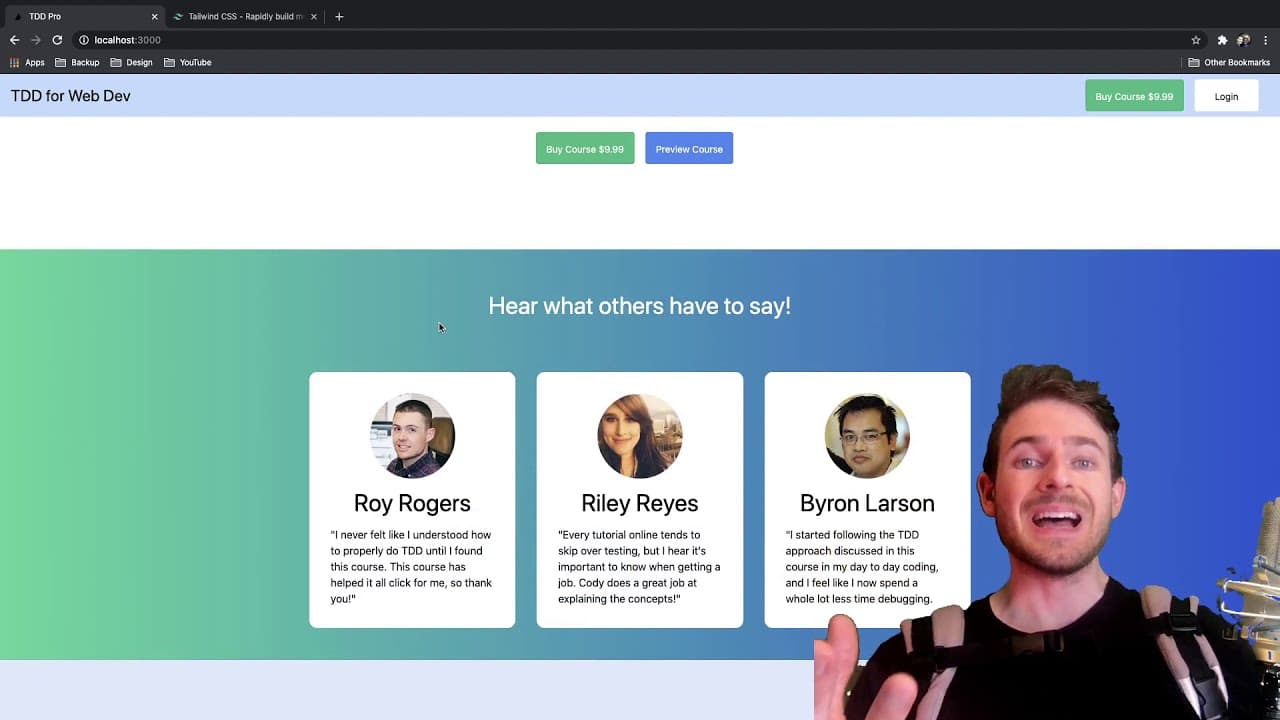
what is up everyone welcome back i hope you guys are having a great day um in this video i just kind of want to tell you all my experience with using tailwind css i just started using it on a personal site that i'm working on i'm trying to make a course related to test driven development or just testing in general for web developers and i decided t... Read More
Key Insights
- 👻 Tailwind CSS enhances productivity for developers by allowing rapid styling directly within HTML elements.
- 🏛️ Understanding traditional CSS principles is crucial for effectively using Tailwind CSS, especially regarding utility classes.
- 🎨 The framework's responsive design capabilities make it easier for developers to create adaptive layouts without extensive CSS.
- 🥺 Long class names can lead to difficulties with debugging and code readability, potentially complicating development processes.
- 😥 Visual cohesion is a strong point of Tailwind CSS, as developers can quickly see which classes affect a particular UI element.
- 👨💻 There is concern regarding code duplication since styles must be repeated across multiple components instead of being centralized.
- 🚱 Collaboration with non-developer designers can be challenging, as Tailwind's approach requires a different workflow than traditional CSS styling.
Install to Summarize YouTube Videos and Get Transcripts
Explore YouTube Video Summarizer or Get YouTube Transcript Extractor
Questions & Answers
Q: What project is the speaker working on using Tailwind CSS?
The speaker is developing a personal site for a course related to test-driven development and general testing for web developers, utilizing Tailwind CSS for styling within a Next.js framework.
Q: What are the speaker's thoughts on the productivity of Tailwind CSS?
The speaker finds Tailwind CSS to be quite productive, as it allows for quick creation and styling of elements without constantly switching between HTML and CSS files. The framework's utility-first approach helps streamline the styling process, making it easier to make adjustments directly in the markup.
Q: What concerns does the speaker express about long class names in Tailwind CSS?
The speaker is concerned that long class names can lead to difficulty in debugging and maintaining code, as they may create clutter on the screen and make it hard to locate specific classes. The potential for duplication and the need to manage multiple long class name entries can frustrate the debugging process.
Q: Why does the speaker recommend Tailwind CSS for beginners in web development?
The speaker recommends Tailwind CSS for beginners due to its intuitive design and substantial documentation. It allows newcomers to quickly implement styles while also learning fundamental CSS concepts, thus providing a hands-on way to build web applications without getting overwhelmed by traditional CSS complexities.
Q: How does Tailwind CSS help with responsive design according to the speaker?
Tailwind CSS includes built-in utilities for responsive layouts, allowing developers to create designs that adapt to different screen sizes by adding specific prefixes like 'md:' or 'lg:' to class names, making it easier to manage responsiveness without writing long CSS media queries.
Q: Are there any downsides to using Tailwind CSS mentioned by the speaker?
Yes, the speaker notes downsides such as potential code duplication, as styles must be reapplied to individual elements rather than a single class in a stylesheet. They express concern over scalability and collaboration challenges, particularly in larger projects with many developers working on component styling.
Q: What is the speaker's opinion on Tailwind CSS's documentation?
The speaker finds Tailwind CSS's documentation very helpful, praising its organization and searchability, allowing developers to easily find information about specific classes or utilities. This contributes to a smoother experience when learning and implementing styles with the framework.
Q: Does the speaker believe Tailwind CSS will scale well for large projects?
The speaker expresses skepticism about Tailwind CSS's scalability in large projects. They worry that as complexity increases and more components are added, the necessity of managing numerous long class names could complicate maintenance and updates.
Summary & Key Takeaways
-
The speaker, primarily a programmer, discusses their experience using Tailwind CSS for a personal project involving Next.js, highlighting the ease of creating and styling components.
-
They express concerns over the long class names in Tailwind CSS, which can be cumbersome for debugging and maintaining code as complexity increases.
-
The speaker acknowledges Tailwind's responsive design capabilities and overall productivity improvements, while stressing that understanding CSS fundamentals is important for effective use.
Read in Other Languages (beta)
Share This Summary 📚
Summarize YouTube Videos and Get Video Transcripts with 1-Click
Try YouTube Summary with ChatGPT & Claude or YouTube Transcript Generator
Explore More Summaries from Web Dev Cody 📚




Summarize YouTube Videos and Get Video Transcripts with 1-Click
Try YouTube Summary with ChatGPT & Claude or YouTube Transcript Generator