Why Did Masimo Buy Marantz, Denon, and B&W?
TL;DR
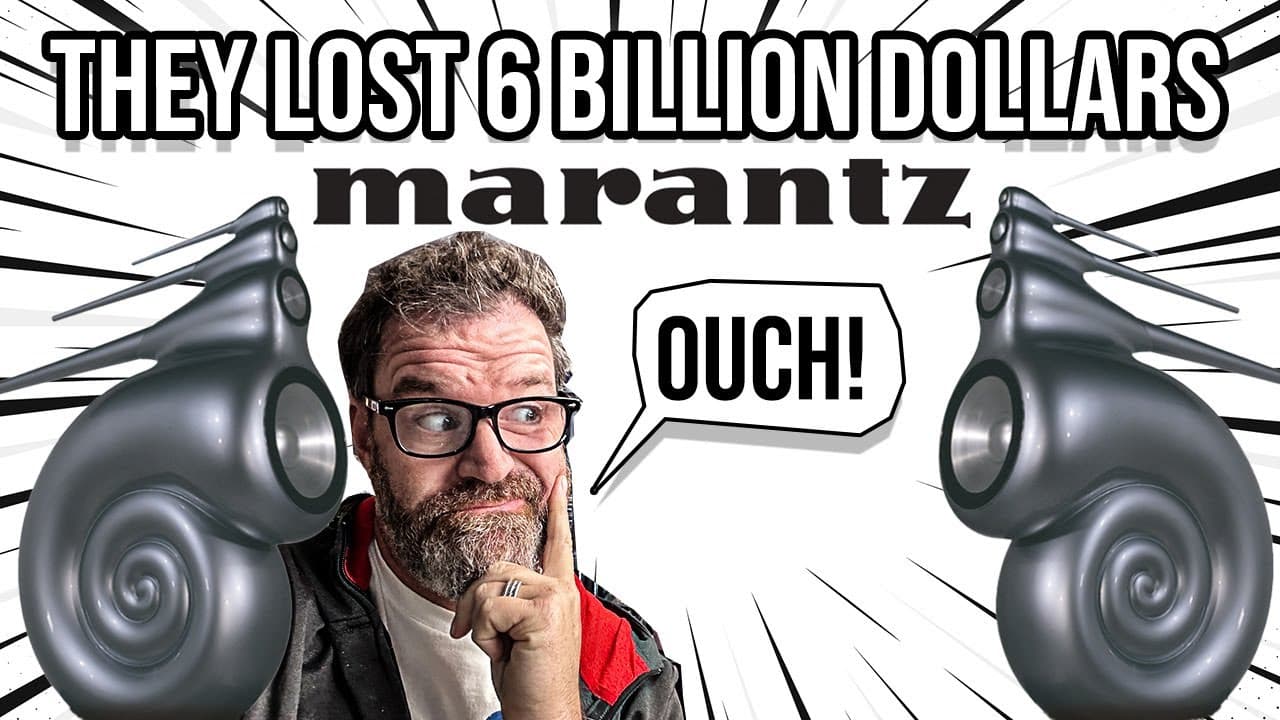
Masimo paid about $1.025 billion for Sound United to gain established consumer sales channels, audio brands, and technology that might complement its health-monitoring products. Investors rejected the strategy, sending Masimo shares down 35% on the announcement day, while the consumer division’s roughly 13% adjusted gross margin compared poorly with the healthcare business’s approximately 52% to 53%.
Transcript
this is the craziest story ever in April of 2022 masimo Corporation bought sound United sound United includes Brands all the ones you all know like morance Bowers and Wilkins denen pulk definitive Technologies and a whole bunch of other ones too for the eye watering sum of one billion dollar actually is over 1 billion it's like 1.025 billion dollar... Read More
Key Insights
- Sound United was created in 2012 and expanded through acquisitions, adding Definitive Technology in 2016, Denon, Marantz, and Boston Acoustics through D+M Group in 2017, Classé in 2018, and Bowers & Wilkins in 2020.
- Masimo bought Sound United in 2022 for approximately $1.025 billion, gaining a portfolio that included Marantz, Denon, Bowers & Wilkins, Polk, Definitive Technology, Boston Acoustics, and other consumer-audio brands.
- Masimo’s original business was medical monitoring technology, beginning in 1989 after founder Joe Kiani obtained a $40,000 loan and started the company from his garage in Irvine, California. Masimo later went public in 2007.
- The acquisition strategy was partly based on distribution, because Sound United already had consumer sales channels reaching retailers such as Best Buy and Euronics. Masimo intended to use those relationships to distribute products including the W1 watch and Stork baby monitor.
- The proposed technology synergy involved combining Masimo’s signal processing, biosensing, and photonics capabilities with Sound United’s audio and home-automation systems. The transcript suggests possible health sensing through earbuds and connections between Masimo wearables and the HEOS platform.
- Masimo’s consumer division had an adjusted gross margin of roughly 13%, according to the transcript, while its healthcare operation produced approximately 52% to 53%. Consumer operations generated about 30% to 31% of the company’s overall revenue.
- The consumer business generated approximately $150 million to $160 million in each of the two quarters discussed. The transcript’s rough estimate concludes that even attributing the entire consumer division to Sound United would imply a payback period exceeding 13 years.
- Masimo’s stock fell 35% on the day the Sound United acquisition was announced, erasing approximately $5 billion in market capitalization. Combined with the purchase price, the transcript characterizes the immediate financial impact as roughly $6 billion.
Install to Summarize YouTube Videos and Get Transcripts
Explore YouTube Video Summarizer or Get YouTube Transcript Extractor
Questions & Answers
Q: Why did Masimo buy Sound United?
Masimo bought Sound United to gain established consumer distribution channels, recognizable audio brands, immediate scale, and technologies that could potentially complement its health-monitoring expertise. The company hoped to distribute products such as the W1 watch and Stork baby monitor through retailers including Best Buy and Euronics, while exploring integrations between biosensing, audio products, home automation, wearables, and the HEOS platform.
Q: Which audio brands did Masimo acquire through Sound United?
The Sound United purchase gave Masimo control of a portfolio that included Marantz, Denon, Bowers & Wilkins, Polk, Definitive Technology, Boston Acoustics, Classé, and other brands. Sound United had assembled this portfolio over several years, acquiring Definitive Technology in 2016, D+M Group in 2017, Classé in 2018, and Bowers & Wilkins in 2020.
Q: How much did Masimo pay for Sound United?
Masimo paid approximately $1.025 billion for Sound United in 2022. Because Sound United was backed by private investors and the transcript does not provide the earlier acquisition costs for its individual audio brands, it is not possible from the supplied information to determine the portfolio’s total cost basis or whether its owners earned a specific profit from the sale.
Q: How did investors react to Masimo buying Sound United?
Investors reacted negatively when the Sound United acquisition was announced on February 16, 2022. Masimo’s stock price fell 35% in a single day, which the transcript says erased about $5 billion in market capitalization. When the acquisition’s roughly $1 billion price is added, the transcript characterizes the immediate combined impact as approximately $6 billion.
Q: Why was Sound United considered a poor financial fit for Masimo?
Sound United became part of Masimo’s consumer operation, which had an adjusted gross margin of approximately 13%, according to the transcript. Masimo’s healthcare business generated roughly 52% to 53%, about three and a half times the consumer margin. The criticism is that Masimo spent more than $1 billion expanding a lower-margin segment instead of concentrating resources on its more profitable healthcare products.
Q: What technology synergies did Masimo expect from the acquisition?
Masimo expected to combine its expertise in signal processing, biosensing, and photonics with Sound United’s audio and home-automation technologies. Potential products could blend health monitoring with audio entertainment, such as earbuds that measure heart rate. The transcript also describes industry speculation that Masimo wanted HEOS to connect its wearable health devices with a whole-home audio platform.
Q: How long could it take Masimo to recover the Sound United purchase price?
The transcript offers a rough estimate exceeding 13 years, even under the generous assumption that the entire consumer division’s contribution came from Sound United. It notes quarterly consumer revenue of approximately $150 million to $160 million and a roughly 13% adjusted gross margin. The actual recovery period could be longer because Sound United represented only part of the broader consumer portfolio.
Q: What products did Masimo hope to sell through Sound United’s channels?
Masimo hoped to expand distribution for consumer health products such as the W1 smartwatch and the Stork baby monitor. The W1 provides continuous monitoring that includes blood oxygen and heart rate, while the Stork tracks infant oxygen saturation, pulse rate, and skin temperature. Sound United’s existing relationships with consumer retailers such as Best Buy and Euronics were intended to accelerate market access.
Summary & Key Takeaways
-
Masimo acquired Sound United in 2022 for approximately $1.025 billion. The purchase brought brands including Marantz, Denon, Bowers & Wilkins, Polk, Definitive Technology, and Boston Acoustics into Masimo’s consumer division, giving the medical-technology company immediate access to recognized audio names, established customers, and major retail distribution channels.
-
The proposed strategy was to combine Masimo’s signal processing, biosensing, and photonics expertise with Sound United’s audio and home-automation technologies. Possible applications included health-monitoring features in headphones or integration between Masimo wearables and the HEOS whole-home audio platform, although the transcript questions whether these combinations offered enough practical value.
-
Investors reacted strongly against the acquisition. Masimo’s stock fell 35% when the deal was announced on February 16, 2022, erasing about $5 billion in market capitalization. The transcript argues that Sound United’s low-margin consumer revenue was a poor fit beside Masimo’s substantially higher-margin healthcare operation and could require many years to recover the purchase price.
Read in Other Languages (beta)
Share This Summary 📚
Summarize YouTube Videos and Get Video Transcripts with 1-Click
Try YouTube Summary with ChatGPT & Claude or YouTube Transcript Generator
Explore More Summaries from cheapaudioman 📚
Summarize YouTube Videos and Get Video Transcripts with 1-Click
Try YouTube Summary with ChatGPT & Claude or YouTube Transcript Generator