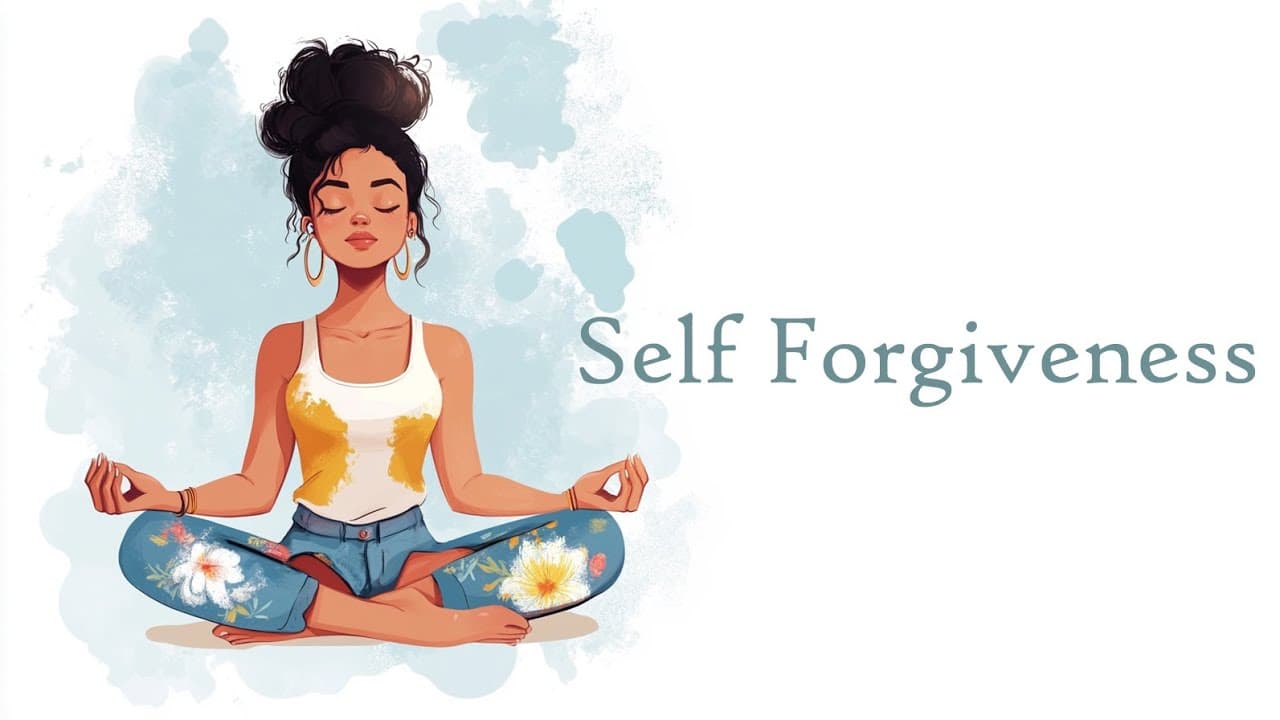
How to Practice Self-Forgiveness Through Meditation
TL;DR
Begin self-forgiveness by relaxing your body, observing your breath, and releasing the need to control or judge your present experience. Repeat compassionate phrases of apology, forgiveness, love, and gratitude, then move your awareness through the body while appreciating each part and affirming that you are acceptable and deeply loved as you are.
Transcript
Begin by inviting all of your awareness to enter into this time and space by tuning into your breath and body right now and just observing how they are observing how the air flows as you lovingly close your eyes if you have not already and as long as it feels best to you letting shoulders drop away from the ears allowing belly to hang soft and loos... Read More
Key Insights
- Present-moment awareness is established by observing the breath and body as they are, allowing attention to settle without requiring any immediate change. The practice begins with relaxed shoulders, a soft belly, and closed eyes when that feels comfortable for the listener.
- Inner lightness can emerge when the listener releases the need to be anything specific during the practice. Attention rests only on breathing, bodily presence, gravity, and simple observation, giving every aspect of the self permission to be fully off the hook for the moment.
- Nonjudgmental observation is applied to sensations and movements in the fingers and palms. Involuntary motion, tingling, wiggling, or stretching can be noticed without manipulation, control, or criticism, allowing the listener to experience whatever energy or physical response is present.
- The heart center becomes the focal point after awareness moves through the left and right pointer fingers. The meditation directs the perceived energy from both fingers into the middle of the chest, where the listener gathers awareness and allows the body to become heavier with each breath.
- Self-forgiveness is expressed through repeated phrases of apology, forgiveness, gratitude, and love. The listener addresses the totality of their being with these statements, including the declaration that forgiveness is offered fully and completely in the present moment.
- Personal experience is accepted as appropriate for the present moment, regardless of what arises. During several quiet breaths, the listener may notice weightlessness or another response, while being reminded that their individual experience does not need to match any prescribed sensation.
- Gratitude moves progressively through the entire body, beginning at the soles of the feet and toes. It then travels through the ankles, legs, torso, organs, arms, hands, neck, and head, appreciating the body for carrying, supporting, and sustaining the listener.
- Self-acceptance is reinforced through gentle affirmations that require no proof or achievement. The closing message tells the listener they are okay as they are, deeply loved, a precious gift from nature, and appreciated by others listening across all timelines.
Install to Summarize YouTube Videos and Get Transcripts
Explore YouTube Video Summarizer or Get YouTube Transcript Extractor
Questions & Answers
Q: How do you begin a guided self-forgiveness meditation?
Begin by bringing your full awareness into the present time and space through the breath and body. Observe how the air flows, and close your eyes if doing so feels comfortable. Let your shoulders drop away from your ears, soften your belly, and release the need to perform, prove anything, or become a particular kind of person.
Q: What phrases can you repeat during self-forgiveness meditation?
The meditation uses a sequence of compassionate statements directed toward the totality of your being: “I forgive you,” “I’m sorry,” “thank you,” and “I love you.” These phrases are repeated while awareness rests in the heart center. The sequence concludes by offering forgiveness fully and completely in the present moment, while allowing the body to release more deeply.
Q: How does body awareness support this self-forgiveness practice?
Body awareness gives the listener a direct focus that does not require judgment or control. The practice moves attention through the breath, fingers, palms, heart center, feet, legs, torso, organs, arms, hands, neck, and head. Sensations such as heaviness, lightness, tingling, or involuntary movement are simply observed and allowed to exist as they are.
Q: What should you do if unexpected sensations arise during meditation?
Observe unexpected sensations without judging, manipulating, or trying to control them. The meditation specifically allows for involuntary finger movements, a desire to wiggle or stretch, tingling in the palms, bodily heaviness, or a sense of weightlessness. Whatever comes up can be accepted as your experience for that moment, without needing to resemble anyone else’s response.
Q: How is the heart center used in the meditation?
Awareness first rests on the left pointer finger and then the right pointer finger. The listener is guided to feel energy traveling upward through both fingers and entering the heart center in the middle of the chest. Attention gathers there as the body grows heavier with each breath and the phrases of apology, forgiveness, gratitude, and love are repeated.
Q: How do you practice gratitude for the body during meditation?
Begin with a warm, loving sense of gratitude at the soles of the feet and toes. Let it move through the ankles, shins, calves, knees, thighs, sitting bones, torso, organs, arms, hands, neck, and head. Each area is appreciated for its role, including bending, walking on the Earth, carrying the body, and supporting everyday existence.
Q: What does letting go mean in this guided meditation?
Letting go means releasing the need to be a specific thing, control bodily sensations, manipulate energy, or judge the experience unfolding in the moment. The listener rests as an awareness of breath and body, allowing everything to be as it is. Repeated self-forgiveness phrases and quiet observation invite the body to soften and release even more.
Q: How should you finish a self-forgiveness meditation?
Finish by holding the awareness that you are okay as you are, deeply loved, and a precious gift from nature. Carry that feeling of gratitude and acceptance with you while gradually returning attention to the present time and space. Move at your own pace, take as much time as needed, and open your eyes slowly only when ready.
Summary & Key Takeaways
-
The meditation begins by drawing awareness into the present through observation of the breath and body. The listener closes the eyes if comfortable, lowers the shoulders, softens the belly, and releases every expectation. This creates space to experience the breath, physical sensations, gravity, and an emerging sense of inner lightness.
-
Awareness then moves into the fingers, palms, and pointer fingers without judgment or attempted control. The listener imagines energy traveling through both pointer fingers into the heart center. While resting attention in the chest, the practice introduces repeated statements of apology, forgiveness, gratitude, and love to encourage deeper release.
-
The final stage guides gratitude from the feet through the legs, torso, organs, arms, hands, neck, and head. Every part is appreciated for supporting the listener. The meditation closes with affirmations of acceptance and love, followed by a gradual return to the surrounding time and space at a comfortable pace.
Read in Other Languages (beta)
Share This Summary 📚
Summarize YouTube Videos and Get Video Transcripts with 1-Click
Try YouTube Summary with ChatGPT & Claude or YouTube Transcript Generator
Explore More Summaries from Great Meditation 📚
Summarize YouTube Videos and Get Video Transcripts with 1-Click
Try YouTube Summary with ChatGPT & Claude or YouTube Transcript Generator