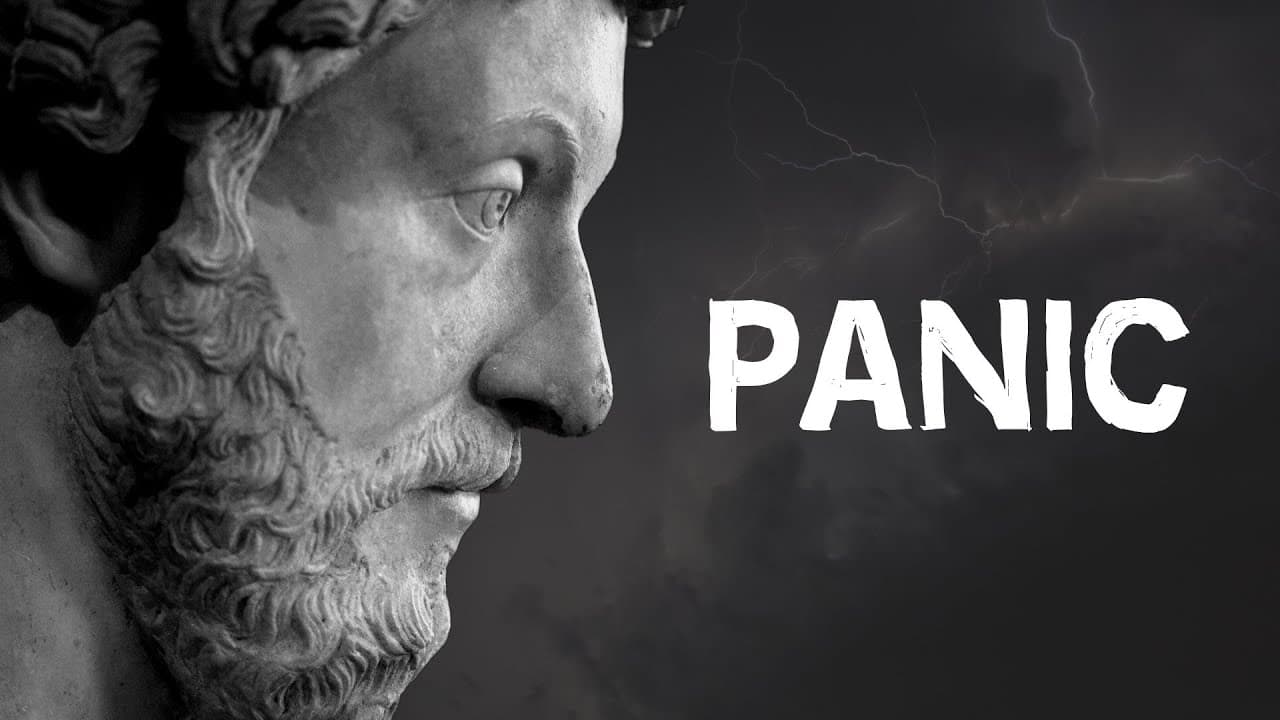
“Let Them Scream Whatever They Want” | Marcus Aurelius on Panic
TL;DR
Stay calm when others panic by judging events through facts and logic, resisting fear-driven behavior, and doing what the community needs. Marcus Aurelius frames crises as familiar, transient patterns rather than wholly unprecedented threats. Prepare without overdoing it, limit disaster-focused media exposure, and act within your direct environment. Read on for practical Stoic ways to preserve rationality and respond constructively during mass hysteria.
Transcript
How should we act when people around us are panicking? And how can we avoid panicking ourselves? Panic gets us nowhere, as it is a state of emotional turmoil during which our rationality is thrown overboard. So when we’re faced with a wide variety of opinions, the strong language of influencers, and decisions based on fear and greed, it can be diff... Read More
Key Insights
- ❓ Panic is emotional turmoil that hinders rational decision-making during crises.
- 👋 Marcus Aurelius suggests using rationality and focusing on the common good to avoid panicking.
- 👻 Historical patterns show that crises are cyclical, allowing us to adapt and overcome panic.
- 🤩 Staying calm and avoiding irrational behavior during crises is key to effective decision-making.
- 🔉 Media consumption can exacerbate panic, so focusing on actionable steps and personal connections is beneficial.
- 🧑🏭 Supporting communities by working together and acting rationally strengthens resilience during crises.
- 🌍 Individual actions based on rationality and calmness can have a positive ripple effect in a panicking world.
Install to Summarize YouTube Videos and Get Transcripts
Explore YouTube Video Summarizer or Get YouTube Transcript Extractor
Questions & Answers
Q: How can we avoid panicking during times of mass hysteria?
Base decisions on facts and logic rather than fear, greed, strong language, or the behavior of the crowd. Marcus Aurelius also recommends recognizing that crises follow familiar, transient patterns and fortifying the mind with philosophical ideas.
Q: How should we act when people around us are panicking?
Remain calm, assess what is happening rationally, and do what the situation and community require. If people are unwilling to consider alternatives, avoid wasting time trying to change them and focus on not joining their panic.
Q: Why do seemingly unprecedented events cause panic?
An event that appears new and alien can trigger fear of the unknown. Looking at historical accounts reveals recurring patterns of hardship, including lost jobs, lost money, plagues, peace, and war, which can make the present feel more familiar and manageable.
Q: What does Marcus Aurelius say about history repeating itself?
He describes events as the same familiar patterns appearing across history, cities, and households. The characters and formats may change, but humanity repeatedly experiences crises, hardship, good times, and bad times.
Q: How should we prepare for a crisis without making it worse?
Prepare for the situation, but do not overdo it, especially when excessive preparation undermines the community. Calm judgment helps identify what actually needs to be done instead of encouraging impulsive actions that worsen the crisis.
Q: How can media consumption intensify panic?
Constant exposure to disaster-focused coverage can create the impression that nothing else is happening in the world. The transcript recommends turning attention toward the direct environment, where beneficial action is actually possible.
Q: What does acting for the common good mean during a crisis?
It means working together and, in Marcus Aurelius’s words, doing what the community needs done. During a virus outbreak, for example, the transcript suggests that simply staying home may be more useful than trying to become the hero of the day.
Q: What can we control when other people behave irrationally?
Other people’s actions and opinions are not up to us, and their minds can change only if they are open to alternatives. We can control whether we follow their panic, keep our own minds calm, accurately assess our surroundings, and use events constructively.
Summary & Key Takeaways
-
Panic is emotional turmoil that hinders rationality, especially during times of mass hysteria.
-
Marcus Aurelius suggests using rationality, focusing on the common good, and fortifying the mind with philosophical ideas to avoid panic.
-
Historical patterns show that crises are cyclical, and staying calm and rational is key in overcoming panic.
Read in Other Languages (beta)
Share This Summary 📚
Summarize YouTube Videos and Get Video Transcripts with 1-Click
Try YouTube Summary with ChatGPT & Claude or YouTube Transcript Generator
Explore More Summaries from Einzelgänger 📚




Summarize YouTube Videos and Get Video Transcripts with 1-Click
Try YouTube Summary with ChatGPT & Claude or YouTube Transcript Generator