Speak With Me: How Do You Discuss Laundry in Everyday English?
TL;DR
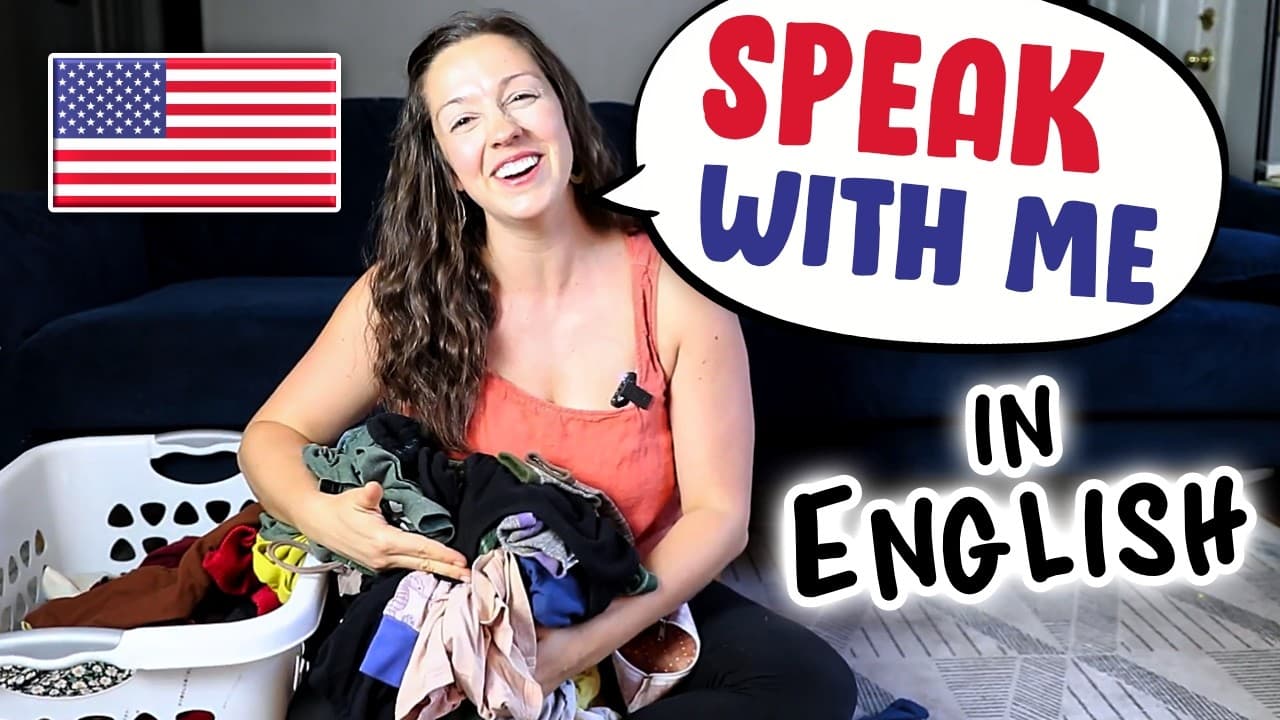
Use “do the laundry” for the complete process of washing, drying, folding, and putting clothes away. Vanessa demonstrates everyday expressions such as “inside out,” “right side out,” “fold it up,” and “hang it up” while sorting clothes for the five people in her household. Read on for practical vocabulary covering clothing, linens, baby items, and natural ways to describe each laundry task.
Transcript
Are you ready for some real life English? Welcome to my home. Today you are invited to learn real daily life English. Not that textbook stuff that doesn't help you in the real world, but real daily life English with me in my home. If you are new here, hi. I'm Vanessa and I teach English here on the Speak English with Vanessa YouTube channel to help... Read More
Key Insights
- “Do the laundry” is the correct expression for the complete process of washing, drying, folding, and putting clothes away. The verb “do” is essential in this phrase, while expressions such as “make the laundry” or “have the laundry” are not used for the task.
- “Inside out” describes clothing whose inner surface is facing outward, while “right side out” describes returning it to its normal orientation. A person can put a hand inside the garment, pull it right side out, shake it out, and then fold it.
- “Hang up” is used for garments placed on hangers rather than folded into piles. Vanessa sets aside collared shirts, dresses, and one of her own shirts so she can later take them to the bedroom and hang them in the closet.
- “PJs” is an everyday abbreviation for pajamas, and “jammies” is another term sometimes used for children’s sleepwear. Vanessa’s family uses PJs rather than jammies, showing that families can prefer different informal words for the same kind of clothing.
- A sleepsack is a wearable blanket for a baby that can be zipped around the child. Vanessa explains that babies cannot have an ordinary blanket while sleeping because they could suffocate, so the sleepsack provides a blanket-like covering that they wear.
- Household fabric items have distinct purposes: a tea towel can dry hands or dishes and clean messes, a placemat goes beneath a plate, a cloth napkin is used at the table, and a washcloth can remove makeup or be used by children.
- A dryer is commonly used in Vanessa’s experience in the United States, although some people hang their clothes. She prefers the dryer because her household produces substantial laundry, dried clothes become soft, and she does not need to spend time hanging or ironing everything.
- Laundry can be organized by person, garment type, and season. Vanessa arranges clothes from the youngest family member to the oldest, leaves socks in one pile for later sorting, and separates short-sleeved summer clothing from long pants and long-sleeved items.
Install to Summarize YouTube Videos and Get Transcripts
Explore YouTube Video Summarizer or Get YouTube Transcript Extractor
Questions & Answers
Q: How do you talk about doing laundry in everyday English?
Use “do the laundry” for the complete process of washing, drying, folding, and putting clothes away. For individual stages, use specific phrases such as “wash the clothes,” “put them in the dryer,” “fold the clothes,” and “put them away.”
Q: What do “inside out” and “right side out” mean?
A garment is “inside out” when its inner surface faces outward. To “turn it right side out,” Vanessa puts her hand inside the garment, pulls it back to its normal orientation, shakes it out, and folds it.
Q: When should clothes be folded or hung up?
Vanessa sets aside garments that go on hangers, including collared shirts and dresses, so she can hang them up later. She folds items such as shorts, sweatpants, T-shirts, and PJs into separate piles.
Q: What everyday clothing words are useful in laundry conversations?
The lesson uses terms including T-shirt, long-sleeved shirt, collared shirt, sundress, shorts, sweat shorts, sweatpants, sweatshirt, workout shorts, pajamas, and PJs. “Jammies” is another informal word for children’s pajamas, although Vanessa’s family usually says “PJs.”
Q: What is a baby sleepsack?
A sleepsack is a wearable blanket for a baby. The baby is placed inside and zipped up, providing a blanket-like covering without using an ordinary blanket while sleeping.
Q: What is the difference between a tea towel, washcloth, placemat, and cloth napkin?
A tea towel is used in the kitchen to dry hands or dishes and clean up messes, while a washcloth can remove makeup or be used by children. A placemat goes beneath a plate, and a cloth napkin is a reusable fabric item used at the table.
Q: How does Vanessa organize laundry for a family of five?
Vanessa makes piles for her youngest daughter, middle son, oldest son, herself, and her husband, arranging them roughly from youngest to oldest. She separates garments that need hangers, leaves socks together for later, and organizes short-sleeved and long-sleeved seasonal clothing.
Q: Why does Vanessa use a clothes dryer instead of hanging clothes?
Her five-person household produces a substantial amount of laundry, so she says she does not have time to hang everything. She also likes that clothes from the dryer are soft and less crinkly, reducing the need for ironing.
Summary & Key Takeaways
-
Vanessa demonstrates natural American English while folding laundry for the five people in her household. She identifies clothing, linens, and reusable lunch bags while describing how she sorts, folds, hangs, and organizes everything. The household setting connects useful vocabulary with actions that English learners can observe and imitate in daily life.
-
The lesson introduces expressions including “inside out,” “right side out,” “fold it up,” and “hang it up.” It also distinguishes the complete activity, “do the laundry,” from individual actions such as washing clothes, placing them in the washing machine, transferring them to the dryer, folding them, and putting them away.
-
Household items provide additional vocabulary beyond ordinary clothes. Vanessa identifies a baby sleepsack, tea towel, cloth napkin, placemat, washcloth, sundress, collared shirt, workout shorts, and reusable zippable lunch bag. Personal stories about children, chores, seasonal clothing, and family routines show how these terms appear in natural conversation.
Read in Other Languages (beta)
Share This Summary 📚
Summarize YouTube Videos and Get Video Transcripts with 1-Click
Try YouTube Summary with ChatGPT & Claude or YouTube Transcript Generator
Explore More Summaries from Speak English With Vanessa 📚






Summarize YouTube Videos and Get Video Transcripts with 1-Click
Try YouTube Summary with ChatGPT & Claude or YouTube Transcript Generator