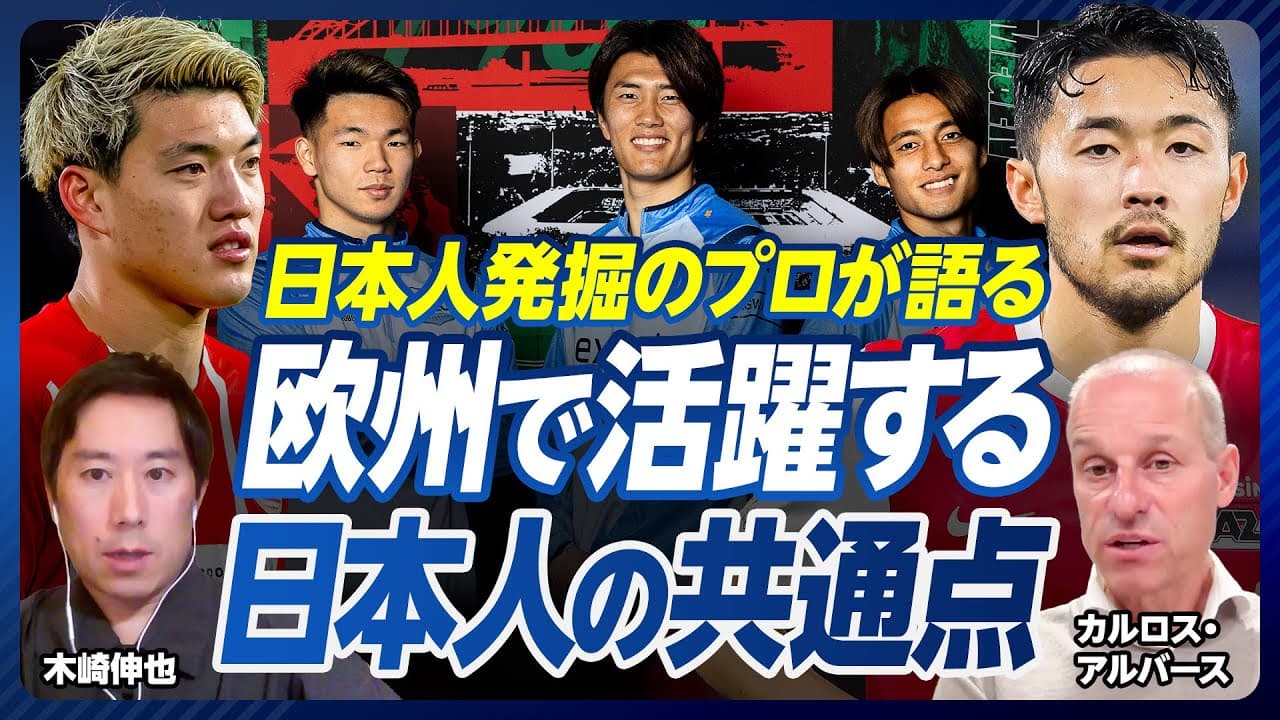
堂安と塩貝はなぜ欧州で成功できるのか、日本人発掘のプロが語る獲得理由、ヘッドスカウトの権限、19歳の意義、獲得確率1%、良い選手の見分け方、数年以内の日本代表入り
TL;DR
European success for Japanese players depends on combining excellent technique and handling speed with the physical capacity to sustain high-intensity football. The scout committed to signing 堂安 after watching him perform against Uruguay, acting before other European clubs responded to his later goals against Italy. The discussion also explains why timing, trusted networks, live observation and decisive scouting authority shape rare recruitment successes, including the immediate pursuit of 塩貝.
Transcript
danan sugara gawa orano all the players are doing a great job in Europe I I was scouting a lot I see many games and you always have once or twice or maybe three times a year then you can jump on the table and that you believe in in a player I got the information that the player was open to make the step to Europe yeah I got that information and fro... Read More
Key Insights
- Affordability defines the search: Scouting was not simply a hunt for the most visible footballer. The player also had to fit FC Groningen’s financial schedule. The scout’s Messi example makes the constraint explicit: everyone can recognize elite quality, but recognition has little practical value when the club cannot complete the deal under its financial conditions.
- Early travel creates information advantage: The scout reached the AFC qualification setting in South Korea six or seven months before most competing scouts. That lead did more than provide extra viewing time. It allowed him to recognize 堂安’s quality, monitor the physical issue that still required development and establish contact with the player’s agency before attention intensified.
- One difficult match can decide: 堂安’s match against Uruguay mattered because the opponent supplied a demanding test of toughness, fighting spirit and intensity. The scout did not require a goal to reach his decision. He treated 堂安’s ability to perform well within that environment as stronger evidence of readiness than a simple scoring statistic.
- Goals can arrive too late: Other European scouts began contacting 堂安’s agency after he scored two or three goals against Italy. FC Groningen had already acted following the Uruguay match. The sequence shows why waiting for an obvious statistical performance can remove an advantage, especially when video, data and international scouting rapidly distribute the same evidence.
- Physical projection completes evaluation: The scout did not judge only 堂安’s current physical level. He asked how the player might look six or seven months later after playing minutes and beginning strength training. That projected growth was decisive because European progression required proof that technical quality could survive greater speed, running volume and intensity.
- Japanese technique fits build-up play: Japanese players stood out for handling speed and technique, qualities that aligned with a Dutch preference for building attacks. The scout could therefore identify many players who looked compatible in possession. The limiting factor was whether their physical capacity could support those skills under the more intense conditions demanded by European football.
- Intensity is a signing threshold: More sprints and more metres covered per minute were described as defining features of modern football. A player unable to deliver that intensity would find reaching Europe’s top level almost impossible. For this scout, insufficient physical output could outweigh attractive technical ability and lead directly to a decision not to sign.
- Progression shapes recruitment value: The club assessed whether a player could succeed in the Eredivisie and then take another step. Recruitment was therefore not limited to immediate team fit. A prospect needed qualities that could develop toward a higher level, with physical growth acting as an essential bridge between technical promise and future progression.
- Market knowledge expires quickly: Data and video programs meant that clubs could know the leading players across the world market within two or three months. Scouting advantage was consequently temporary. The club had to be quicker, different and well timed, because prolonged analysis gave competitors time to reach the same conclusion and approach the same agency.
- Kento’s choice required readiness: The club already knew Kento from under-23 national-team observation and wanted him, but he was deciding between moving to Europe and remaining in Japan to combine study with football. When his view changed after a six-week period in Europe, the club could respond the next day because its evaluation was already complete.
- Reliable networks enable speed: Immediate action on Kento depended on relationships built before the opportunity became active. The network understood what the club was doing and what each party could expect. Personal and institutional reliability reduced delay, allowing a next-day offer when many European clubs were interested and another choice remained possible.
- Conviction must remain rare: Watching many matches did not produce constant table-jumping certainty. The scout experienced that level of belief only once, twice or perhaps three times per year. This rarity gives meaning to the CEO’s instruction and explains why an immediate decision on a prospect such as 塩貝 signals unusually strong scouting conviction rather than routine enthusiasm.
Install to Summarize YouTube Videos and Get Transcripts
Explore YouTube Video Summarizer or Get YouTube Transcript Extractor
Questions & Answers
Q: 欧州で成功する日本人選手の共通点は何ですか?
The central combination is excellent handling speed and technique supported by enough physical capacity for high-intensity football. The scout said Japanese players were particularly good technically and could fit teams that wanted to build up play. Success in Europe also required more sprints, more metres per minute and the ability to maintain intensity. Without that physical component, even a technically impressive player might not be signed.
Q: FC Groningenが堂安の獲得を決めた理由は何ですか?
The decisive evidence came in 堂安’s second match against Uruguay. Uruguay offered a demanding test through toughness, fighting spirit and intensity, and 堂安 played well even though he did not score. That performance convinced the scout that FC Groningen should proceed. He contacted the agency immediately, before 堂安’s later goals against Italy brought approaches from other European scouts.
Q: なぜ堂安のイタリア戦ではなくウルグアイ戦が決め手になったのですか?
The Uruguay match tested qualities that the scout considered essential for European football. 堂安 had to operate against a team defined by fighting spirit, toughness and strong intensity. His good performance showed more than a goal total could show, even though he did not score. The later two or three goals against Italy attracted wider attention, but the scouting decision had already been made.
Q: 日本人選手の獲得でフィジカルはなぜ重要ですか?
Modern football required more sprinting, more metres per minute and higher intensity according to the scout. Japanese players could already offer excellent technique, handling speed and build-up ability, but those strengths needed a sufficient physical base. Young players could improve by playing minutes and beginning strength training. If the required physical development did not appear achievable, the club would decline the signing.
Q: スカウトは若い選手の成長可能性をどう判断しますか?
The scout compared current qualities with the player’s likely condition several months later. With 堂安, he already knew the technical strengths and watched whether the physical side improved across six or seven months. Playing time and strength training were identified as mechanisms behind that development. The final question was whether the player could handle higher intensity and later take another competitive step.
Q: データと映像の普及はスカウティングをどう変えましたか?
New technology, data and video programs made good players visible across the world market very quickly. The scout estimated that clubs could know the same players within two or three months. This shortened the period in which one club possessed a meaningful information advantage. As a result, recruiters needed to arrive early, distinguish their judgment and act at the right moment.
Q: Kentoの事例は獲得タイミングの重要性をどう示していますか?
The club had already watched Kento with the under-23 national team and was convinced about signing him. He initially remained unsure whether to move to Europe or stay in Japan while combining study and football. After changing his mind during a six-week period in Europe, he could receive an offer the following day. Prior knowledge, experience and a reliable network made that speed possible while many European clubs were interested.
Q: ヘッドスカウトにはどのような判断力と権限が必要ですか?
Management expected the scouting operation to find major new talent, and the CEO encouraged decisive advocacy when exceptional quality appeared. The scout described reaching that level of conviction only once, twice or perhaps three times a year despite seeing many games. His recommendation therefore had to rest on accumulated observation, financial fit, physical projection, timing and trusted contacts. The immediate pursuit of 塩貝 is presented as an example of that rare conviction.
Summary & Key Takeaways
-
Finding value before competitors: While working for FC Groningen, the scout searched worldwide for good players available under workable financial conditions. Obvious stars were irrelevant if they did not fit the club’s financial schedule. As technology, data and video made emerging talent visible much faster, he focused on overlooked markets and competitions. He attended AFC World Cup qualification activity in South Korea six or seven months before most other scouts arrived, giving him time to identify 堂安’s qualities and contact his agency early.
-
Testing 堂安 against intensity: The scout already appreciated 堂安’s technique, but needed to see whether his physical development would support European football. The second match against Uruguay became decisive because Uruguay played with toughness, fighting spirit and strong intensity. 堂安 did not score, yet his overall performance convinced the scout to approve the signing. He immediately told the agency that FC Groningen wanted him. When 堂安 later scored two or three goals against Italy, other European scouts called, but Groningen was already ahead.
-
Balancing technique and physical growth: Japanese players impressed the scout with their handling speed, technique and ability to participate in build-up football. Those qualities suited the Netherlands, where teams also wanted to construct play from the back. However, modern football demanded more sprints, more metres per minute and greater intensity. Young players could improve through match minutes and strength training, as 堂安 did across six or seven months. If a technically strong player could not reach the required physical level, the club would not sign him.
-
Winning through timing and trust: Technology allowed clubs across Europe to identify the same players within two or three months, making speed and timing central to recruitment. The scout’s experience with Kento illustrates the point. The club had already watched him with the under-23 national team and wanted to sign him, but Kento was initially uncertain about Europe. After he changed his mind during a six-week period, the club’s established knowledge and reliable network enabled it to send an offer the following day.
-
Backing decisive scouting judgments: Management repeatedly asked the scouting operation to discover the next major talent. The CEO’s instruction was clear: when the scout truly saw exceptional talent, he should metaphorically jump on the table. Such conviction occurred only once, twice or perhaps three times a year despite watching many matches. The page frames 塩貝 as an immediate decision, discusses the authority carried by a head scout, highlights the significance of age 19 and presents successful acquisition as a rare outcome with a probability of 1%.
Read in Other Languages (beta)
Share This Summary 📚
Summarize YouTube Videos and Get Video Transcripts with 1-Click
Try YouTube Summary with ChatGPT & Claude or YouTube Transcript Generator
Explore More Summaries from PIVOT 公式チャンネル 📚





Summarize YouTube Videos and Get Video Transcripts with 1-Click
Try YouTube Summary with ChatGPT & Claude or YouTube Transcript Generator