How to Build a Brand That Scales: Scott Galloway
TL;DR
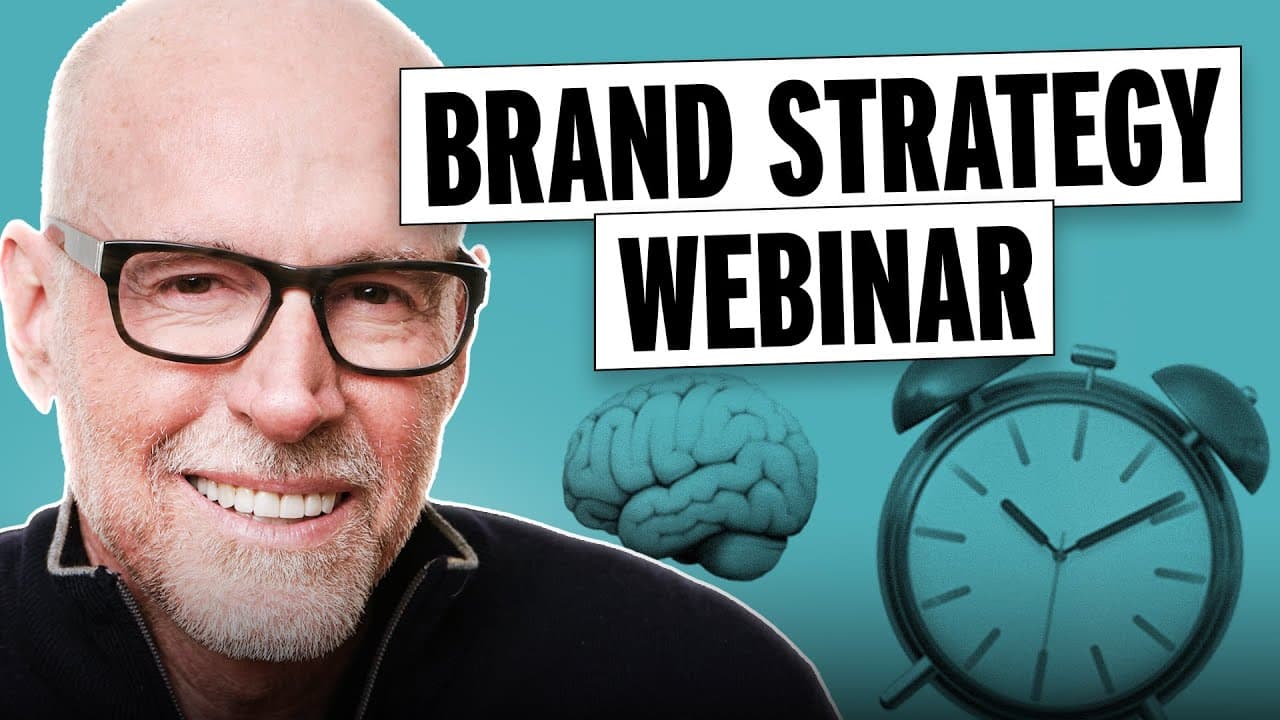
Brand building maps to a clock: 12-4 is pre-purchase, 4-8 is purchase, 8-12 is post-purchase. Because broadcast advertising ROI has collapsed, L2 replaced ads with YouTube videos, teased research rankings that triggered reverse inquiry, and overinvested in design. Pick one slice of the clock and go crazy with it as a quality cue.
Transcript
Okay, we have 2700 seconds and 62 slides. So, let's light this candle. My name is Scott Galloway. I'm a professor of marketing at NYU Stern School of Business. And I'm going to give you sort of the greatest hits of my brand strategy course. This course has been delivered to over 4,500 students. At the school, we charge each student, no joke, $7,000... Read More
Key Insights
- The brand clock is a construct that places the ultimate end consumer or customer at the center, with 12 to 4 representing pre-purchase, 4 to 8 representing purchase, and 8 to 12 representing post-purchase, so brands can see the full journey as one visual metaphor.
- Pre-purchase has become increasingly expensive because the tools for creating it have become remarkably less efficient. As a percentage of US households, Johnny Carson reached 10 times the number of people advertisers reach today, while paying dramatically less for that reach.
- Advertising ROI has been cut by a factor of 14 or 15 by one measure: the Oscars now reaches a third as many people as it did, while its 30 second spots are five times as expensive as they were 30 years ago.
- Rankings are one of the most underrated vehicles for free media pickup, because the press goes crazy for them and just as many people call from the bottom of the list as from the top. Everyone who came in third wants to know why they did not come in second.
- Reverse inquiry changes the complexion of the sales process by shifting negotiating and pricing power to the seller. When Nike reaches out first, the seller holds leverage, unlike the standard SaaS model of a young graduate trolling LinkedIn to hit a quota of coffee meetings.
- Design is enduring in an age of AI, and the ratio of designers to programmers at the biggest tech companies has actually gone up. AI has a very difficult time reverse engineering or mimicking great breakthrough design, since the base of AI language coding is fairly anodyne.
- Event attendance predicts renewal. At L2, the likelihood of a membership renewal could almost be predicted by how many events a client attended, and low attendance or low research downloads triggered a mid-tenure red flag to the client manager that the account was at risk.
- A quality cue is one slice of the clock taken to an extreme to signal overall quality: the value hotel baking warm chocolate chip cookies you smell in the lobby, Hyundai extending a category-standard three year warranty to seven years, or Tiffany's aquamarine blue packaging.
Install to Summarize YouTube Videos and Get Transcripts
Explore YouTube Video Summarizer or Get YouTube Transcript Extractor
Questions & Answers
Q: What is the brand clock framework?
The brand clock is a construct from Scott Galloway's NYU Stern brand strategy course that places the ultimate end consumer or customer at the center of a clock face. The hours from 12 to 4 represent pre-purchase, 4 to 8 represent purchase, and 8 to 12 represent post-purchase. A consumer enters the franchise at pre-purchase through advertising, trialing, product sampling, public relations, and logos seen on billboards, all of which build awareness and a set of associations around a company's products and services. Galloway teaches it as a construct rather than a case study because the human brain has an easier time holding on to visual metaphors.
Q: Why has advertising become less efficient over time?
The tools for creating pre-purchase awareness have become remarkably less efficient because of the splintering and proliferation of channels and because the most valuable consumers now hide behind subscriptions and paywalls. As a percentage of US households, Johnny Carson reached 10 times the number of people that comparable vehicles reach today, and the advertisers on Carson were paying dramatically less for that reach. The Oscars now reaches a third as many people as it once did while its 30 second spots cost five times what they did 30 years ago, meaning the return on investment has been cut by a factor of roughly 14 or 15. Galloway notes that people did not realize how inexpensive and efficient broadcast advertising used to be.
Q: How does content marketing generate inbound sales leads?
Galloway's firm L2 published research reports called the digital IQ index that included rankings, and released a portion of each report publicly: the first eight pages, the key findings, the table of contents, and the ranking itself. If the head of digital at Nike saw that page 53 covered Nike versus Adidas on Instagram, they would turn to that page and find a click-here prompt that opened an email inquiry. Galloway would arrive at 8 a.m. to a dozen or so inquiries from Europe, then more from the US through the day, and fewer from Asia overnight. He describes this freemium content model as reverse inquiry, and it worked because the firm could not afford conferences or advertising.
Q: Why is reverse inquiry more powerful than outbound sales?
Reverse inquiry changes the complexion of the sales process because it inverts who is asking. When a company like Nike reaches out first, the seller has more negotiating power and more pricing power, since as Galloway puts it, the buyer called you. He contrasts this with the majority of SaaS and software companies, which employ a very bright young 23-year-old graduate who trolls LinkedIn sending emails against a quota of setting up as many coffee meetings as possible with a former athlete or someone charismatic, hoping the prospect will like them enough to trial the software. The inbound model starts from demonstrated interest rather than manufactured contact.
Q: Why does design still matter in an age of AI?
Galloway argues design is enduring because it is one place AI is having a very difficult time reverse engineering or mimicking. The base of AI language coding is fairly anodyne, so as he frames it, code is the chip and design is the salsa. Evidence for this is that the ratio or percentage of designers to programmers at the biggest tech companies has actually gone up rather than down. He has always overinvested in creative, telling his team that everything that leaves the office has to be beautiful. His partner at his current business, Section, is a professor of the arts at the Tisch School with a design background.
Q: How can rankings be used to earn free media coverage?
Rankings are a hugely underrated vehicle because the media picks up on them and goes crazy for them, generating a large volume of free press. Galloway notes that the media cares about who comes in last just as much as or more than who comes in first. In practice, just as many people call from the bottom of a ranking as call from the top, and everybody who came in third wants to know why they did not come in second, or fourth. The technique works best when paired with real insight and strong presentation, bringing the underlying data alive through provocative findings and great design.
Q: What is a quality cue in brand strategy?
A quality cue is when you take one slice of the brand clock and really go crazy with it in order to stand out, making a deliberate and sometimes irrational overinvestment that signals overall quality. Galloway's examples include a value hotel that went through the trouble of baking fresh warm chocolate chip cookies you could smell on entering the lobby, which made him and his friends choose that brand on a trip to see UCLA play; Hyundai extending the warranty in a car class where three years was standard out to seven years; and Tiffany's packaging, where the aquamarine blue color signals a gift even though on a low price item the packaging can eat up most of the margin.
Q: How do events strengthen customer retention after purchase?
Events occupy the post-purchase portion of the brand clock, and Galloway says the most rewarding things are usually the hardest things. L2 ran about 55 events a year around the world with a dedicated events team, hosting somewhere between four and 6,000 people annually. Every touch point was made amazing, down to Caudalie and Aesop soaps in the bathrooms, because luxury-brand consumers notice the little things and judge in an instant whether you get it. The payoff was measurable: renewal likelihood could almost be predicted by how many events a member attended, and a client who stopped attending events, taking digital IQ briefings, or downloading research triggered a mid-tenure red flag to the client manager that the account was at risk with about six months to fix it.
Summary & Key Takeaways
-
Scott Galloway, a professor of marketing at NYU Stern School of Business, presents the greatest hits of his brand strategy course, which has been delivered to over 4,500 students at a cost of $7,000 per student. The core teaching device is a set of visual constructs, because the human brain has an easier time with visual metaphors than with case studies students will forget.
-
The brand clock places the ultimate end consumer or customer at the center, with 12 to 4 covering pre-purchase, 4 to 8 covering purchase, and 8 to 12 covering post-purchase. Pre-purchase includes advertising, trialing, product sampling, public relations, and logos on billboards, all of which create awareness and a set of associations around products and services.
-
At L2, his benchmarking and advisory firm, Galloway could not afford conferences or advertising, fired every PR firm within three months, and instead used YouTube winners and losers videos, teased research reports with rankings, and an overinvestment in design to generate inbound inquiries, member briefings, and 55 community events a year.
Read in Other Languages (beta)
Share This Summary 📚
Summarize YouTube Videos and Get Video Transcripts with 1-Click
Try YouTube Summary with ChatGPT & Claude or YouTube Transcript Generator
Explore More Summaries from The Prof G Pod – Scott Galloway 📚



Summarize YouTube Videos and Get Video Transcripts with 1-Click
Try YouTube Summary with ChatGPT & Claude or YouTube Transcript Generator