How Did the Catholic Church Become an Empire?
TL;DR
The Catholic Church became a spiritual empire in Western Europe by claiming authority over who enters heaven while kings competed over earthly rule. As the poorer, fragmented western half of Rome declined, the Church filled the power vacuum, absorbing steppe migrants into a new nobility and enforcing orthodoxy through crusades and the inquisition.
Transcript
Okay, good morning class. Um, so we have five more classes in the semester and the four last classes are the most important. So what what I will do this class is set up the uh background and context for the last four classes. So um what I want to do first is review what what we've learned so far. Okay, so we discussed the um Roman Republic. the Rom... Read More
Key Insights
- The Roman Republic was an oligarchy of about 100 patrician families, which worked while Rome was small, poor, and at war because the nobility lived close to ordinary people, creating an open, energetic, and cohesive society.
- Empire exposed the oligarchy's flaws: Rome became corrupt, unequal, and stagnant, and the failure to build a centralized bureaucracy because families refused to give up power led to constant civil war from Sula through Julius Caesar.
- Constantine reinvented the Roman people by moving the capital from Rome to Constantinople, creating the Byzantine Empire, a Greek-language bureaucracy that became known as the second Rome and lasted about a thousand years.
- The Roman Empire split into a wealthy eastern half rooted in the Middle East that dominated through trade and diplomacy, and a poor western half fragmented by natural barriers into competing societies with great diversity.
- The Catholic Church became the dominant power in Western Europe by claiming to be out of history: kings compete over who rules the earth, but the Church decides who goes to heaven, making it a spiritual and divine empire.
- Noble families that supported the Catholic Church gained an advantage by absorbing steppe migrants into society at the bottom, letting migrant war leaders join the roughly 50 families to form a new nobility.
- The Church tried to control the divine spark Jesus revealed, teaching it was of the devil and must be imprisoned; it answered dissenting religious leaders with crusades and an inquisition secret police to educate, then burn, heretics.
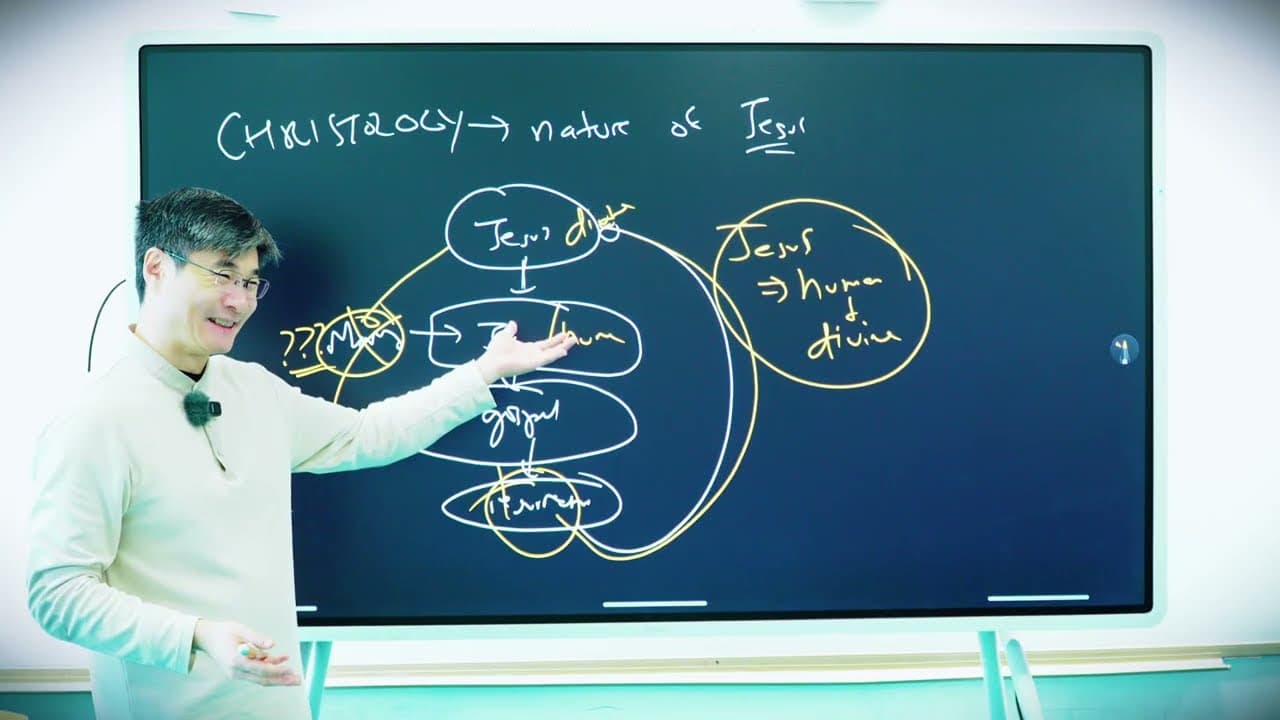
- Constantine made Christianity the official religion of Rome and demanded one orthodoxy because the faith was a franchise model where different churches taught different things, sparking debates like christology over Jesus's nature.
Install to Summarize YouTube Videos and Get Transcripts
Explore YouTube Video Summarizer or Get YouTube Transcript Extractor
Questions & Answers
Q: How did the Catholic Church become an empire in Western Europe?
The Catholic Church became the dominant power because it claimed to be out of history: while kings competed over who ruled the earth, the Church decided who went to heaven. As Western Europe rose and the Eastern Empire declined, the Church grew stronger, effectively becoming a spiritual and divine empire that spoke for God, which produced tremendous conflict throughout the region.
Q: Why did the Roman Republic's oligarchy work at first but fail as an empire?
As a small, poor society at war, Rome's roughly 100 patrician families were not much better off than everyone else, so the society stayed open, energetic, and cohesive, becoming dominant in the Mediterranean. Once it became an empire, that same oligarchy turned corrupt, unequal, and stagnant, and the families refused to surrender power to a centralized bureaucracy, leading to constant civil war.
Q: What did Constantine do to reinvent the Roman Empire?
Constantine decided the old system did not work, so he reinvented the Roman people by moving the capital from Rome to a new city he called Constantinople, creating the Byzantine Empire. As a new culture it could finally become a bureaucracy, with Greek as its official language. This became known as the second Rome and lasted about a thousand years.
Q: What was the difference between the Eastern and Western Roman Empires?
The eastern part, including the Levant, Anatolia, and Egypt, was the wealthiest region and dominated through trade and diplomacy, warring with the Persian Empire, and its capital Constantinople was designed to be invincible. The western part was the poorest region, broken up by mountains, forests, and rivers into diverse competing societies, where the Catholic Church emerged as the dominant power.
Q: Why did Constantine make Christianity the official religion and demand one orthodoxy?
Before Constantine there were Christian emperors, but he was the first to make Christianity the official religion of Rome. Because Christianity operated as a franchise model where different churches taught different things, Constantine insisted the empire could not have that debate under an official religion. He demanded a unified ideology and single orthodoxy to end the confusion among churches.
Q: How did the Catholic Church handle people who believed in the divine spark?
Jesus taught there was a divine spark within people, but the Church declared that spark to be of the devil and something to imprison. When religious leaders arose insisting the divine spark was within us, the Church responded with crusades, sending warriors to kill such believers, and set up the inquisition, a secret police to find opponents, educate them, and burn heretics at the stake.
Q: How did steppe migrants become part of European nobility?
Steppe peoples called the Goths migrated into Europe as the Han dynasty's war against the Xiongnu pushed people westward. Noble families supporting the Catholic Church absorbed these migrants at the bottom of society. Since migrant societies were egalitarian and elected war leaders, the Church system let such a war leader become nobility, joining the roughly 50 families to form a new ruling class.
Q: What is the christology debate about the nature of Jesus?
Christology asks whether Jesus was human or divine. If he was divine, he could not die, so his death and resurrection make no sense; if human, his death is a sacrifice. One view holds Jesus was divine in heaven but human in the world, so Mary bore only the human Jesus. The Church officially teaches Jesus was human and divine at the same time.
Summary & Key Takeaways
-
The Roman Republic succeeded as an oligarchy of about 100 patrician families while Rome was small, poor, and at war, but once it became an empire the same oligarchy turned corrupt, unequal, and stagnant, and refusing to build a centralized bureaucracy produced endless civil war from Sula to Caesar.
-
Constantine moved the capital to Constantinople, founding the Byzantine Empire as a Greek bureaucracy and second Rome that lasted a thousand years. The empire split into a wealthy eastern half ruling by trade and diplomacy and a poor, fragmented western half where the Catholic Church rose to fill the power vacuum.
-
The Catholic Church became a spiritual empire by claiming to decide who enters heaven, absorbing steppe migrants and their leaders into a new nobility. It enforced orthodoxy through crusades and the inquisition against believers in the divine spark, while Constantine's demand for unity fueled christological debates over Jesus's nature.
Read in Other Languages (beta)
Share This Summary 📚
Summarize YouTube Videos and Get Video Transcripts with 1-Click
Try YouTube Summary with ChatGPT & Claude or YouTube Transcript Generator
Explore More Summaries from Predictive History 📚





Summarize YouTube Videos and Get Video Transcripts with 1-Click
Try YouTube Summary with ChatGPT & Claude or YouTube Transcript Generator