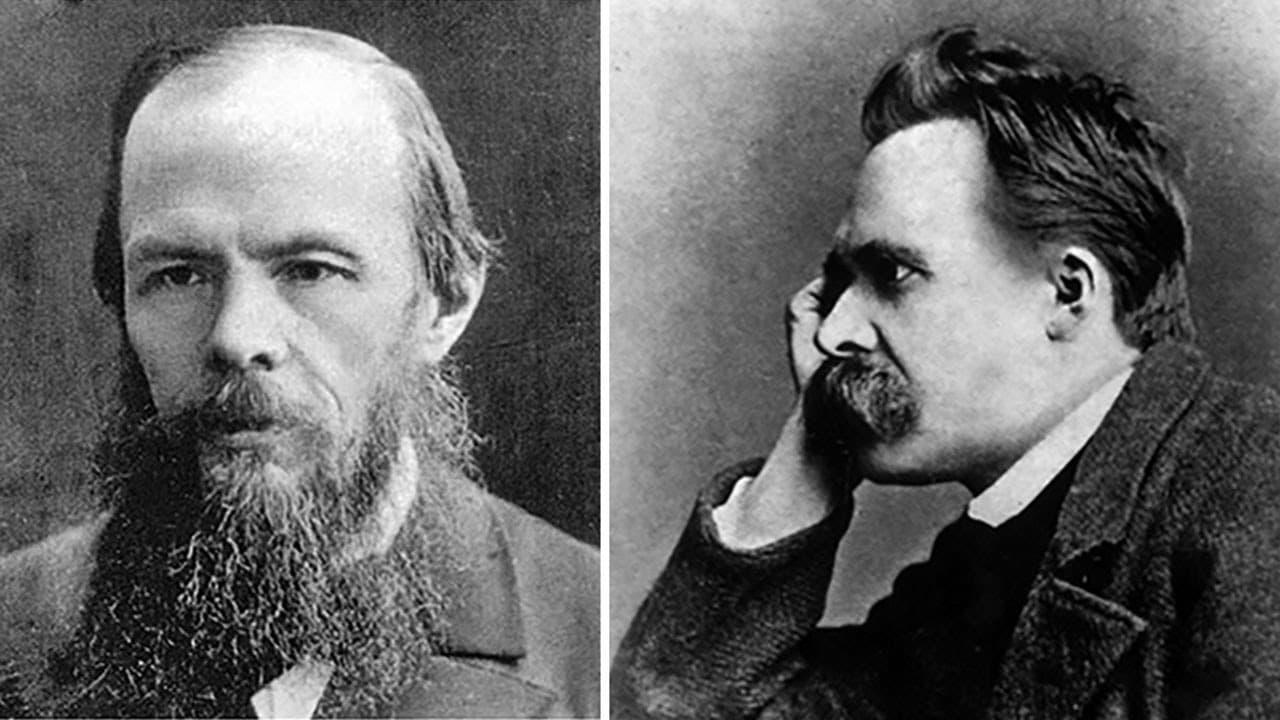
What Did Nietzsche and Dostoevsky Predict About Nihilism?
TL;DR
Existentialism and nihilism are central themes, with Nietzsche and Dostoevsky shown as forecasting the rise of nihilism and its link to mass movements. The discussion argues philosophy and psychology must be understood together, not memorized, because ideas possess people and shape lives. Understanding values and identity is essential to prevent drifting into aimlessness.
Transcript
This lecture, and the next, are probably the most explicitly philosophical lectures of the course. Then, we move into psychometrics, and biological psychology. Those are going to be the most scientific lectures of the course. I was thinking, this morning, while I was preparing this lecture, about why I approach these topics this way. Part of the an... Read More
Key Insights
- Existentialists emerged as a psychological movement after World War II, driven by concerns about ideological possession and individual responsibility.
- Nietzsche is presented as a central figure who anticipated nihilism and the future of Western culture’s values moving toward catastrophe.
- Dostoevsky is described as predicting the 20th century’s problems and influencing later thinkers like Freud, Jung, and Rogers.
- The speaker argues that mass movements cannot be fully explained by top-down coercion alone, as individuals still bear responsibility.
- Jung’s idea that ideas possess people is highlighted as a framework for understanding irrational and counterproductive behavior.
- The lecture emphasizes the need to understand underlying values and what people should value for meaningful action, not just memorize procedures.
- The role of fear and conformity under authority is discussed, challenging simple dichotomies of leaders versus followers.
- Existentialism and phenomenology are linked to postwar concerns about totalitarianism, freedom, and individual choice.
Install to Summarize YouTube Videos and Get Transcripts
Explore YouTube Video Summarizer or Get YouTube Transcript Extractor
Questions & Answers
Q: What is nihilism and how does it relate to existentialism?
Nihilism is described as a cultural condition where traditional values lose their meaning, leading to a sense of aimlessness. Existentialism, connected to phenomenology, examines how individuals confront freedom, responsibility, and the absence of given meanings. The discussion suggests that understanding these presuppositions helps people avoid becoming dictated by mass ideologies and instead act with intentionality.
Q: Why do Nietzsche and Dostoevsky matter for understanding the 20th century?
The lecture argues that Nietzsche and Dostoevsky predicted the problems that unfolded in the 20th century, including nihilism and totalitarian impulses. Their work is said to illuminate how values, psychology, and culture interact to shape history, making them essential for understanding mass movements, personal responsibility, and the roots of ideological possession.
Q: What does the speaker say about the role of mass movements and individuals?
The speaker contends that mass movements cannot be fully explained by mere coercion or leadership alone. While leaders may be evil, ordinary followers are not purely victims; individuals share responsibility for collective actions. This view emphasizes personal accountability and cautions against blaming individuals solely for the actions of a mass.
Q: How does Jung’s idea about ideas possessing people relate to the lecture?
Jung’s idea that ideas possess people serves as a framework to understand how beliefs influence behavior beyond conscious control. The speaker uses this to explain why people can act irrationally or contribute to harmful movements, underscoring the importance of recognizing and examining the philosophical assumptions guiding thoughts and actions.
Q: What is the relationship between values and learning in personality theory?
The lecture argues that memorization alone is insufficient for genuine knowledge in personality theory. True understanding requires grasping the underlying values and the framework of psychological literature, because this enables meaningful application, especially in clinical contexts where the stakes involve human well-being and identity formation.
Q: Why is responsibility important in the context of the postwar era?
Responsibility is highlighted as crucial in the postwar era to prevent the individual from being subsumed by mass ideologies. The discussion suggests that recognizing one’s own values and the potential consequences of actions helps maintain moral agency and resist blindly following authoritarian or conformist pressures.
Q: What does the speaker say about the danger of drifting in life?
Drifting is described as leading to a miserable outcome by a certain age, with the suggestion that choosing and sticking to an identity acts as a form of apprenticeship. The warning emphasizes the importance of creating purpose and direction to avoid late-life regret and lost opportunities.
Q: How are Nietzsche, Dostoevsky, and Kierkegaard connected in this lecture?
The lecture positions Nietzsche and Dostoevsky as central figures whose insights into nihilism and meaning shaped 20th-century thought, with Kierkegaard’s sentiments integrated into existentialist concerns about individual choice and authenticity. Together, they are portrayed as shaping the modern understanding of freedom, responsibility, and the danger of mass ideologies.
Summary & Key Takeaways
-
The lecture argues that Nietzsche and Dostoevsky forecast nihilism and mass movements, emphasizing the influence of philosophical presuppositions on psychology and behavior. It posits that understanding what people value is essential to prevent aimless drifting and to form meaningful identities rather than relying on memorized procedures.
-
A central claim is that ideas possess people, a Jungian insight echoed by the speaker, which requires studying philosophy to grasp how beliefs drive behavior, especially in postwar contexts and totalitarian risks.
-
The discussion links historical events to broader philosophical movements, urging readers to recognize the role of individual responsibility within the mass and to examine the assumptions behind social science models, rather than accepting convenience explanations for cruelty or conformity.
Read in Other Languages (beta)
Share This Summary 📚
Summarize YouTube Videos and Get Video Transcripts with 1-Click
Try YouTube Summary with ChatGPT & Claude or YouTube Transcript Generator
Explore More Summaries from Jordan B Peterson 📚


Summarize YouTube Videos and Get Video Transcripts with 1-Click
Try YouTube Summary with ChatGPT & Claude or YouTube Transcript Generator