How to Use Camera Angles for Cinematic Videos
TL;DR
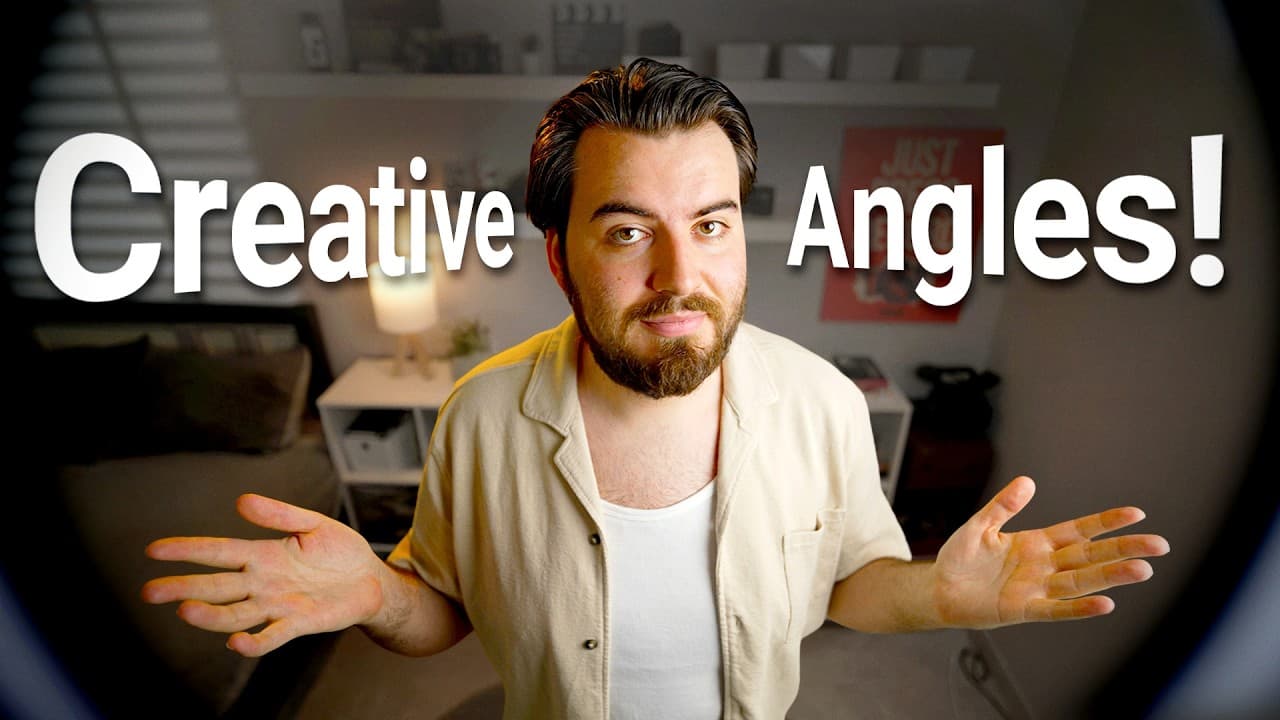
Make videos feel more cinematic by choosing camera angles that support the meaning of each moment. Foreground layers add depth, wide shots establish locations, close-ups emphasize details, and high or low angles change how the subject feels. Camera movement, including push-ins and whip pans, can direct attention and connect scenes, even when filming alone.
Transcript
So, you want your videos to look a little cooler, but not in a flashy, over-the-top way. You just want your shots to feel more intentional, more cinematic, dare I say it, and honestly, just a little less boring. Lucky for you, I am an awardwinning filmmaker, which means I may have a slightly inflated ego. But hey, I picked up a few tricks along the... Read More
Key Insights
- A dirty frame is a composition that shoots through a foreground object, such as a plant, monitor, or doorway. The added layers create depth, texture, environmental context, and a more organic appearance, provided the foreground element adds character without distracting from the subject.
- A top-down shot is an overhead perspective suited to unboxings, product reviews, gear displays, and artwork demonstrations. It creates an organized, clean aesthetic, but the camera support should be securely weighted with a sandbag so the equipment does not fall onto the subject.
- A push-in is a gradual movement toward the subject that emphasizes an important statement or introduces a significant change in topic. A pull-out creates distance or closure. Both can be captured with a slider or imitated in DaVinci Resolve through the dynamic zoom tool.
- A wide establishing shot is a broad view that introduces the environment, communicates the atmosphere of a new location, and helps reset viewer attention. It offers visual variety beyond typical head-and-shoulders framing and can be created simply by positioning a tripod farther from the subject.
- An extreme close-up is a tightly framed view that directs attention toward one specific detail, such as an eye or facial expression. It works particularly well for intense, emotional, or important moments because the framing clearly signals that the highlighted detail deserves the viewer's attention.
- A point-of-view shot is a first-person perspective that lets viewers see an action through the creator's eyes. It is useful for tutorials, walkthroughs, object demonstrations, and behind-the-scenes setups, and can be captured by holding the camera close or mounting a GoPro to the body.
- An over-the-shoulder shot is a second perspective that places part of the subject's shoulder and head within the frame. It works well for computer work or editing scenes because viewers feel as if they are beside the creator or quietly observing from inside the room.
- Low and high camera angles communicate contrasting emotional qualities. A camera below eye level can suggest power, authority, or importance, while a camera above the subject can support personal, thoughtful, or vulnerable moments. Adjusting the height allows either effect to remain subtle rather than extreme.
Install to Summarize YouTube Videos and Get Transcripts
Explore YouTube Video Summarizer or Get YouTube Transcript Extractor
Questions & Answers
Q: How can camera angles make a video look cinematic?
Camera angles make footage feel more cinematic when each framing choice supports the meaning of the moment. Foreground objects can create depth, wide shots can establish the environment, and close-ups can isolate important details. Changing camera height can suggest authority or vulnerability, while deliberate movement can emphasize statements, create closure, or transition between locations.
Q: How do you create a dirty frame in a video?
Create a dirty frame by positioning an object between the camera and the main subject, then shooting through or past it. A plant, computer monitor, doorway, or bush can add foreground texture and depth. The object should strengthen the environment, provide context, or create leading lines without becoming so prominent that it distracts viewers from the subject.
Q: When should you use a top-down camera shot?
Use a top-down shot when viewers need a clear, organized view of objects or hands working on a surface. It is especially suitable for unboxings, product reviews, gear showcases, and drawing demonstrations. A tripod with a boom-style center column or a C-stand can position the camera overhead, but the support should be weighted securely with a sandbag.
Q: How do push-in and pull-out shots affect a scene?
A push-in gradually brings viewers closer to the subject, making an idea feel important and encouraging the audience to pay closer attention. A pull-out introduces distance and can signal closure. These movements can be recorded with a motorized camera slider, or a similar effect can be created in DaVinci Resolve by setting dynamic zoom start and end points.
Q: Why should a video use a wide establishing shot?
A wide establishing shot shows the surrounding environment, communicates the mood of a location, and tells viewers when the setting has changed. It also provides a visual reset from common head-and-shoulders framing. Creators can produce one by placing the camera farther away on a tripod, while a drone or suitable stock footage can provide broader perspectives.
Q: What is the purpose of an extreme close-up?
An extreme close-up tells viewers to focus on one specific detail or emotion. A tightly framed eye, facial expression, or object can make an important moment feel more intense and immediate. To capture the shot, move the camera close to the subject and, when the lens permits, zoom in until the selected detail dominates the composition.
Q: How are POV and over-the-shoulder shots different?
A POV shot represents what the creator sees, placing the audience directly inside a first-person experience. An over-the-shoulder shot observes the action from behind the creator, with part of the head and shoulder visible. POV works well for walkthroughs and demonstrations, while over-the-shoulder framing suits editing, computer work, and scenes meant to feel quietly observational.
Q: How do low and high camera angles change a subject's appearance?
A low camera angle looks upward at the subject and can communicate power, authority, importance, or a hero-like presence. A high angle looks downward and can make the subject feel less intimidating, more personal, or more vulnerable. Neither angle must be extreme, since small changes above or below eye level can produce a subtler emotional effect.
Summary & Key Takeaways
-
Intentional framing makes a video feel cinematic without requiring flashy production. A dirty frame adds foreground texture, while top-down, POV, and over-the-shoulder shots provide useful perspectives for tutorials, product demonstrations, editing scenes, walkthroughs, and behind-the-scenes footage. Each angle gives viewers clearer visual context and makes a familiar environment feel more layered.
-
Shot size helps control attention and emotion. Wide establishing shots reveal a new environment and reset attention, while extreme close-ups isolate an important expression or detail. Push-ins make statements feel more important, and pull-outs create distance or closure. These techniques can be produced through physical camera movement or simulated during editing.
-
Camera height and movement influence storytelling. Low angles suggest power, authority, or importance, while high angles can make personal or vulnerable moments feel less intimidating. A whip pan creates a transition by rapidly panning out of one shot and into the next. Creators can adjust each technique subtly rather than using its most extreme form.
Read in Other Languages (beta)
Share This Summary 📚
Summarize YouTube Videos and Get Video Transcripts with 1-Click
Try YouTube Summary with ChatGPT & Claude or YouTube Transcript Generator
Explore More Summaries from Think Media 📚
Summarize YouTube Videos and Get Video Transcripts with 1-Click
Try YouTube Summary with ChatGPT & Claude or YouTube Transcript Generator