How to Create Sodium Amalgam with Mercury Safely
TL;DR
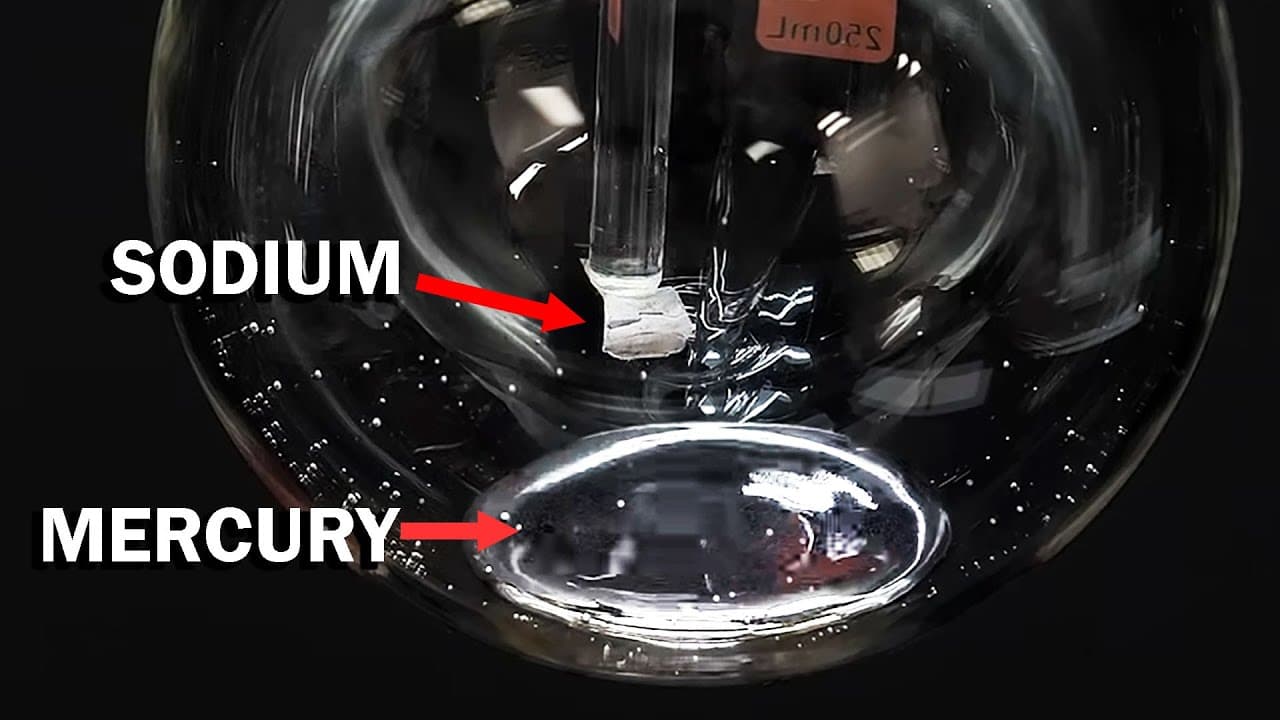
Sodium amalgam forms when you push clean sodium metal beneath the surface of mercury and crush it to expose fresh metal, triggering a very fast, heat-releasing reaction. Once the sodium rises above about 1% by mass, the amalgam solidifies, then slowly disperses back into liquid mercury that now clings to the glass. Because the reaction can flame and mercury is toxic, the sodium is first cleaned in toluene and cut into small pieces. See how each pour behaved differently.
Transcript
this video has been sponsored by Nord VPN you can get a special deal and support the channel by visiting Nord VPN comm / nyle rad over the years I've worked with mercury many times and it's almost always a bit of a pain because it requires special handling as well as waste management but despite this I think it's still slowly becoming one of my fav... Read More
Key Insights
- 🤘 Mercury has unique properties, including the ability to form alloys with other metals through amalgamation.
- 💦 Sodium is a highly reactive metal that prefers to react with oxygen and water, requiring special storage precautions.
- ❓ Sodium amalgam can be created by combining sodium and mercury, resulting in a mixture that can have various concentrations of sodium.
- 🪔 Sodium amalgams have practical applications in chemistry, such as reductions and sodium vapor lamps.
- 💦 Safety precautions, such as working in a fume hood and handling the amalgam properly, are crucial due to the toxic nature of mercury.
- ❓ The concentration of sodium in the amalgam affects the reactivity of the mixture.
- 😍 Solid sodium amalgam can be crushed into powder, while liquid sodium amalgam allows for different visual effects and reactions.
Install to Summarize YouTube Videos and Get Transcripts
Explore YouTube Video Summarizer or Get YouTube Transcript Extractor
Questions & Answers
Q: What is the amalgam of mercury and sodium?
It is an alloy made by combining sodium metal with mercury, a process known as amalgamation. Mercury can form alloys with most other metals at relatively low temperatures, and with sodium the result is sodium amalgam, whose properties depend on how much sodium it contains.
Q: Which solvent is sodium stored in before making the amalgam?
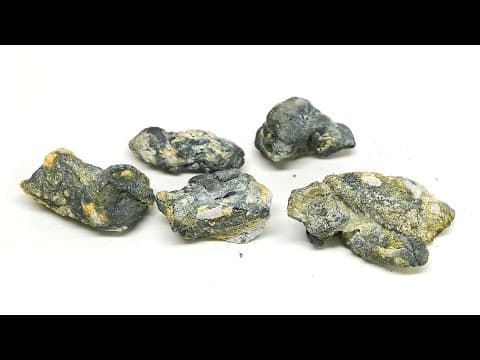
Sodium is kept under a layer of an inert solvent like mineral oil to protect it from air and moisture, though it still slowly tarnishes over time. Before the reaction, the piece is cleaned with toluene, which dissolves any remaining oil and then evaporates easily, leaving fresh metal.
Q: Why does the sodium float on top of the mercury at first?
Sodium is less dense than mercury, so it just sits on the surface. On top of that, a tarnished layer keeps it from contacting the mercury, so a glass rod is used to shove the sodium under and crush it, exposing fresh metal that finally reacts.
Q: At what sodium concentration does the amalgam turn solid?
When the concentration of sodium rises above about 1% by mass in the mercury, the amalgam begins to solidify. Because the reaction is extremely fast, the mercury right around the sodium takes up a high concentration first, giving solid sodium amalgam mixed with ordinary liquid mercury. After a few minutes it disperses evenly and looks like mercury again, but it now sticks to the glass.
Q: Why can mixing sodium with mercury catch fire?
As the amalgam forms it releases a lot of heat, which melts the sodium and increases its surface area. That makes it react even faster and generate still more heat, creating a positive feedback loop, so the reaction rate can rise exponentially and produce fire, especially with larger pieces of sodium.
Q: Why is the sodium cleaned and cut into small pieces before the reaction?
The reaction can be violent, and some procedures even recommend covering the vessel to block flaming sodium shot out the top. Cutting the sodium into smaller pieces keeps things on the safer side, and cleaning off oil and tarnish helps the fresh metal make contact with the mercury.
Q: What are sodium amalgams used for?
Sodium amalgams can be used as reducing agents in various chemical reactions. They are also associated with sodium vapor lamps, which serve as streetlights or plant grow lights.
Q: Why does mercury require special handling and waste management?
Mercury is toxic, so it demands careful handling and proper disposal to avoid harm to health and the environment. Working safely with it, including in a fume hood, is important throughout the amalgam-making process.
Summary & Key Takeaways
-
The host discusses the interesting properties of mercury and its ability to form alloys with other metals, known as amalgamation.
-
The process of creating sodium amalgam is demonstrated, showcasing the reaction between sodium and mercury.
-
The host explores the potential uses of sodium amalgams in chemistry, such as reductions and sodium vapor lamps.
Read in Other Languages (beta)
Share This Summary 📚
Summarize YouTube Videos and Get Video Transcripts with 1-Click
Try YouTube Summary with ChatGPT & Claude or YouTube Transcript Generator
Explore More Summaries from NileRed 📚

Summarize YouTube Videos and Get Video Transcripts with 1-Click
Try YouTube Summary with ChatGPT & Claude or YouTube Transcript Generator