How Did Warren Buffett Build His $160 Billion Fortune?
TL;DR
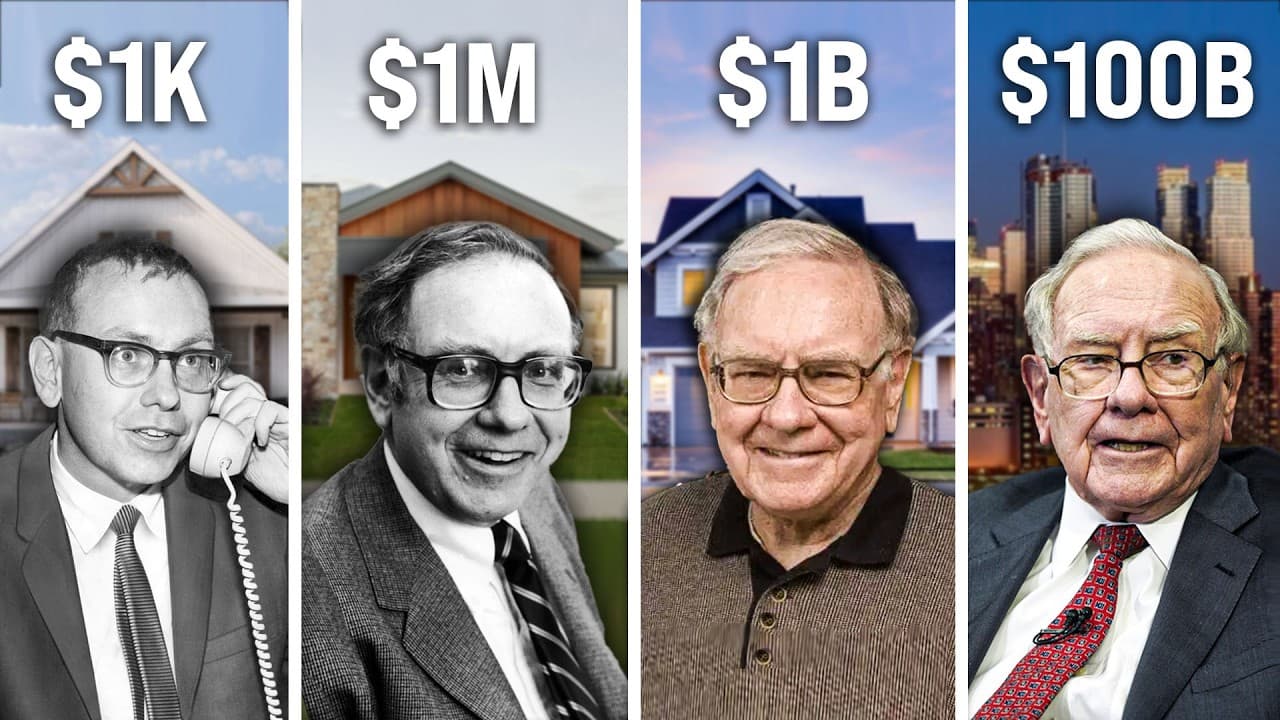
Warren Buffett built his fortune by combining early entrepreneurship with disciplined value investing and decades of compounding through Berkshire Hathaway. He bought his first stock at 11, launched an investment partnership in 1956, achieved a 25.9% compounded annual return in that partnership, and later generated 20% annual returns at Berkshire Hathaway from 1965. Read on for the pivotal investments and lessons behind that progression.
Transcript
Warren Buffett is known today as the world's best investor, having generated 20% annual returns in his company, Burkshire Hathaway, since 1965. No one else even comes close. And the more you study him, the more you realize just how irreplicable his success really is. But how did the Oracle of Omaha do it? What were the decisions he made, strategies... Read More
Key Insights
- Warren Buffett has generated roughly 20% annual returns through Berkshire Hathaway since 1965, a track record the video says no one else comes close to matching, making his success largely irreplicable.
- Buffett's first stock purchase came at age 11, when he used his saved $114.75 to buy three shares of City Service Preferred at $38, sold at $40, then watched it soar past $200, learning the cost of impatience.
- Buffett's early money came from pure hustle: selling gum and Coca-Cola, running pinball machines sold for $1,200 at age 16, paper routes that saved him $2,000 by 15, and buying 40 acres of Nebraska farmland at 14.
- Value investing entered Buffett's life in 1950 when he read Ben Graham's The Intelligent Investor, prompting him to enroll at Columbia Business School to learn 'cigar butt' investing directly under Graham.
- Buffett's 1956 partnership charged zero management fees and zero fees on the first 6% annually, taking 25% of gains above that hurdle, yet still made him wealthy while he invested only $100 of his own money.
- The Sanborn Map play showed classic value logic: shares traded at $45 while cash and investments alone were worth $65, so Buffett bought 43%, joined the board, and forced a $65 buyback for a 44% gain.
- The 1964 American Express salad oil scandal let Buffett bet 40% of his partnership's capital on a quality franchise whose brand and customer trust stayed intact, signaling his shift toward great businesses.
- The 1972 See's Candies purchase for $25 million tested and confirmed Munger's philosophy of paying up for pricing power, ultimately delivering over $2 billion in pre-tax profits, a return above 8,000%.
Install to Summarize YouTube Videos and Get Transcripts
Explore YouTube Video Summarizer or Get YouTube Transcript Extractor
Questions & Answers
Q: How did Warren Buffett build his $160 billion fortune?
Buffett began with childhood businesses, then adopted Ben Graham’s value-investing approach and launched his own investment partnership in 1956. The partnership compounded at 25.9% annually, while Berkshire Hathaway later generated 20% annual returns from 1965, allowing his wealth to snowball over time.
Q: How did Warren Buffett make his first $1,000?
Buffett earned his first $1,000 through side hustles rather than stock investing. He sold chewing gum and Coca-Cola, delivered newspapers, and operated three pinball machines before selling the pinball business for $1,200 at age 16.
Q: What was Warren Buffett’s first stock investment?
At age 11, Buffett used $114.75 in savings to buy three shares of City Service Preferred Stock at $38 each. He sold at $40 after the price recovered from about $27, but the stock subsequently climbed above $200, teaching him how costly impatience could be.
Q: What is cigar-butt investing?
Cigar-butt investing means buying beaten-down businesses so cheaply that a small improvement or liquidation can provide one final profit. Buffett learned the approach from Ben Graham and used it to target overlooked companies trading cheaply relative to their assets or earnings.
Q: How did Warren Buffett start his investment partnership?
Buffett returned to Omaha in 1956 and started an investment partnership at age 25 with roughly $105,000 from relatives and close friends. He invested only $100 personally and charged no management fee, no fee on the first 6% of annual gains, and 25% of gains above that level.
Q: How did Buffett profit from Sanborn Map Company?
Sanborn shares traded at about $45 even though the company’s cash and investments alone were worth $65 per share. Buffett’s partnership acquired 43% of the company, he joined its board, and management ultimately repurchased shares at $65, producing a 44% gain.
Q: Why did Buffett invest in American Express during the salad oil scandal?
In 1964, American Express shares fell after a subsidiary lost millions on fraudulent collateral involving water presented as soybean oil. Buffett observed that customers were still using the company’s charge cards, indicating that its core franchise, brand, and customer trust remained intact.
Q: What made Buffett’s investment record so difficult to replicate?
The transcript attributes Buffett’s extraordinary result to sustained compounding across different stages of his career. His partnership achieved a 25.9% compounded annual return, and Berkshire Hathaway generated 20% annual returns from 1965, a record the transcript says no one else came close to matching.
Summary & Key Takeaways
-
Warren Buffett built wealth early through business instincts, selling gum, Coca-Cola, and pinball machine profits, and buying farmland as a teenager. By age 11 he bought his first stock, learning about volatility and impatience, and by the end of college had amassed roughly $9,800 in savings.
-
In 1950 Buffett discovered Ben Graham's value investing, studied at Columbia, and worked at Graham Newman before launching his own partnership in 1956 with about $105,000. His cigar butt strategy, buying cheap beaten-down firms like Sanborn Map, produced a 25.9% compounded annual return and made him a millionaire by 1962.
-
Charlie Munger convinced Buffett to abandon cigar butts and buy wonderful businesses at fair prices. Using Berkshire Hathaway as his vehicle, Buffett bought See's Candies for $25 million in 1972, a decision that eventually earned Berkshire over $2 billion in pre-tax profits and reshaped his investing approach.
Read in Other Languages (beta)
Share This Summary 📚
Summarize YouTube Videos and Get Video Transcripts with 1-Click
Try YouTube Summary with ChatGPT & Claude or YouTube Transcript Generator
Explore More Summaries from New Money 📚
Summarize YouTube Videos and Get Video Transcripts with 1-Click
Try YouTube Summary with ChatGPT & Claude or YouTube Transcript Generator