How Does Thermal Imaging Work for Night Wildlife Filming?
TL;DR
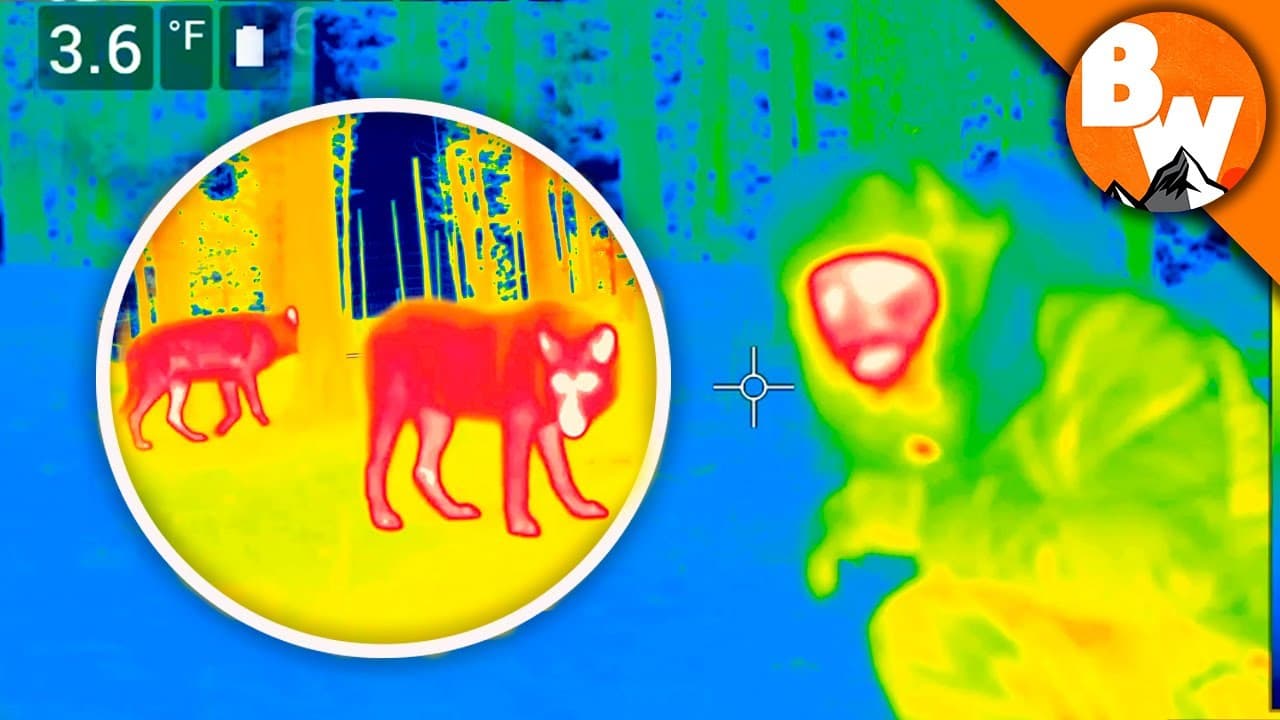
Thermal imaging allows you to see the heat signatures of animals in low-light conditions, revealing their movements and behaviors at night. Using FLIR cameras, Coyote Peterson showcases wolves' heat patterns while testing how well they can detect him in a Sasquatch costume, emphasizing the advantages of thermal technology for wildlife observation.
Transcript
(intense music) - Bravo Team six. Let's go dark. (intense music) Whoa, whoa, whoa, whoa. I think I got something here. What is that? Oh, is that, is that a bear? Oh its, it's bipedal. Oh my gosh, that's him, that's really him. No way, here he comes, here he comes, (grunts) Guys! (intense music) (tribal music) (birds chirp) No way. (grunts) - What's... Read More
Key Insights
- 😘 The FLIR camera system allows for unique filming opportunities, especially in low-light or nighttime conditions.
- 🎥 Wildlife behavior can be observed and captured more effectively using thermal imaging cameras.
- 🥵 Wolves' heat signatures reveal insights about their anatomy and thermal regulation.
- 🌃 Filming wildlife at night requires patience, preparation, and understanding of animal behavior.
- 🐺 Wildlife in captivity, like the wolves in this episode, still display natural instincts and behaviors.
- 😉 The FLIR camera system enhances filmmakers' ability to share unique encounters with wildlife.
- 🫵 Coyote Peterson's upcoming Wolf Conservation episode, filmed at the Colorado Wolf and Wildlife Center, creates anticipation among viewers.
Install to Summarize YouTube Videos and Get Transcripts
Explore YouTube Video Summarizer or Get YouTube Transcript Extractor
Questions & Answers
Q: How does the FLIR camera system work?
The FLIR camera system detects heat signatures emitted by objects and animals. Different colors represent varying levels of heat, from blues (low heat) to whites and reds (high heat).
Q: What can the FLIR camera system reveal about wildlife at night?
The FLIR camera system allows filmmakers to see animals' heat signatures, even in complete darkness. It provides a unique perspective on their behavior, movements, and interactions.
Q: How do wolves' heat signatures differ from their surroundings?
Wolves' heat signatures are significantly warmer than their surroundings. The fur gives off a reddish heat signature, while the face, legs, and paws emit the most heat.
Q: How do the wolves react to Coyote and the FLIR camera during the filming?
The wolves show curiosity and get closer to Coyote and the camera. Despite being cautious animals, they howl in response to Coyote's howling, creating an immersive and thrilling experience.
Summary & Key Takeaways
-
Coyote Peterson tests FLIR's thermal imaging cameras in Colorado, playing the role of Sasquatch and filming wildlife at night.
-
He explores the capabilities of the FLIR camera system in detecting heat signatures of objects and animals.
-
Coyote and the filming crew venture into an enclosure with wolves to capture their heat signatures and witness their behavior in the dark.
Read in Other Languages (beta)
Share This Summary 📚
Summarize YouTube Videos and Get Video Transcripts with 1-Click
Try YouTube Summary with ChatGPT & Claude or YouTube Transcript Generator
Explore More Summaries from Brave Wilderness 📚
Summarize YouTube Videos and Get Video Transcripts with 1-Click
Try YouTube Summary with ChatGPT & Claude or YouTube Transcript Generator