How Should You Spend Your 20s in the AI Era?
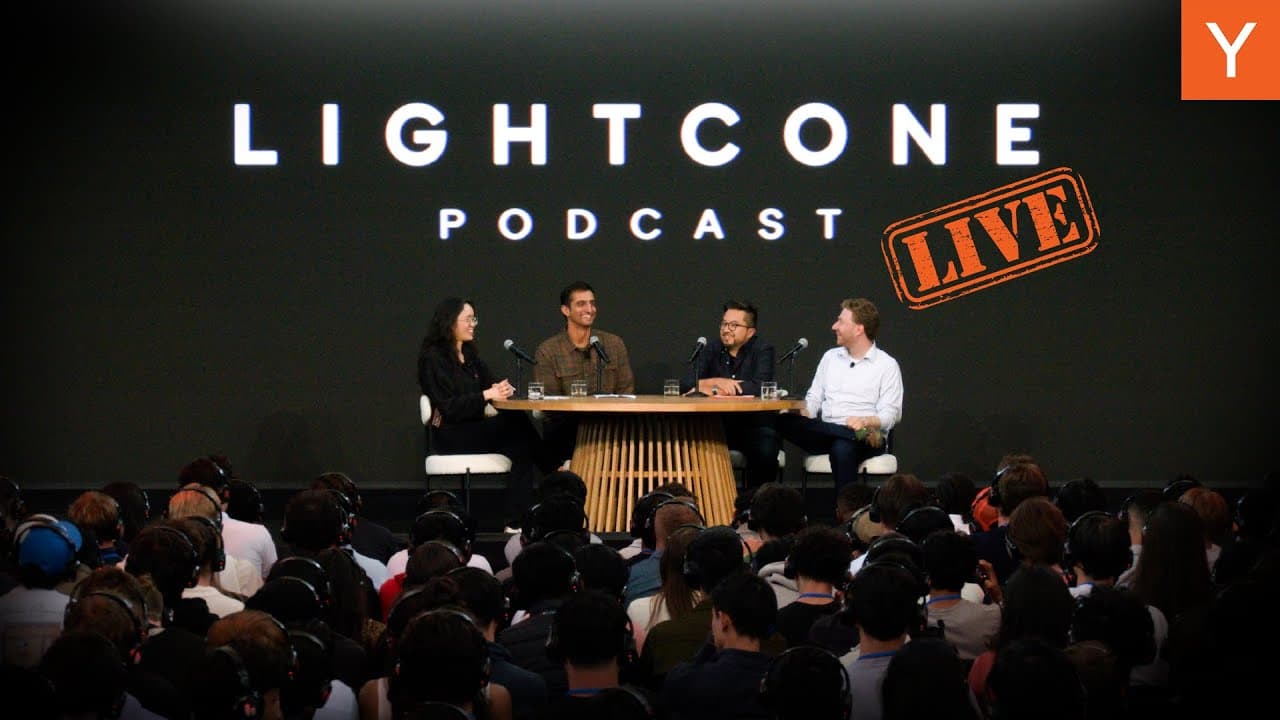
TL;DR
Spend your 20s in the AI era building real skills, domain expertise, agency, and independence instead of relying on credentials or a traditionally safe career path. The discussion cites 6.1% unemployment among computer science majors versus 3.0% for art history majors and argues that AI increasingly competes with people who merely follow instructions. Read on for practical guidance about careers, startups, education, and authentic value creation.
Transcript
Think about the area under the curve of utility that you could contribute to society and everything else is similacrim. It is not real. When you think about SBF, when you think about therronos, when you think about the things that truly disgrace us as people who create technology, when you peel back a little bit, you realize there's nothing. It was... Read More
Key Insights
- AI is disrupting traditional career paths, making previously stable jobs uncertain.
- Computer science graduates face higher unemployment rates compared to some humanities majors.
- Credentialism is losing value; real skills and domain expertise are becoming more critical.
- AI startups can achieve rapid growth, scaling from zero to eight-figure revenues swiftly.
- Fear-driven decisions are less effective than those motivated by excitement and passion.
- Social media can be a useful tool for startups if used to tell authentic stories.
- Entrepreneurship programs may not always provide practical startup insights.
- A shift from following instructions to demonstrating agency and independence is vital in the AI era.
Install to Summarize YouTube Videos and Get Transcripts
Explore YouTube Video Summarizer or Get YouTube Transcript Extractor
Questions & Answers
Q: How should you spend your 20s in the AI era?
Focus on building real skills, domain expertise, agency, and the ability to work independently. Traditional credentials and instruction-following may offer less protection as AI improves, so practical projects, innovation, and creating genuine value matter more.
Q: How is AI changing traditional career paths?
AI is creating uncertainty around jobs that once appeared stable, including entry-level programming roles. The speakers question whether a computer science degree and a conventional technology job will remain the safest career path over the next 10 years.
Q: Are computer science graduates struggling to find jobs?
The discussion cites a New York Fed statistic from February of that year showing 6.1% unemployment among computer science majors. It contrasts that figure with 3.0% for art history majors, challenging the assumption that computer science always provides greater job security.
Q: Why are credentials becoming less valuable in the AI era?
The speakers describe credentials as signals that someone can arrive on time, complete a program, and reliably follow instructions. Because AI is already strong at following instructions, people need to demonstrate capabilities beyond passing tests and completing assigned work.
Q: What should students get from college besides a credential?
Students should use college to develop agency, independence, practical skills, and domain expertise. The discussion argues that merely showing up, passing tests, and following instructions will not be enough in an AI-shaped workplace.
Q: Why might a traditionally safe technology job no longer be safe?
Companies are hiring fewer entry-level workers for some of the simpler tasks traditionally assigned to recent graduates. The speakers use a level 59 Microsoft role as an example of a job once viewed as a stable, prudent route and ask whether that assumption still holds.
Q: What opportunities does rapid AI startup growth create?
The existing discussion highlights AI startups that can move from zero to eight-figure revenue quickly, including with small teams. That creates opportunities for people who build authentic, valuable products and focus on real customer needs rather than credentials alone.
Q: What principle should guide technology builders in the AI era?
Builders should focus on the utility they contribute to society and create products with authentic value. The discussion rejects technology ventures built on illusion or deception, citing SBF and Theranos as examples of what disgraces the technology community.
Summary & Key Takeaways
-
AI's impact on traditional careers is profound, with computer science no longer a guaranteed path to success. Building real skills and domain expertise is essential in this new landscape. The rapid growth of AI startups offers opportunities, but requires a focus on innovation over credentials.
-
Credential maxing is becoming obsolete as AI transforms industries. Real success now hinges on skill development, domain expertise, and the ability to adapt. Small teams can achieve significant growth quickly, but must focus on building authentic and valuable products.
-
The AI era demands a shift from traditional education models to a focus on independent skill-building and innovation. Social media can aid startups in storytelling, but authenticity is key. Entrepreneurship programs may not always align with real-world startup needs.
Read in Other Languages (beta)
Share This Summary 📚
Summarize YouTube Videos and Get Video Transcripts with 1-Click
Try YouTube Summary with ChatGPT & Claude or YouTube Transcript Generator
Explore More Summaries from Y Combinator 📚





Summarize YouTube Videos and Get Video Transcripts with 1-Click
Try YouTube Summary with ChatGPT & Claude or YouTube Transcript Generator