What is a Black Hole? - Stephen Hawking's final theory
TL;DR
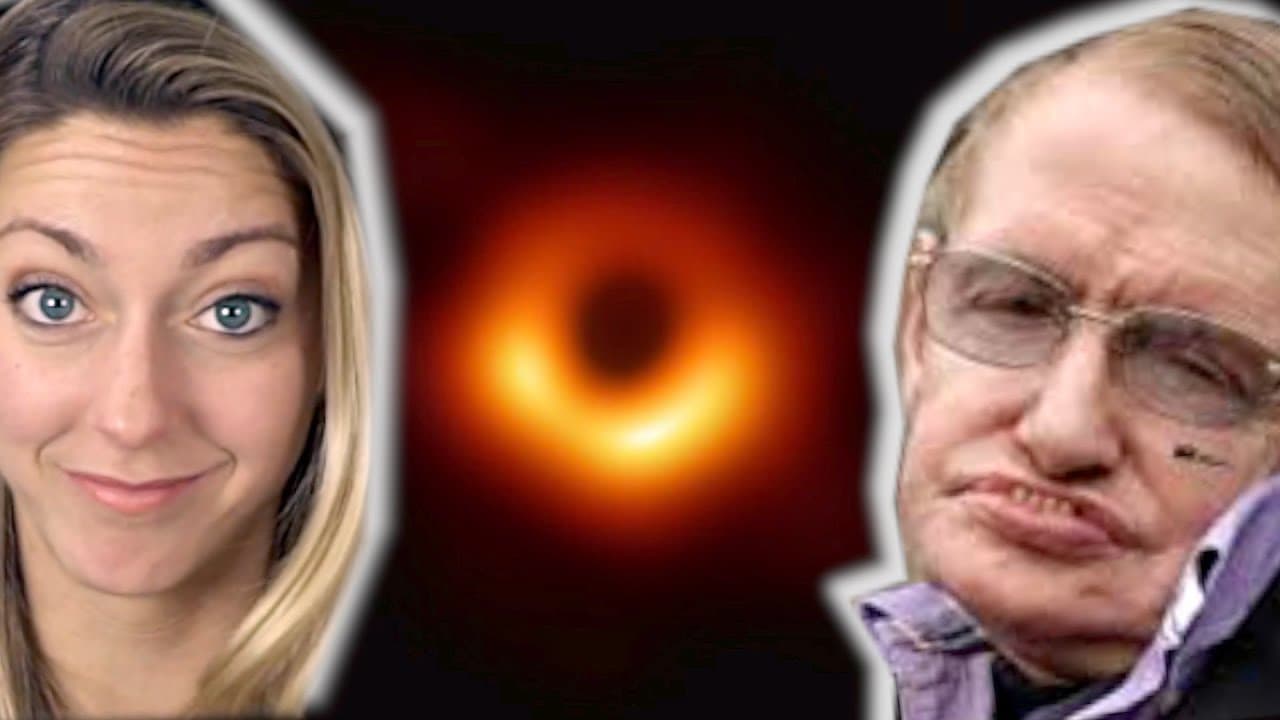
A black hole is an ultra-dense object that curves spacetime so strongly that nothing nearby, not even light, can escape. Stephen Hawking and his co-authors proposed in a 2018 paper that information from falling objects may remain as low-energy photons on the event horizon, forming metaphorical “soft hair.” Read on to understand how this idea addresses the black hole information paradox.
Transcript
We want to thank Google's science journal app for supporting PBS Digital Studios black holes they're weird In a recent paper about them seems to me to be the strangest one yet black holes might be covered in hair I'm Diana you're watching physics girl It's been a while since I made a YouTube video so I hope you're ready for me to get excited about ... Read More
Key Insights
- 🖤 Stephen Hawking's posthumous paper suggests that black holes might have soft hair, which preserves information instead of destroying it.
- 🖤 Soft hair particles are proposed to exist on the event horizon of black holes, preventing the violation of the fundamental laws of physics.
- 🥹 This theory challenges the long-held belief that black holes are completely devoid of characteristics or distinguishing features.
- 💁 The existence of soft hair could potentially provide a solution to the black hole information paradox by preserving information in the universe.
- 👨🔬 However, further research and observations are necessary to confirm the validity of this theory.
- 🖤 Black holes remain one of the most enigmatic and fascinating objects in the universe, with much still to be understood.
- 🖤 The study of black holes and the search for answers to their mysteries continue to honor the legacy of Stephen Hawking.
Install to Summarize YouTube Videos and Get Transcripts
Explore YouTube Video Summarizer or Get YouTube Transcript Extractor
Questions & Answers
Q: What is a black hole?
A black hole is an ultra-dense object whose gravity prevents anything that gets too close from escaping. Its effect on spacetime is so extreme that even light cannot get out.
Q: Why can’t anything escape from a black hole?
Einstein’s theory describes gravity as the curvature of spacetime rather than simply a pulling force. Around an extremely dense black hole, paths through spacetime curve so severely that they never lead back out.
Q: What is Stephen Hawking’s final theory about black holes?
A paper by Stephen Hawking and his co-authors proposes that black holes may be covered in metaphorical “soft hair.” Information from objects falling into a black hole could persist as very low-energy particles on its event horizon instead of being destroyed.
Q: What is the black hole information paradox?
Quantum mechanics holds that information can change form but cannot be destroyed. Black holes appear to erase the distinctive information of objects that fall into them, creating a contradiction known as the black hole information paradox.
Q: What is soft hair on a black hole?
Soft hair is a metaphor for low-energy particles that may remain when something falls into a black hole. The theory places these particles on the black hole’s boundary, called the event horizon.
Q: How could soft hair address the black hole information paradox?
The proposal says that falling objects deposit information as low-energy photons on the event horizon. If that information remains in the universe, the black hole does not violate the quantum-mechanical principle that information cannot be destroyed.
Q: Why did Stephen Hawking call the remaining information “hair”?
Hair represents the distinguishing features that make objects unique. Black holes otherwise have very few distinguishing characteristics, including electric charge and angular momentum, so they are described metaphorically as nearly bald.
Q: What is a black hole’s event horizon?
The event horizon is the boundary of a black hole. Hawking and his co-authors proposed that low-energy photons carrying information from falling objects could remain there as a fuzzy edge of soft hair.
Summary & Key Takeaways
-
Stephen Hawking's latest paper proposes that black holes have "soft hair," which is the information left behind when objects fall into a black hole.
-
This theory challenges the idea that black holes destroy information, suggesting that it instead remains as low-energy particles on the event horizon.
-
The existence of soft hair on black holes could help solve the black hole information paradox, but more research is needed to confirm this theory.
Read in Other Languages (beta)
Share This Summary 📚
Summarize YouTube Videos and Get Video Transcripts with 1-Click
Try YouTube Summary with ChatGPT & Claude or YouTube Transcript Generator
Explore More Summaries from Physics Girl 📚



Summarize YouTube Videos and Get Video Transcripts with 1-Click
Try YouTube Summary with ChatGPT & Claude or YouTube Transcript Generator