Why Does Ferrofluid Stretch When Dropped on a Magnet? | Slow Motion Science
TL;DR
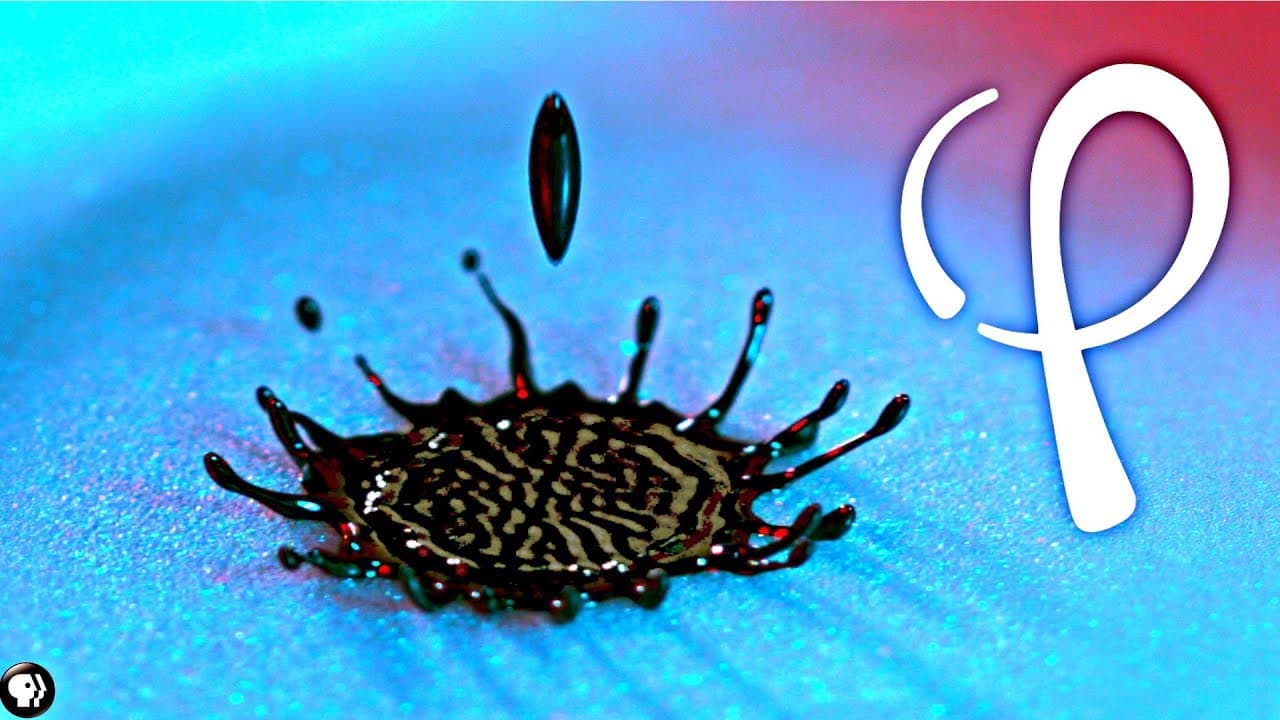
Ferrofluid stretches when dropped on a magnet because the bottom of the droplet, being closer, is pulled and accelerated more strongly than the top. High-speed footage shows the droplet elongating like an American football or a grain of rice before striking a plate above a neodymium magnet. The same kind of differential force helps explain Earth’s tides and spaghettification near black holes, so read on to see how these phenomena connect.
Transcript
[MUSIC PLAYING] DIANNA COWERN: Thanks to Curiosity Stream for supporting PBS Digital Studios. Hey, yo. It's Dianna. And you're watching "Physics Girl," and-- [ROOSTER CROWING] --I'm back home on Kawaii at my childhood home, visiting my parents for the holidays-- which is why I'm filming in this bush-- and these guys are everywhere. Anyways, you're ... Read More
Key Insights
- 💋 Ferrofluid is an interesting substance with unique properties, such as sticking to magnets and forming spikes in a magnetic field.
- 💦 Elongation of ferrofluid droplets is caused by the differential pulling force between the top and bottom of the droplet.
- 😘 This phenomenon can be compared to tides on Earth, where differential gravitational forces create high and low tides.
- 🖤 Tidal forces near black holes are strong enough to cause spaghettification, similar to the elongation of ferrofluid droplets.
- 💦 The study of fluid dynamics, including droplets and splashing dynamics, involves significant research and has various practical applications.
- 😒 Ferrofluid has potential uses in industries, such as medicine, but these applications are still under development.
- 🐕🦺 The video also includes announcements about subtitle submissions, as well as promotions for other content creators and Curiosity Stream, a streaming service offering documentaries and nonfiction titles.
Install to Summarize YouTube Videos and Get Transcripts
Explore YouTube Video Summarizer or Get YouTube Transcript Extractor
Questions & Answers
Q: Why does ferrofluid stretch when dropped on a magnet?
The bottom of the ferrofluid droplet is closer to the magnet, so it experiences a stronger magnetic attraction than the top. The bottom accelerates faster, the top cannot keep up, and the entire droplet stretches.
Q: What is ferrofluid?
Ferrofluid is an oily substance that sticks very strongly to magnets. It also forms striking spikes in the presence of a magnetic field.
Q: How was the slow-motion ferrofluid experiment set up?
Ferrofluid was dropped onto a styrofoam plate and recorded with a Phantom high-speed camera. Some drops had a strong neodymium magnet beneath the plate, while others did not.
Q: What shape does the ferrofluid droplet form as it falls toward the magnet?
The falling droplet becomes elongated rather than compressed. Its shape is compared to an American football or a grain of rice.
Q: Does a magnet make ferrofluid fall faster than freefall?
The transcript says the magnetic attraction makes the ferrofluid move faster than freefall. It would therefore pass a normal water droplet, although that direct comparison was not tested in the experiment.
Q: How does the ferrofluid experiment help explain Earth’s tides?
Like the magnet’s uneven pull across a ferrofluid droplet, the Moon’s gravity pulls differently on different regions of Earth. The oceans closer to the Moon are pulled more strongly, and the resulting elongation places high tides on the sides of Earth.
Q: What are tidal forces?
Tidal forces are gravitational forces whose strength differs across a body and causes differential pulling. The ferrofluid’s magnetic stretching demonstrates a similar pattern because the force is stronger at the droplet’s bottom than at its top.
Q: How is the ferrofluid demonstration related to spaghettification near a black hole?
Near a black hole, tidal forces can differ so strongly between a person’s head and feet that they pull the person apart. This stretching is called spaghettification, and the elongated ferrofluid droplet provides a small-scale visual analogy.
Summary & Key Takeaways
-
Ferrofluid is an oily substance that forms spikes when placed near a magnetic field.
-
When dropped onto a magnet, ferrofluid droplets elongate due to the differential pulling force.
-
This phenomenon is similar to the tidal forces between Earth and the Moon, as well as the spaghettification that occurs near a black hole.
Read in Other Languages (beta)
Share This Summary 📚
Summarize YouTube Videos and Get Video Transcripts with 1-Click
Try YouTube Summary with ChatGPT & Claude or YouTube Transcript Generator
Explore More Summaries from Physics Girl 📚





Summarize YouTube Videos and Get Video Transcripts with 1-Click
Try YouTube Summary with ChatGPT & Claude or YouTube Transcript Generator