What Secrets Does the Eastern Sahara Hold About Ancient Civilizations?

TL;DR
The Eastern Sahara harbors significant archaeological treasures, including ancient settlements and rock art, uncovered by a German research team over 40 years. Their work highlights the area's historical transformation from green savannah to desert due to climate change and proposes the NAD plateau for World Heritage status to protect its invaluable contributions to understanding human history.
Transcript
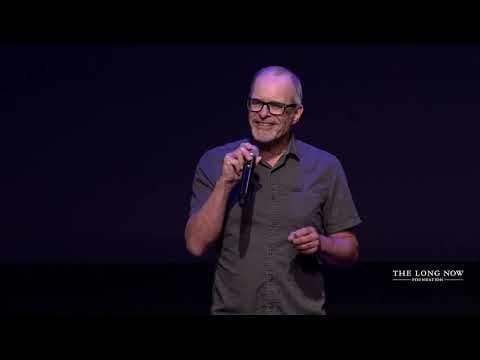
good evening I'm Alexander Rose the executive director at the long now foundation as many of you know we start these talks with a long short a short film that in some way exemplifies long-term thinking and often we we cheat and use things like time lapses tonight's is a little different but before I introduce that I just wanted to mention there is ... Read More
Key Insights
- 🥰 The German scientific team has conducted over 40 years of research in the Eastern Sahara, uncovering ancient settlements and rock art.
- 😤 The team has proposed the NAD plateau as a World Heritage Site, recognizing its importance in understanding human history and climate change.
- 💚 The Eastern Sahara was once a green savannah but gradually transformed into a desert over thousands of years due to climate change.
- 🧑🎓 Finding students and researchers willing to commit to fieldwork in extreme desert conditions is challenging.
Install to Summarize YouTube Videos and Get Transcripts
Explore YouTube Video Summarizer or Get YouTube Transcript Extractor
Questions & Answers
Q: What are some challenges faced by the German scientific team in their research in the Eastern Sahara?
The team faces challenges such as extreme temperatures, logistical difficulties, lack of water, and the need to navigate through remote and unexplored areas.
Q: Why has the team focused their research in the Eastern Sahara?
The Eastern Sahara is a region that has been relatively unexplored and offers rich archaeological and climatic data. The team believes that understanding the history and climate of this region is important for understanding human civilization and environmental changes.
Q: What are some key discoveries made by the German scientific team in their research?
The team has discovered ancient rock art, evidence of ancient settlements, and used geological and archaeological data to understand climate change patterns in the region. They have also proposed several sites as World Heritage Sites, recognizing their historical and cultural value.
Q: How has the German scientific team faced challenges in finding students and researchers to continue their work?
The extreme conditions and technical expertise required for research in the Sahara make it difficult to find students and researchers willing to commit to long periods of fieldwork. Many prefer to focus on lab-based or remote sensing research.
Summary & Key Takeaways
-
A German scientific team has been conducting field research in the Eastern Sahara for over 40 years.
-
The team has uncovered ancient settlements, rock art, and evidence of climate change in the region.
-
They have proposed the NAD plateau as a World Heritage Site and have seen success in obtaining the designation for other sites in the Sahara.
Read in Other Languages (beta)
Share This Summary 📚
Summarize YouTube Videos and Get Video Transcripts with 1-Click
Try YouTube Summary with ChatGPT & Claude or YouTube Transcript Generator
Explore More Summaries from Long Now Seminars 📚





Summarize YouTube Videos and Get Video Transcripts with 1-Click
Try YouTube Summary with ChatGPT & Claude or YouTube Transcript Generator