How does Treasury lead economic isolation on Iran?
TL;DR
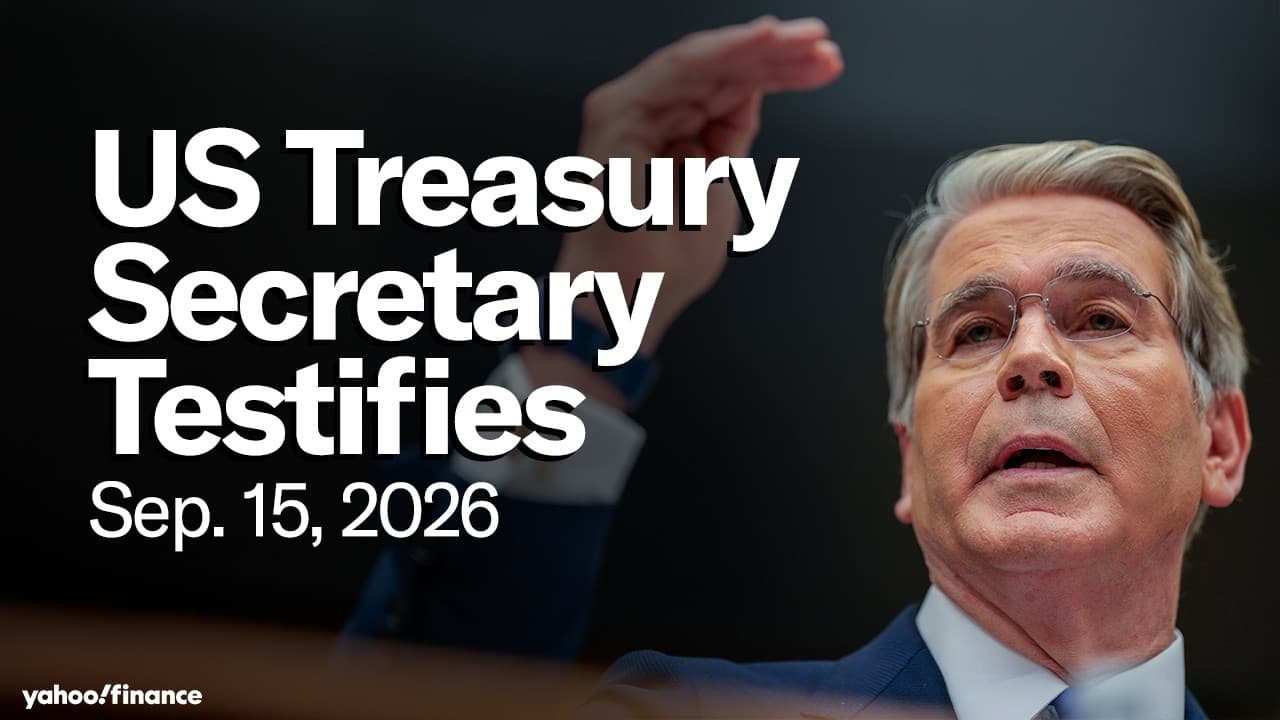
Treasury Secretary Scott Bessent outlines a coordinated effort to financially isolate Iran while supporting domestic growth. He cites tax cuts, expanding manufacturing, and the campaign against Iran as key pillars, discusses updating reporting thresholds, and addresses concerns about inflation, gas prices, and the impact on American households.
Transcript
directly to millions of low and middle inome Americans. Over 64 million tax returns claimed at least one of President Trump's signature new tax cuts. No tax in tips, no tax in overtime, no tax on American car loan interest, and an enhanced deduction for low and middle inome seniors. Through tax day, working families received over 325 billion in ref... Read More
Key Insights
- Manufacturing is expanding with a multi month growth streak. The key to policy success is aligning domestic growth with sanctions on Iran.
- The administration advocates aligning financial reporting thresholds with anti illicit finance goals, balancing small bank burden with safety. These thresholds are being considered for updates.
- Operation Economic Outcast is a named effort to close loopholes and end workarounds used to skirt sanctions, signaling aggressive enforcement against Iran.
- There is a sustained effort to sanction banks connected to Iran, including actions in Dubai and with Chinese financial systems to disrupt illicit flows.
- China and UAE diplomacy is a recurring theme, with private discussions and sanctions as tools to sever financial ties with Iran.
- The IMF and World Bank discussions around China are framed as holding China accountable for imbalances that threaten global financial stability.
- The testimony links high energy and commodity prices to broader policy actions, warning about inflationary pressures and the impact on households.
- The narrative presents a broader strategic view: domestic tax relief and manufacturing growth support national strength while pressuring adversaries economically.
Install to Summarize YouTube Videos and Get Transcripts
Explore YouTube Video Summarizer or Get YouTube Transcript Extractor
Questions & Answers
Q: What is Operation Economic Outcast and how does it relate to Iran sanctions?
Operation Economic Outcast is described as a campaign aimed at bringing the game of hide and seek with Iran to a close by closing workarounds and ensuring that sanctions are effective. It relates to Iran sanctions by targeting illicit financial flows, pressuring banks, and disrupting networks that could funnel money to the regime. The speaker implies coordinated actions across regulatory and financial authorities to cut off Iran from international finance and to prevent evasion of existing sanctions.
Q: Why is updating suspicious activity reporting thresholds important according to the testimony?
Updating suspicious activity reporting thresholds is portrayed as essential to keep pace with evolving financial networks and to improve the ability of law enforcement to detect illicit activity without imposing excessive burdens on small institutions. The goal is to strike a balance between safety and soundness of the financial system, and to ensure that financial institutions have the right incentives to monitor customers and flag suspicious behavior.
Q: How does the testimony describe the relationship between domestic economic growth and sanctions on Iran?
The testimony links domestic economic growth to sanctions on Iran by stating that a strong economy reinforces the ability to apply pressure internationally. Tax cuts, manufacturing expansion, and a robust domestic economy are framed as enabling the United States to wage economic isolation against Iran from a position of strength, implying that growth supports greater geopolitical leverage.
Q: What concerns are raised about inflation and energy prices in the discussion?
The discussion acknowledges concerns about inflation and energy prices as part of the broader economic policy debate. It notes that gasoline prices and the 10-year and 30-year yield levels have implications for consumer costs, mortgages, and overall affordability, with the implication that policy choices aim to manage these effects while pursuing sanctions and growth objectives.
Q: What evidence is presented about the 10-year and 30-year Treasury yields?
The testimony notes that the 10-year Treasury yield reached 5 percent and that the 30-year yield was at levels not seen since 2007, highlighting financial market reactions as a metric of policy impact. This framing is used to discuss the costs and dynamics of financing, borrowing, and the potential effects on household finance.
Q: How are China and UAE discussed in relation to Iran policy?
China and the UAE are discussed as interlocutors in efforts to cut off Iran from financial networks. The testimony mentions private discussions with the UAE financial system and sanctions on a Dubai bank that had transferred funds to Iran, as well as ongoing conversations with China regarding their role in international finance and how to hold them accountable in the context of Iran policy.
Q: What is the speaker’s view on the IMF and China’s role in global financial stability?
The speaker believes the IMF is engaging in advanced discussions with China about imbalances and potential threats to global financial stability. He underscores the need to hold China accountable and to scrutinize its allocation in the IMF and its broader economic practices, framing these discussions as part of a reinforced global financial governance approach.
Q: How does the testimony frame the relationship between tax relief and the broader strategy against Iran?
Tax relief is framed as a component of domestic resilience that supports growth, productivity, and a stronger economic position, which in turn reinforces the capacity to enforce sanctions and pursue a strategic approach against Iran. The narrative connects internal economic policy with external security goals, presenting growth as a means to sustain international influence and economic isolation of adversaries.
Summary & Key Takeaways
-
The speaker describes a dual strategy that strengthens domestic manufacturing and enforces international sanctions on Iran to limit their financial networks. The approach is framed as a coherent economic policy aimed at restoring American strength and reducing adversary leverage without compromising safety and soundness. The emphasis is on execution and accountability.
-
The testimony highlights ongoing efforts to update suspicious activity reporting thresholds and to balance regulatory burden on small banks with law enforcement needs in illicit finance. It also foregrounds international diplomacy with UAE and China to enforce sanctions and disrupt Iran related funding.
-
A central theme is the interplay between macroeconomic policy, geopolitical risk, and consumer impact, including how tax relief and growth in manufacturing influence inflation and household finances, while government actions signal a sustained commitment to economic isolation of Iran and strategic countermeasures across global finance.
Read in Other Languages (beta)
Share This Summary 📚
Summarize YouTube Videos and Get Video Transcripts with 1-Click
Try YouTube Summary with ChatGPT & Claude or YouTube Transcript Generator
Explore More Summaries from Yahoo Finance 📚


Summarize YouTube Videos and Get Video Transcripts with 1-Click
Try YouTube Summary with ChatGPT & Claude or YouTube Transcript Generator