How to Extract Niacin from Pills for Chemistry Use
TL;DR
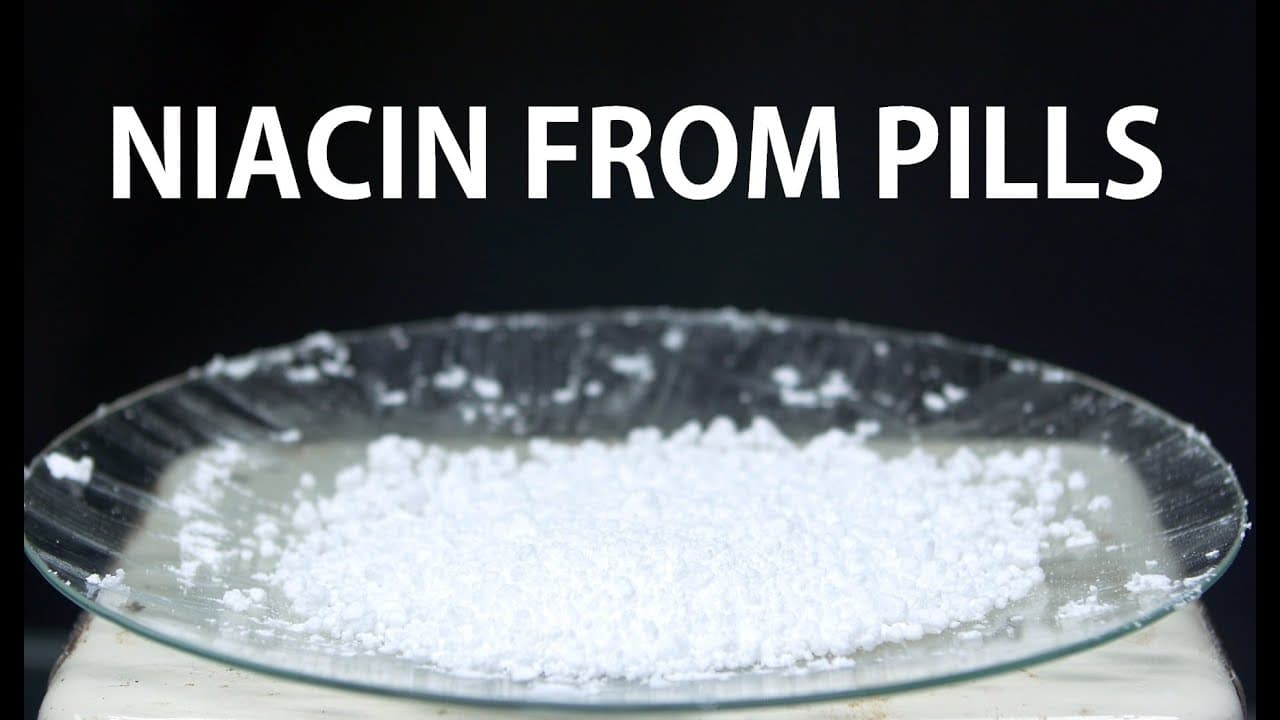
You can extract niacin from pills using a pseudo acid-base extraction process. This involves powderizing the pills, reacting the niacin with sodium hydroxide, acidifying the solution, and filtering the product. The yield typically ranges from 50% to 70%, and improvements can be made by using precise pH measurements or performing liquid-liquid extraction.
Transcript
so today we're going to be extracting some niacin from niacin pills niacin is also known as vitamin b3 and the reason that we want it is because we can carry out a reaction known as a decarboxylation and convert it to something called pyridine pyridine is a useful solvent and catalyst in organic chemistry and i'm going to be using it to synthesize ... Read More
Key Insights
- ⚾ Niacin, also known as vitamin B3, can be extracted from niacin pills using a pseudo acid-base extraction process.
- 💁 The extraction process involves powderizing the pills, creating a sodium hydroxide solution, reacting the niacin with sodium hydroxide to form a soluble salt, acidifying the solution, filtering, and drying the extracted niacin.
- 🫗 The yield of niacin typically ranges between 50 and 70%, and potential improvements include using more accurate pH measurement and performing a liquid-liquid extraction.
- 🚱 The non-Newtonian fluid properties of the extracted niacin made it challenging to fully dry using vacuum filtration.
Install to Summarize YouTube Videos and Get Transcripts
Explore YouTube Video Summarizer or Get YouTube Transcript Extractor
Questions & Answers
Q: What is niacin and why is it useful in organic chemistry?
Niacin, also known as vitamin B3, can be used as a solvent and catalyst in various organic chemistry reactions. It is particularly useful in synthesizing certain compounds.
Q: Why did the extraction process involve a pseudo acid-base extraction instead of a true acid-base extraction?
The extraction process aimed to be more environmentally friendly by avoiding the use of organic solvents. A pseudo acid-base extraction, using sodium hydroxide and hydrochloric acid, was used to react with and extract the niacin from the pills.
Q: What challenges were faced during the extraction process?
The niacin pills had insoluble fillers, making it necessary to filter off the undissolved material. Additionally, the extracted niacin exhibited non-Newtonian fluid properties, making it difficult to fully dry using vacuum filtration.
Q: How could the yield of niacin be improved in future extractions?
The yield of niacin could be increased by using more accurate pH measurement techniques and performing a proper liquid-liquid extraction. These methods would help ensure complete extraction of the niacin and minimize any losses.
Summary & Key Takeaways
-
Niacin, also known as vitamin B3, can be extracted from niacin pills for use as a solvent and catalyst in organic chemistry.
-
The extraction process involves powderizing the pills, creating a sodium hydroxide solution, reacting the niacin with sodium hydroxide to form a soluble salt, acidifying the solution, filtering, and drying the extracted niacin.
-
The yield of niacin varies between 50 and 70%, and the process could be improved by using more accurate pH measurement and performing a proper liquid-liquid extraction.
Read in Other Languages (beta)
Share This Summary 📚
Summarize YouTube Videos and Get Video Transcripts with 1-Click
Try YouTube Summary with ChatGPT & Claude or YouTube Transcript Generator
Explore More Summaries from NileRed 📚

Summarize YouTube Videos and Get Video Transcripts with 1-Click
Try YouTube Summary with ChatGPT & Claude or YouTube Transcript Generator