How to Escape Stuckness with a 3 Step Decision Process
TL;DR
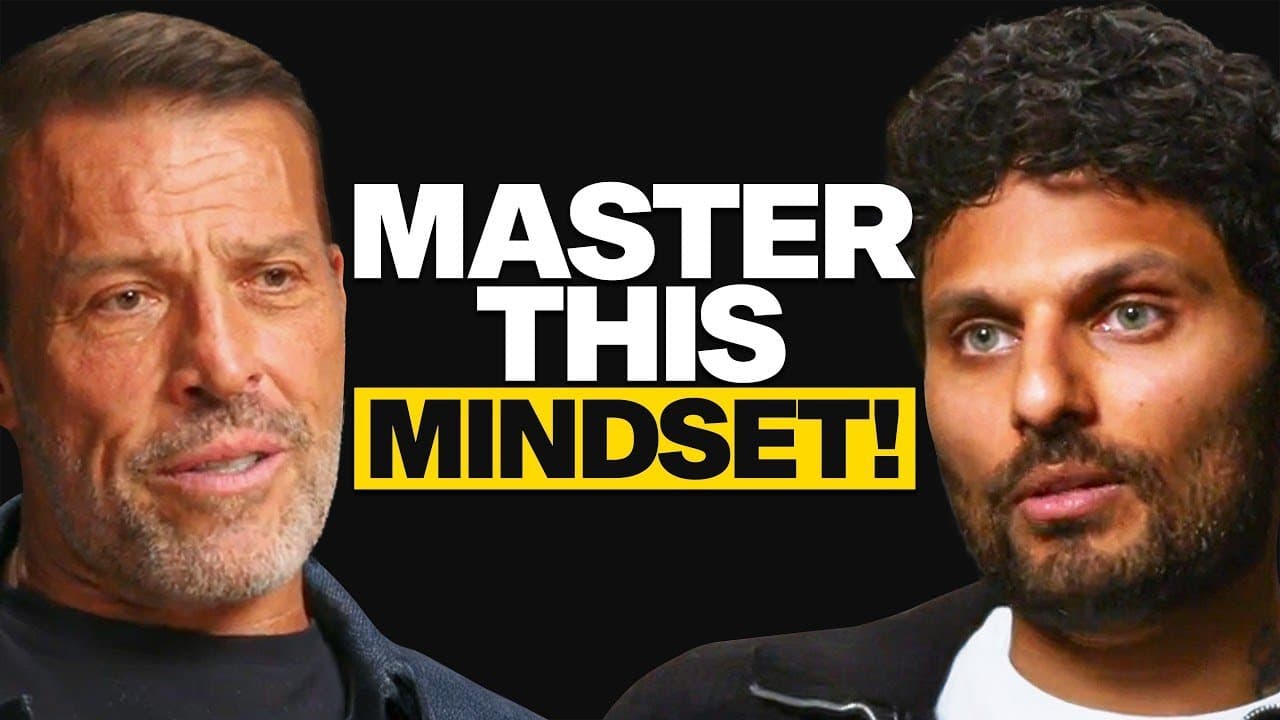
The fastest way to change your life is to start making real decisions, not waiting for perfect information. Practice small decisions to build decision making momentum, then tackle bigger ones. Fear and the need for certainty often hold you back; courage comes from taking action and adjusting as you go.
Transcript
[music] [music] [music] Tony, I want to start with, you know, with you there's so many things we can talk about and you've been doing this work for decades. I feel like your ability to learn what's at the root of things is is second to none. It's so powerful for you to know. And I feel today since even when you started, people are still stuck. The ... Read More
Key Insights
- Decisions are the primary determinant of life quality, not external conditions.
- Decision making is a muscle that strengthens with practice and small wins.
- Fear of making wrong choices is the main obstacle to progress.
- Waiting for absolute certainty paralyzes progress and opportunities.
- The most effective leaders act by framing choices and committing to action.
- Taking charge and making decisions reduces stress and increases control over outcomes.
- Discomfort is a necessary catalyst for growth and becoming who you are meant to be.
- Meaning in life grows from ongoing growth and contribution, not mere achievement.
Install to Summarize YouTube Videos and Get Transcripts
Explore YouTube Video Summarizer or Get YouTube Transcript Extractor
Questions & Answers
Q: What is the first step to stop feeling stuck according to the conversation?
The first step is to start making real decisions. The speakers emphasize that fear often blocks this process, so moving past the hesitation to decide — even in small ways — creates momentum. By choosing, you regain agency and begin to steer your life rather than feeling controlled by circumstances. The emphasis is on action over rumination.
Q: How does fear affect decision making in the context of this video?
Fear is described as the primary blocker to decision making, especially fear of making the wrong choice or facing consequences. The discussion argues that fear keeps people stuck by prompting them to delay, seek excessive information, or wait for certainty. Overcoming fear requires accepting imperfect decisions and learning from outcomes rather than avoiding action.
Q: What role does information play in decision making here?
Information is important but not a prerequisite for decision making. The speakers note that waiting for complete information leads to missed opportunities, because certainty rarely exists. The key is to decide with the information available and adjust later if needed, recognizing that perfect knowledge is often unattainable and unnecessary for progress.
Q: What mindset shift helps you change your life, according to Tony Robbins and the host?
The mindset shift is recognizing that you are a creator and that your decisions shape your life. By shifting from a passive to an active stance, you move from feeling at the mercy of events to actively shaping outcomes. This involves embracing uncomfortable decisions as a path to growth and breaking the habit of avoidance.
Q: How do small decisions contribute to bigger changes?
Small decisions build decision making momentum and strengthen the decision making muscle. The example used is that making frequent, low-stakes choices creates the capacity to handle larger, more meaningful decisions. Over time, this results in increased confidence, reduced overwhelm, and a greater sense of control over your life.
Q: What does the story about General Schwarzkopf illustrate?
The story illustrates that decisive action matters even when information is incomplete. A leader can choose a direction, implement it, and adjust if needed, rather than waiting for every detail to be resolved. The core message is that taking action under uncertainty is often more effective than trying to achieve perfect clarity.
Q: What is Rule 13 and Rule 14 as mentioned in the discussion, and why are they important?
Rule 13 is to take charge when placed in command, emphasizing responsibility and proactive leadership. Rule 14 is to do what is right, underscoring ethical decision making. Together, they advocate taking action and maintaining integrity, especially when information is imperfect or the stakes are high.
Q: How should one handle discomfort and meaning in life according to the discussion?
Discomfort is framed as a necessary part of growth, not something to avoid. Meaning comes from growth and giving rather than solely pursuing comfort or achievement. The speakers argue for balancing achievement with fulfillment, using discomfort as a catalyst to become who you are meant to be and to contribute meaningfully.
Q: What is the overall recommended approach to changing one’s life in the near term?
Start with small, concrete decisions to build momentum, then escalate to more significant choices. Accept that uncertainty exists, embrace discomfort as a growth mechanism, and remain committed to acting despite fear. Maintain a mindset of self-trust and continuous adjustment as you move toward greater fulfillment and impact.
Summary & Key Takeaways
-
A practical framework is introduced to move from feeling stuck to making decisive moves, emphasizing the power of small decisions that compound into momentum. The host and Tony Robbins stress that fear and perfectionism are major barriers, and decisions unlock agency over your life. They also highlight the value of faith and willingness to adjust when outcomes reveal new information.
-
The conversation reframes discomfort as a driver of growth, arguing that meaning comes from growth and giving, not just achievement. It discusses balancing achievement with fulfillment and the role of commitment in building self trust, while warning against chasing comfort at the expense of progress.
-
The dialogue provides actionable examples, such as prioritizing decision making over information gathering and using simple rules like “when in doubt, decide” to overcome paralysis. It invites listeners to examine their own life patterns and replace indecision with consistent action.
Read in Other Languages (beta)
Share This Summary 📚
Summarize YouTube Videos and Get Video Transcripts with 1-Click
Try YouTube Summary with ChatGPT & Claude or YouTube Transcript Generator
Explore More Summaries from Jay Shetty Podcast 📚



Summarize YouTube Videos and Get Video Transcripts with 1-Click
Try YouTube Summary with ChatGPT & Claude or YouTube Transcript Generator