How Luxury Car Brands Influence Buying Decisions
TL;DR
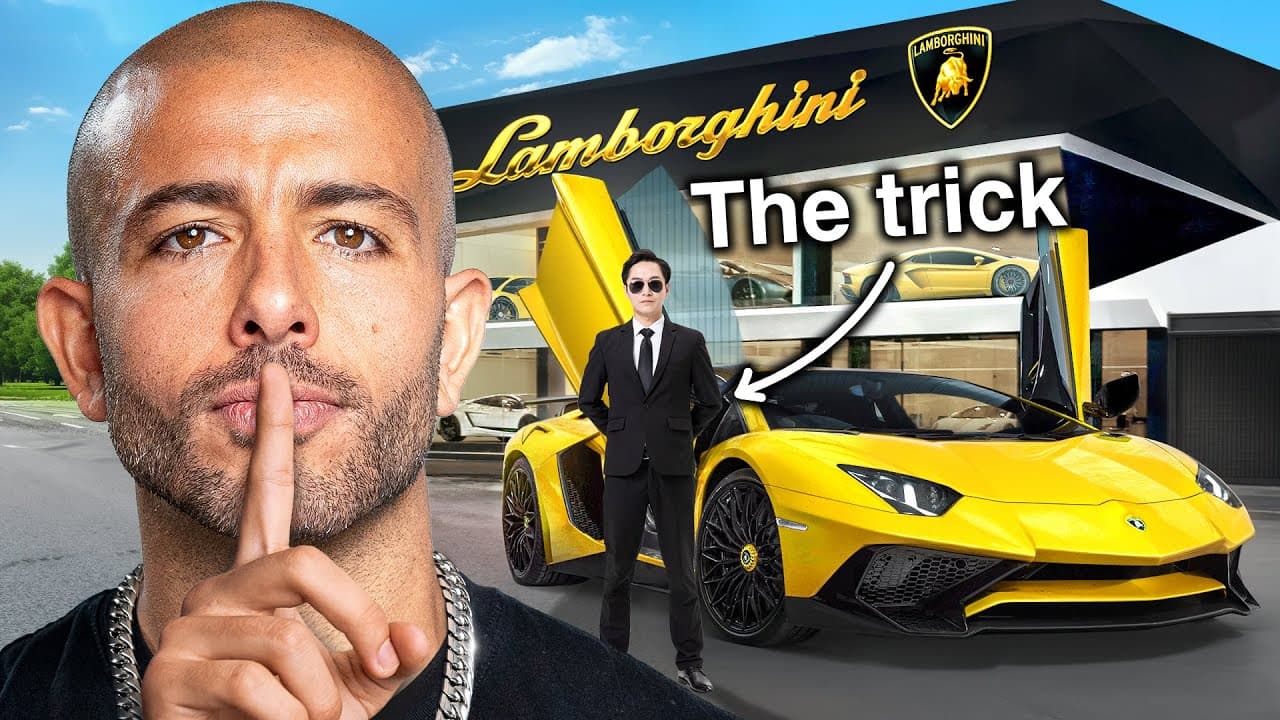
Luxury car dealerships can make high prices feel justified through exclusivity, craftsmanship stories, strategic upgrades, product ladders, and selective attention. The investigation argues that Rolls-Royce foregrounds price, McLaren creates social distance, Bentley builds emotional value through storytelling, and Porsche guides buyers toward increasingly expensive configurations.
Transcript
this is the brand new Rolls-Royce Spectre and costs over $530,000 and today I'm in Beverly Hills going undercover to expose how these luxury car brands brainwash you to buy using dark psychological principles first up is Rolls-Royce I'm heading inside to see what dark tactics that they use to get me to buy and here is our first suspect what's this ... Read More
Key Insights
- Rolls-Royce uses price as part of its value story, openly presenting the vehicle's cost and then explaining the craftsmanship, personalization, comfort, and optional features that supposedly justify it. The presenter calls this approach a velvet-rope pricing illusion.
- Bespoke customization is a major part of the Rolls-Royce sales experience, with buyers invited to select materials, colors, finishes, and interior details. These choices make the vehicle feel personally significant while creating multiple opportunities to increase the final purchase price.
- McLaren's sales environment is portrayed as distant and selective, because the presenter initially receives little attention and encounters a laid-back salesperson. He interprets this behavior as a status challenge that can motivate customers to demonstrate that they deserve inclusion.
- Status signaling changes the McLaren interaction, as the salesperson becomes more attentive after the presenter mentions owning a Lamborghini. The episode suggests that references to existing luxury possessions can establish credibility and influence how a prospective customer is treated inside an exclusive dealership.
- Bentley's central sales message is craftsmanship, supported by detailed accounts of hand stitching, leather preparation, durable engines, and skills passed through generations. These stories give individual components emotional meaning and help distinguish the brand from a vehicle presented only through specifications.
- Storytelling can turn a seller into a trusted brand representative, because vivid accounts of makers, materials, and traditions help customers connect emotionally with a product. The presenter says Bentley's story was persuasive enough to make him consider purchasing the car.
- Porsche uses a price ladder by introducing several models and then recommending progressively more expensive choices for the buyer's needs. The presenter asks about an everyday car, but the discussion moves toward higher-tier variants, customization, and additional spending.
- Scarcity strengthens Porsche's buying process through references to high demand, limited allocations, customization restrictions, and lengthy delivery expectations. The presenter describes the experience as ritualized, suggesting that waiting and restricted access can make purchasing feel more exclusive and consequential.
Install to Summarize YouTube Videos and Get Transcripts
Explore YouTube Video Summarizer or Get YouTube Transcript Extractor
Questions & Answers
Q: How do luxury car brands make high prices feel justified?
Luxury car brands can present price as evidence of exclusivity and then build a supporting story around craftsmanship, personalization, comfort, performance, and scarcity. At Rolls-Royce, the salesperson openly discusses the expensive vehicle and its optional features instead of hiding the cost. The presenter argues that this sequence encourages customers to interpret expense as a signal of exceptional quality.
Q: What is velvet-rope pricing in luxury car sales?
Velvet-rope pricing is the presenter's term for emphasizing a high price rather than apologizing for it or delaying its disclosure. Rolls-Royce states the cost early and then explains bespoke materials, special finishes, craftsmanship, and comfort. The strategy is presented as creating an association between expense, exclusivity, and quality, which can make the customer want access to the product.
Q: How does customization increase luxury car spending?
Customization increases spending by turning optional details into part of a personal design process. At Rolls-Royce, the buyer is shown materials, colors, finishes, illuminated elements, audio features, and other upgrades. At Porsche, paint and interior choices add further expense. Because each choice shapes a distinctive vehicle, customers may view added costs as expressions of identity rather than ordinary upgrades.
Q: Why might a luxury salesperson act distant toward a customer?
The presenter argues that distance can create a social challenge for customers who want recognition and inclusion. At McLaren, he initially receives little attention, has to approach the salesperson, and is left waiting during the interaction. He interprets this detached behavior as a tactic that may prompt status-conscious shoppers to prove themselves by demonstrating wealth or making a purchase.
Q: How does status signaling affect a luxury dealership interaction?
Status signaling can establish that a shopper belongs within the dealership's target group. During the McLaren visit, the presenter's mention of owning a Lamborghini is followed by increased attention from the salesperson. Based on that interaction, the presenter concludes that visible or stated luxury ownership can influence how seriously a potential buyer is treated and how much assistance they receive.
Q: How does Bentley use storytelling to sell craftsmanship?
Bentley connects physical details to stories about skilled people, traditional methods, and generations of experience. The salesperson discusses hand-stitched leather, the preparation of cowhide, the steering wheel, engine durability, and knowledge passed through families. These narratives make individual components feel meaningful, supporting the idea that the buyer is purchasing human craft and heritage rather than only transportation.
Q: What is a price ladder in luxury car sales?
A price ladder is a sequence of product options that begins with a lower-cost entry point and moves the buyer toward more expensive variants. During the Porsche visit, the presenter asks to see the cheapest model in the lineup, but the recommendations progress through higher-tier versions and eventually include costly customization. The process gradually resets expectations about an acceptable budget.
Q: How do scarcity and waiting periods influence luxury buyers?
Scarcity and waiting periods can make access feel selective and increase the perceived significance of a purchase. Porsche sales staff discuss strong demand, limited allocation spots, customization constraints, and a long ordering and delivery process. The presenter interprets these requirements as a ritualized buying experience in which restricted availability reinforces exclusivity and may encourage customers to commit sooner.
Summary & Key Takeaways
-
Rolls-Royce presents its high price and expensive options directly, then supports them with descriptions of craftsmanship, comfort, personalization, and exclusivity. The presenter interprets this as a velvet-rope pricing strategy, where expense itself signals quality and makes the vehicle appear more desirable rather than becoming a detail that salespeople conceal.
-
McLaren provides limited initial attention and a relatively detached sales experience. According to the presenter, this distance can challenge status-conscious customers and make them seek recognition by proving they belong. Attention improves after he mentions owning another luxury car, reinforcing his interpretation that perceived status influences how prospective buyers are treated.
-
Bentley emphasizes human craftsmanship and generational stories, while Porsche uses a structured product hierarchy, recommendations, customization, demand, and waiting periods. Together, these approaches show how luxury selling can transform a vehicle purchase into an emotional narrative, a status test, or a carefully staged process that encourages customers to spend more.
Read in Other Languages (beta)
Share This Summary 📚
Summarize YouTube Videos and Get Video Transcripts with 1-Click
Try YouTube Summary with ChatGPT & Claude or YouTube Transcript Generator
Explore More Summaries from Sabri Suby 📚

Summarize YouTube Videos and Get Video Transcripts with 1-Click
Try YouTube Summary with ChatGPT & Claude or YouTube Transcript Generator