How Will the Federal Fraud Task Force Work?
TL;DR
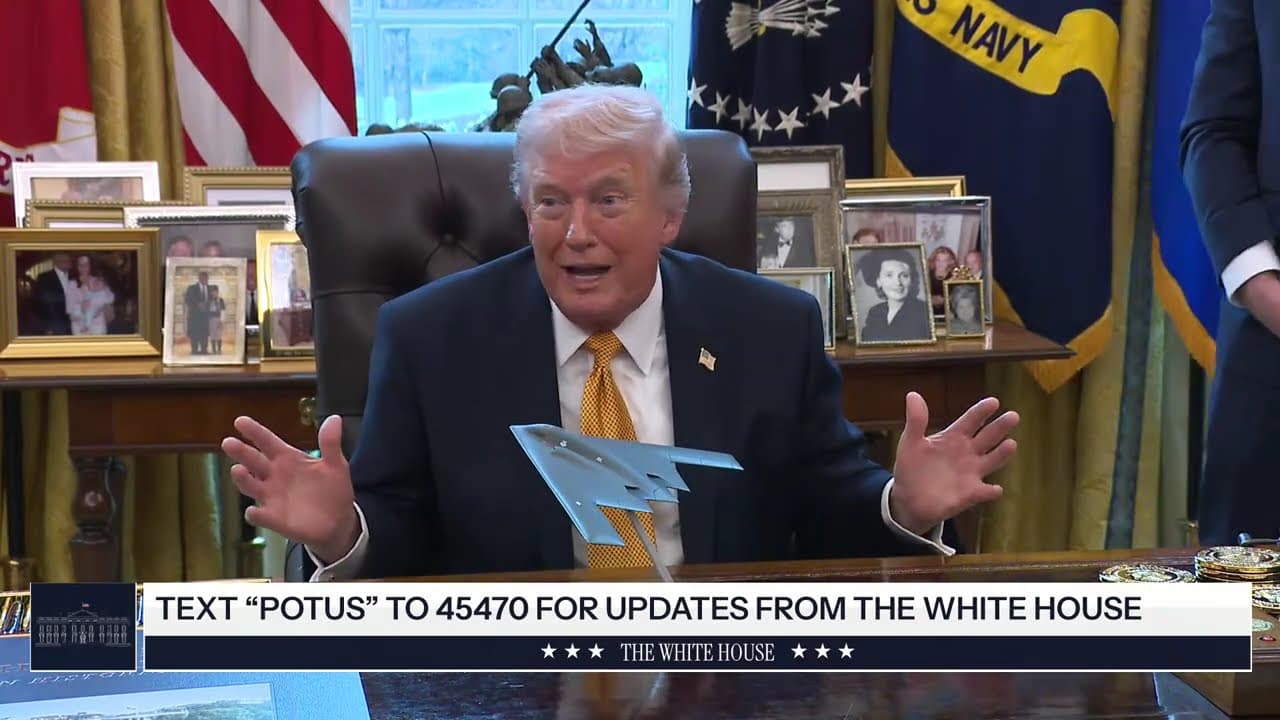
The executive order creates a federal task force, chaired by Vice President JD Vance with FTC Chair Andrew Ferguson as vice chair, to identify fraud in federally funded programs and recover taxpayer money. Officials said its central purpose is to make agencies share evidence, strengthen anti-fraud enforcement, protect legitimate beneficiaries, and direct benefits away from fraudulent recipients.
Transcript
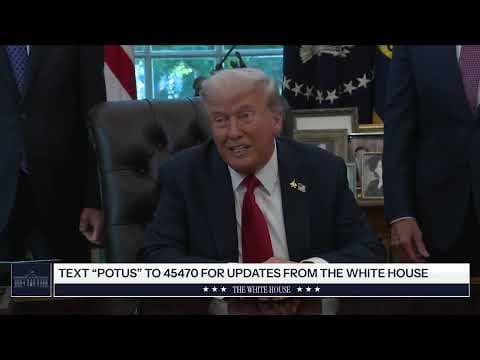
The President: Thank you very much everybody. Appreciate it. This is a very big thing that we're doing. It's about fraud, having to do with all the fraud that's taking place in our country. We have two people that are extremely brilliant and just very talented and they're going to be put in charge. But I'd like to ask, Will, if you would, to give a... Read More
Key Insights
- The executive order establishes a new task force focused on detecting fraud in federally funded programs, recovering improperly obtained funds, and coordinating enforcement across the federal government. Will Scharf characterized the initiative as a whole-of-government response to alleged fraud around the country.
- Vice President JD Vance is the task force chair, while FTC Chair Andrew Ferguson is its vice chair. Trump presented both officials as responsible for leading the effort, and Vance indicated that Ferguson would perform much of the task force's operational work.
- Interagency information sharing is a central purpose of the order. Vance said Treasury, the Department of Justice, and Health and Human Services previously possessed different pieces of fraud-related evidence but did not communicate effectively enough to coordinate investigations or enforcement.
- Protecting legitimate beneficiaries is one stated objective of the task force. Vance and Ferguson argued that fraudulent claims divert funding from American citizens, hospitals, daycare centers, schools, and children who qualify for assistance and depend on federally supported programs.
- Minnesota is the administration's leading example of alleged program fraud. Trump cited a figure of $19 billion, while Vance described alleged Medicaid fraud involving benefits intended for autistic children. These allegations were presented by officials during the signing event and were not independently substantiated in the transcript.
- The task force is intended to investigate fraud regardless of state political affiliation. Trump said the effort would pursue misconduct in both red and blue states, although he repeatedly asserted that the problem appeared more heavily concentrated in Democratic-led states.
- Existing anti-fraud controls were described as inadequately enforced by the previous administration. Ferguson said preliminary examination could reveal lax controls across multiple agencies, while Trump went further and characterized the prior administration itself as fraudulent.
- Recovering taxpayer funds is presented as a major fiscal objective. Administration officials suggested that fraud could involve billions, tens of billions, hundreds of billions, or more, and Trump and Stephen Miller claimed that stopping it could help balance the federal budget.
Install to Summarize YouTube Videos and Get Transcripts
Explore YouTube Video Summarizer or Get YouTube Transcript Extractor
Questions & Answers
Q: What does the federal fraud task force do?
The task force is designed to identify fraud in federally funded programs, coordinate evidence and enforcement across government agencies, stop improper payments, and recover money for taxpayers. Will Scharf described it as a whole-of-government initiative. Officials also said it should protect legitimate recipients by preventing fraudulent businesses or claimants from diverting money from hospitals, schools, daycare centers, Medicaid programs, and other public services.
Q: Who leads the new federal fraud task force?
Vice President JD Vance chairs the task force, and FTC Chair Andrew Ferguson serves as vice chair. President Trump assigned the two officials responsibility for leading the anti-fraud effort. Vance joked that Ferguson would do the work while he took the credit, but the broader discussion presented both men as responsible for coordinating agencies, strengthening enforcement, and recovering funds allegedly taken from federal programs.
Q: Why does the executive order require agencies to share information?
The order requires greater information sharing because Vance said agencies were holding separate pieces of fraud evidence without coordinating effectively. He stated that Treasury could have financial evidence without communicating with the Department of Justice, while Health and Human Services could possess Medicaid fraud evidence without sharing it with Treasury. The task force is intended to connect those records so the government can identify, investigate, and stop fraudulent activity.
Q: How could program fraud affect legitimate beneficiaries?
Officials said fraud can reduce the money available to people and institutions that legitimately need federal support. Ferguson argued that taxpayer funds intended for hospitals, daycare centers, and school systems can instead flow to fake businesses. Vance similarly claimed that fraudulent Medicaid activity involving benefits intended for autistic children could prevent eligible children from receiving necessary assistance while allowing fraudulent participants to profit.
Q: What alleged Minnesota fraud did officials discuss?
Trump cited an alleged Minnesota fraud figure of $19 billion, while Vance described a Medicaid program intended to support autistic children in the Minneapolis area. Vance alleged that some participants falsely claimed children were autistic, enabling people to profit while eligible children lost access to benefits. These statements were allegations made by administration officials during the event, and the supplied transcript does not include independent evidence verifying them.
Q: Will the task force investigate both red and blue states?
Trump said the task force should investigate fraud wherever it occurs, including in both Republican-led and Democratic-led states. He nevertheless asserted that the problem appeared to be concentrated heavily in blue states and repeatedly referenced Minnesota and California. The stated enforcement principle was therefore nationwide investigation without a formal partisan limitation, even though much of the event's rhetoric focused on Democratic officials and jurisdictions.
Q: How much money do officials expect the task force to recover?
The transcript provides no confirmed recovery estimate. Will Scharf said the effort could potentially return billions, tens of billions, or even hundreds of billions of dollars to taxpayers. Trump and Stephen Miller made broader claims that fully stopping fraud could produce enough savings to balance the budget. Those figures and projections were presented as administration estimates or beliefs, not as documented recoveries reported during the signing event.
Q: What other federal spending issues did Trump discuss?
Trump also discussed prescription drug prices and his most favored nations policy. He claimed Americans had paid five, six, or 10 times the prices charged elsewhere and gave an example of a pill costing $10 in Munich and $130 in New York. He further claimed that prices would fall by 50, 60, 70, or 80 percent in some cases, connecting those savings to the need to prevent program fraud.
Summary & Key Takeaways
-
President Trump signed an executive order establishing a task force focused on fraud in federally funded programs. Will Scharf described it as a whole-of-government initiative chaired by Vice President JD Vance, with FTC Chair Andrew Ferguson serving as vice chair, intended to uncover fraud and return improperly obtained money to taxpayers.
-
Vice President Vance said a major enforcement weakness was poor communication among federal agencies. He cited situations in which Treasury, the Department of Justice, and Health and Human Services allegedly held relevant financial or Medicaid information without sharing it effectively. The order is designed to require coordinated action across the government.
-
Officials argued that program fraud harms both taxpayers and people who legitimately depend on hospitals, schools, daycare centers, Medicaid, and other services. They repeatedly cited alleged fraud in Minnesota and California, while Trump said the task force should investigate misconduct wherever it occurs, including in both Democratic-led and Republican-led states.
Read in Other Languages (beta)
Share This Summary 📚
Summarize YouTube Videos and Get Video Transcripts with 1-Click
Try YouTube Summary with ChatGPT & Claude or YouTube Transcript Generator
Explore More Summaries from The White House 📚
Summarize YouTube Videos and Get Video Transcripts with 1-Click
Try YouTube Summary with ChatGPT & Claude or YouTube Transcript Generator