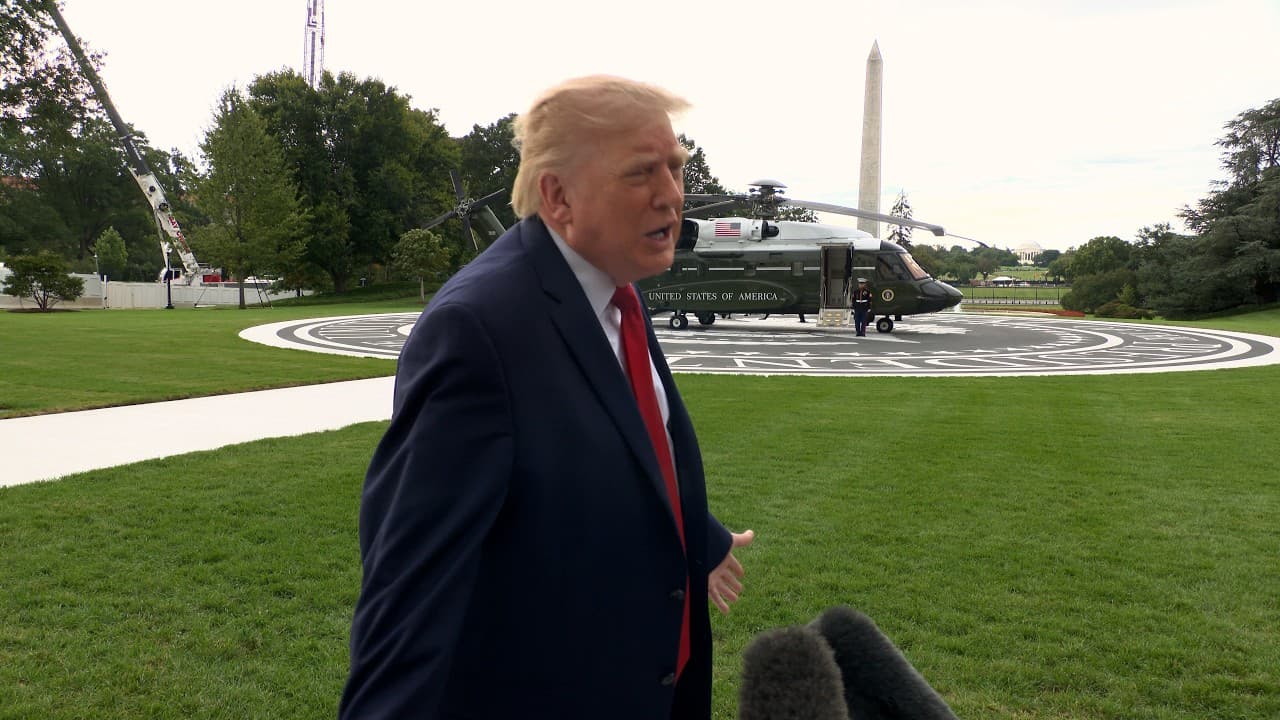
What did Trump say about fake news and Iran at departure?
TL;DR
Trump emphasizes rejection of Iran’s proposal and labels some media as fake news, insisting on real news coverage. He praises a wall of steel in blocking the Hormuz Strait, discusses Taiwan, SI naming, and Ukraine casualties, and stresses wanting deals rather than prolonged conflicts. He also critiques outlets and asserts control of strategic corridors.
Transcript
only one outlet. >> Good morning, Mr. President. Mr. President, how did you get to the latest Iranian proposal? >> I reject their proposal. >> They they made a proposal, but I've rejected it. >> You only want outlets that support you to be a part of the press. >> Say it. >> Do you only want outlets that support you to be a part of? >> No, I want re... Read More
Key Insights
- Real news versus fake news is a central theme, with Trump claiming outlets like CNN and MSDNC are fake news.
- A harsh critique of media is paired with a defense of his own press access and a call for real news rather than biased reporting.
- Trump asserts total control of the Hormuz Strait and describes a blockade as the greatest in military history, arguing it coerces Iran economically.
- He introduces the term SI to describe super intelligence and positions the United States to lead globally in this field.
- The conversation references Taiwan as a subject not heavily discussed but acknowledged as moving along under his oversight.
- Ukraine war casualty figures are cited to emphasize the human cost and push for quicker settlements with Putin and Zalinsky.
- Trump claims he shut down or would shut down certain deals to protect U.S. interests, stressing a preference for deals over extended conflict.
- There is a repeated emphasis on negotiations and making deals with adversaries rather than escalating hostilities.
Install to Summarize YouTube Videos and Get Transcripts
Explore YouTube Video Summarizer or Get YouTube Transcript Extractor
Questions & Answers
Q: What is Trump’s main critique of the Iran proposal and the media in this briefing?
Trump states he rejects Iran’s proposal and accuses certain outlets of fake news. He argues that the media, specifically naming CNN and MSDNC, does not provide real news and that he prefers outlets that present what he considers real reporting. This framing sets up a narrative of control over information and a call for more favorable, reliable coverage.
Q: How does Trump describe the Hormuz Strait situation and its impact on Iran?
Trump says the United States has total control of the Hormuz Strait and describes a blockade as the greatest in military history. He claims massive oil shipments, including 29 ships, are moving through the strait and asserts that Iran’s closure would harm them economically, while the blockade constrains their leverage.
Q: What is the significance of the term SI in the transcript according to Trump?
Trump explains he prefers the term SI, short for super intelligence, over AI, arguing it is more accurate and elegant. He contends that SI represents a stronger form of intelligence and emphasizes that the United States will not slow progress in this area, suggesting strategic national priorities.
Q: What stance does Trump take on Taiwan during the briefing?
Trump acknowledges Taiwan and notes that it came up in discussion, but says they did not spend much time talking about it. He indicates that affairs are moving along, implying ongoing engagement without detailed elaboration during this press encounter.
Q: How does Trump frame the Ukraine situation and casualties?
Trump cites casualty figures, noting tens of thousands of deaths in recent months, and emphasizes the human cost of the Ukraine-Russia conflict. He uses these numbers to advocate for settlements with Putin and Zalinsky, presenting negotiations as preferable to prolonged warfare.
Q: What does Trump say about making deals with adversaries like Putin and Zalinsky?
Trump expresses a preference for making deals and settling matters with adversaries rather than escalating conflict. He mentions wanting Putin and Zalinsky to settle with each other, framing negotiations as a pragmatic path to resolving disputes and reducing casualties.
Q: How does Trump describe media access and press behavior in relation to his presidency?
Trump asserts a desire for real news and fair coverage, while accusing certain outlets of fake reporting. He implies selective access and criticizes media credentials, framing his stance as defending a transparent and open press environment, albeit within a partisan context that favors his perspective.
Q: What topics related to national security and foreign policy are touched upon besides Iran and Ukraine?
The briefing references Cuba, potential reserves activation, and a vague plan surrounding Cuba relations, suggesting a broader national security dialogue. It also mentions elections and domestic political considerations, indicating a wider conversation about how foreign policy and national security intersect with governance.
Summary & Key Takeaways
-
Trump rejects Iran's proposal and attacks CNN and MSDNC as fake news, insisting on real news coverage.
-
He describes a steel blockade of the Hormuz Strait and asserts economic pressure on Iran while keeping doors open to deals.
-
He touches on Taiwan, AI renamed as SI, and Ukraine casualties, while calling for settlements with Putin and Zalinsky to end wars.
Read in Other Languages (beta)
Share This Summary 📚
Summarize YouTube Videos and Get Video Transcripts with 1-Click
Try YouTube Summary with ChatGPT & Claude or YouTube Transcript Generator
Explore More Summaries from The White House 📚
Summarize YouTube Videos and Get Video Transcripts with 1-Click
Try YouTube Summary with ChatGPT & Claude or YouTube Transcript Generator