How to Clone and Run a Convex Rust Project Locally
TL;DR
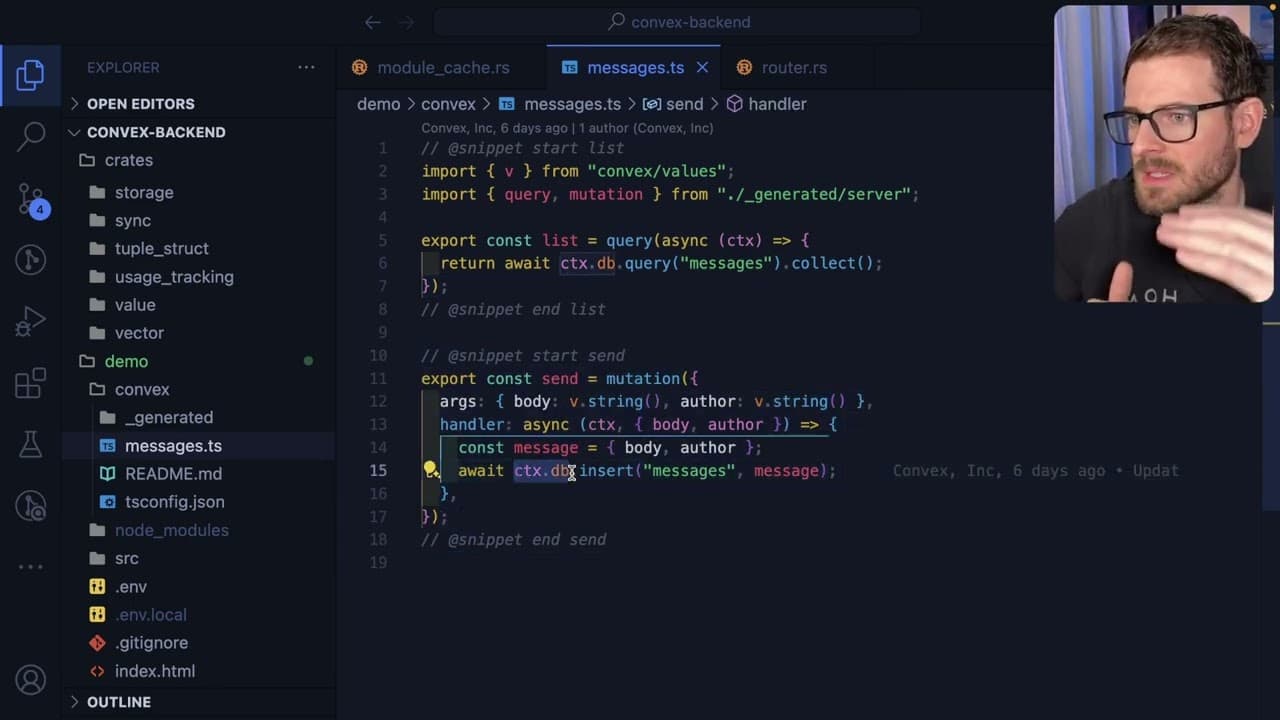
To clone and run a Convex Rust project locally, start by downloading the open-source repo, then execute cargo run --bin local_backend to initiate the backend service. This allows for faster local development without waiting for uploads to cloud services, enhancing your workflow while learning the intricacies of Convex's architecture.
Transcript
so last night was the first night I had a chance to clone down a rust project try to understand what cargo is try to understand the rust syntax and also build a rust project for myself now I'll say this is not my rust project this is the convex backend which they just went open source on and the reason I'm kind of interested in this is because I us... Read More
Key Insights
- 🤗 Convex has transitioned to an open-source model, enabling developers to explore and contribute to its backend architecture.
- 👻 The integration of a V8 isolate within the Rust backend allows TypeScript code to execute efficiently, bridging the gap between high-level and low-level programming.
- 🇧🇮 Local development is significantly expedited by running the Rust backend, avoiding the lag typically associated with cloud service uploads.
- 👻 Convex offers self-hosting capabilities, allowing users to run their projects independently, although cloud services are preferred for stability and scalability.
- 🤗 The speaker's reverse-engineering approach highlighted the importance of hands-on exploration in understanding complex codebases and backend systems.
- 👤 Efficient transaction handling is crucial in Convex for managing database interactions and ensuring data consistency during user requests.
- 🎨 Learning complex systems in Rust not only enhances a developer's toolset but also broadens their understanding of software architecture and design.
Install to Summarize YouTube Videos and Get Transcripts
Explore YouTube Video Summarizer or Get YouTube Transcript Extractor
Questions & Answers
Q: What motivated the speaker to explore the Convex backend?
The speaker's motivation stemmed from their usage of Convex for a project planner AI. They wanted to dive deeper into the backend's workings after it transitioned to open source, thus allowing them to understand and optimize their project’s functionality more effectively.
Q: How does Convex enable the execution of JavaScript code with a Rust backend?
Convex uses a V8 isolate to run JavaScript code, which allows TypeScript code written by developers to execute efficiently while still being managed by the Rust backend. This facilitates seamless integration and better performance by leveraging Rust’s speed and safety.
Q: What are the local development advantages of running the Rust backend?
Running the Rust backend locally eliminates the need for uploads through esbuild when saving files, drastically speeding up development iterations. The process is simplified, allowing for instant testing and integration adjustments without waiting for cloud service response times.
Q: What does the speaker mean by "self-hosting" in the context of Convex?
Self-hosting refers to the ability to run the Convex backend project on a personal VPS or local server. While it's possible, the speaker mentions that Convex still recommends using their cloud services for enhanced production readiness due to benefits like distribution and replication.
Q: What was the speaker's approach to understanding the Convex codebase?
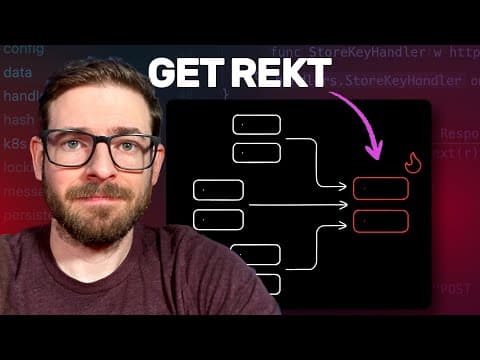
The speaker reversed-engineered the codebase by constructing a diagram to depict their understanding and then exploratively navigated through various components like mutations and endpoint calls to decipher how they functioned, despite initial unfamiliarity with Rust syntax.
Q: How does the Convex backend handle database mutations and queries?
The Convex backend processes database interactions using a combination of transaction management and instruction sets, which are handled by the Rust engine. When running mutations, the system checks for conflicts, ensuring data integrity is maintained during concurrent modifications.
Q: Why is there interest in learning additional programming languages like Go and Rust?
The speaker aims to expand their expertise and exposure to complex systems beyond typical web development tasks. Learning languages like Go and Rust will provide insights into lower-level programming, improving their overall software development skills and system understanding.
Summary & Key Takeaways
-
The video follows the speaker's journey to clone and understand a newly open-sourced Rust project, specifically the Convex backend, which integrates seamlessly with their AI project planner.
-
The speaker provides an overview of how Convex handles interactions like queries and mutations, using a Rust engine that runs TypeScript code via a V8 isolate for backend processes.
-
They also discuss the benefits of running the Rust backend locally, which enhances development speed, and mention the potential for self-hosting Convex despite recommendations for using cloud services.
Read in Other Languages (beta)
Share This Summary 📚
Summarize YouTube Videos and Get Video Transcripts with 1-Click
Try YouTube Summary with ChatGPT & Claude or YouTube Transcript Generator
Explore More Summaries from Web Dev Cody 📚
Summarize YouTube Videos and Get Video Transcripts with 1-Click
Try YouTube Summary with ChatGPT & Claude or YouTube Transcript Generator