Why Does a $100,000 Salary Still Feel Too Small?

TL;DR
A $100,000 salary may not create financial security because taxes, costly housing, health care, education debt, child care, and lifestyle inflation can consume nearly all take-home pay. Feeling wealthy depends less on the headline salary than on purchasing power, fixed obligations, local living costs, savings, and whether spending rises whenever income increases.
Transcript
Have you ever hit a major financial milestone and then felt absolutely nothing? Like you thought reaching six figures was going to be this transformative moment where you'd finally feel wealthy and instead you're still checking your bank account with the same anxiety you had when you were making half that. Yeah, me too. My name is Nick and I spend ... Read More
Key Insights
- A $100,000 salary is not equivalent to $100,000 of spendable money because federal, state, local, FICA, and Medicare taxes can substantially reduce take-home pay. The gap between gross income and deposited income helps explain why reaching six figures may feel less transformative than expected.
- Major-city living can consume nearly all of a high earner's take-home pay through rent, health insurance, student loans, child care, transportation, groceries, utilities, phone service, dining, insurance, and emergency savings. The transcript's example shows expenses potentially matching or exceeding monthly net income.
- High earners can live paycheck to paycheck without making obviously reckless choices. Structural expenses such as housing, transportation, health care, and education can absorb income before discretionary spending begins, creating financial stress even when gross earnings appear high to other people.
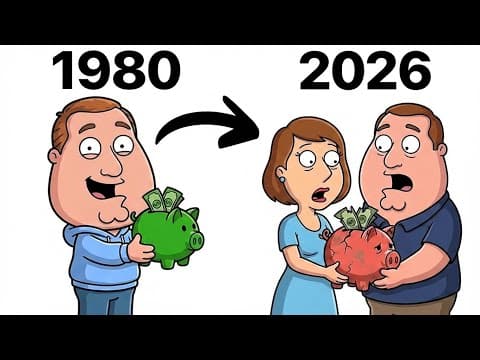
- Inflation reduces what a fixed salary can purchase over time. The transcript states that $100,000 today has substantially less purchasing power than it once had, so reaching an old salary milestone may not provide the security, lifestyle, or progress that the same figure previously represented.
- Lifestyle creep works by turning optional upgrades into recurring baseline expenses. A nicer apartment, luxury car, additional subscriptions, restaurant spending, and expensive travel may each seem reasonable after a raise, but together they can prevent higher income from increasing savings or investments.
- Social comparison encourages spending that signals financial status. High earners may feel pressure to match the homes, cars, and travel displayed by peers or social media accounts, even though those images do not reveal debt, student loans, family assistance, or other hidden financial circumstances.
- Housing is a central obstacle to feeling wealthy because purchase prices can remain unaffordable even for people earning six figures. The resulting gap between career success and homeownership expectations can produce frustration, especially among people who believed education and a high-paying job would make buying possible.
- Wealth is better reflected by financial margin than by gross salary alone. The transcript's examples suggest that take-home income, fixed costs, debt, local prices, emergency savings, and resistance to lifestyle inflation determine whether an earner experiences genuine security or continued paycheck-to-paycheck anxiety.
Install to Summarize YouTube Videos and Get Transcripts
Explore YouTube Video Summarizer or Get YouTube Transcript Extractor
Questions & Answers
Q: Why does a $100,000 salary no longer feel rich?
A $100,000 salary may not feel rich because the headline figure is gross income, not the amount available to spend. Taxes reduce take-home pay, while housing, health insurance, education debt, child care, transportation, food, utilities, and insurance consume much of what remains. Inflation and lifestyle upgrades further weaken the financial margin that would otherwise create security.
Q: How do taxes change the value of a six-figure salary?
Taxes create a substantial difference between stated salary and deposited income. The transcript identifies federal, state, local, FICA, and Medicare taxes as deductions that many people underestimate before calculating their actual budget. In expensive cities, the combination of taxes and high living costs makes a six-figure income feel considerably smaller than the gross salary suggests.
Q: What expenses can make high earners live paycheck to paycheck?
High earners can face large recurring costs for rent, employer health insurance, student loans, child care, transportation, groceries, utilities, internet, phone service, restaurant meals, vehicle insurance, housing insurance, and emergency savings. When these obligations are combined, they can match or exceed take-home income, leaving little flexibility for unexpected expenses despite an impressive annual salary.
Q: What is lifestyle creep and why does it reduce wealth?
Lifestyle creep is the gradual expansion of spending after income rises. A person may move into a better apartment, lease a luxury car, add subscriptions, eat out more often, or choose more expensive vacations. These upgrades soon feel normal and become difficult to reverse, so later raises fund another round of consumption instead of building savings or investments.
Q: How does social media affect spending by high earners?
Social media expands the group against which people compare their lifestyles. A high earner may see luxury homes, cars, restaurants, and travel and conclude that a six-figure salary should provide the same experiences. The images do not reveal student loans, family money, or debt, so viewers may increase spending to match an incomplete and potentially misleading picture.
Q: Why is housing difficult to afford on a $100,000 salary?
Housing can remain unaffordable because home prices and ownership costs have risen beyond the income levels many buyers expected would be sufficient. The transcript says mortgage payments, taxes, and insurance can require earnings above $100,000 even for a typical home. In expensive cities, the gap is larger, leaving six-figure earners unable to purchase despite strong incomes.
Q: How does inflation weaken a financial milestone?
Inflation reduces the amount of housing, food, transportation, services, and financial security that the same salary can buy. The transcript argues that $100,000 has lost substantial purchasing power over time while salaries have not fully kept pace. Consequently, someone may reach a long-awaited income target yet discover that the target no longer supports the lifestyle once associated with it.
Q: How can someone judge wealth more accurately than by salary?
A more useful assessment focuses on the money remaining after taxes and essential obligations. Take-home pay, local living costs, housing, debt, insurance, child care, transportation, emergency savings, and recurring lifestyle expenses all determine financial security. A high gross salary provides limited comfort when fixed costs consume it, while preserving margin can make income increases more meaningful.
Summary & Key Takeaways
-
A six-figure salary can look impressive while producing surprisingly little financial flexibility. Taxes substantially reduce take-home pay, especially where state and local taxes apply. After housing, insurance, education debt, transportation, food, utilities, child care, and savings, a high earner may have little money remaining or may run a monthly deficit.
-
Inflation and high housing costs have weakened the security once associated with earning $100,000. The transcript argues that salaries have not kept pace with rising living expenses, while home prices have moved beyond traditional affordability expectations. Many earners therefore reach a celebrated income milestone without gaining the homeownership or stability they expected.
-
Lifestyle creep and social comparison can erase the benefits of higher income. Raises often lead to better apartments, expensive cars, more dining, upgraded subscriptions, and costlier vacations. These choices become a new baseline, while social media encourages comparison with lifestyles whose debt, family support, or hidden financial obligations remain invisible.
Read in Other Languages (beta)
Share This Summary 📚
Summarize YouTube Videos and Get Video Transcripts with 1-Click
Try YouTube Summary with ChatGPT & Claude or YouTube Transcript Generator
Explore More Summaries from Nick Invests 📚



Summarize YouTube Videos and Get Video Transcripts with 1-Click
Try YouTube Summary with ChatGPT & Claude or YouTube Transcript Generator