How Does Sleep Protect Your Brain and Body?
TL;DR
Sleep is a non-negotiable biological necessity that supports every known operation of the mind and provides broad benefits throughout the body. Even modest sleep loss can impair performance without people recognizing it, while losing one hour around the spring daylight-saving transition is associated with a 24% increase in heart attacks the next day.
Transcript
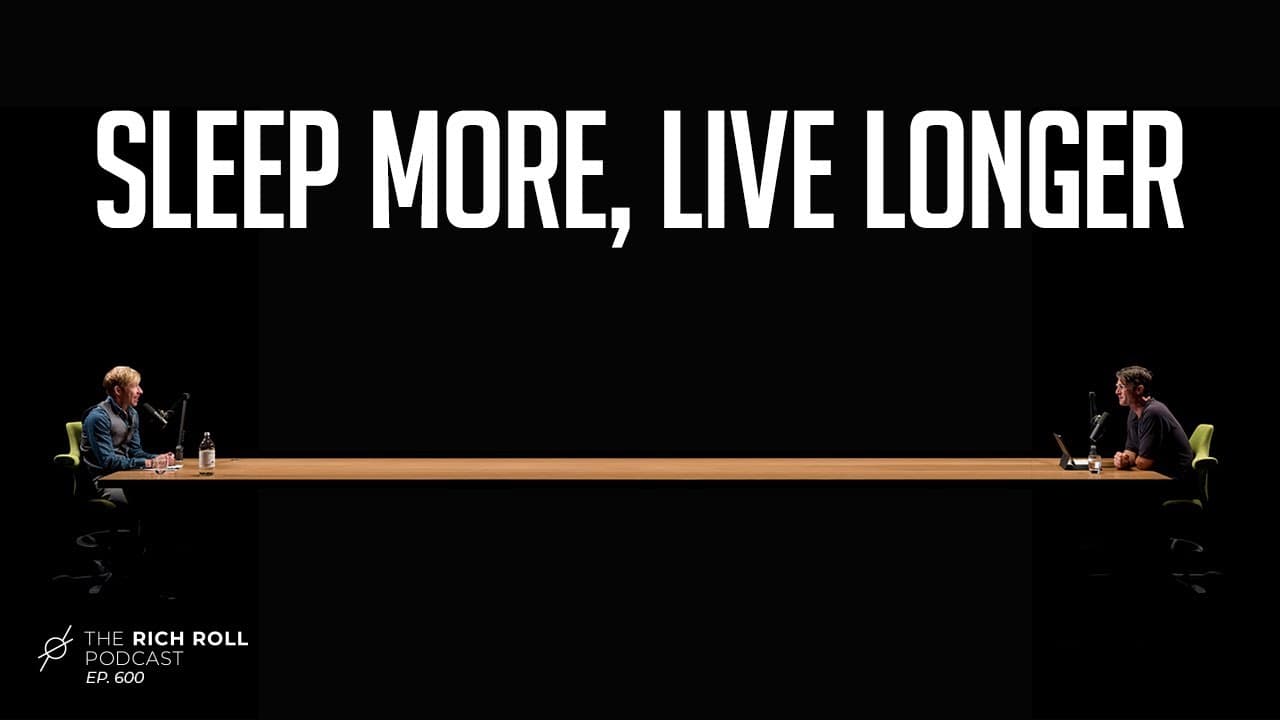
What if everything you thought about sleep was wrong? We've learned more in the previous 50 years about sleep than we did in the previous 5,000. Dr. Matthew Walker has spent his entire life studying one thing, the science of sleep. He's worked with pro athletes, Fortune 500 CEOs, and some of the top institutions in the world. But what he's uncovere... Read More
Key Insights
- Sleep is a non-negotiable biological necessity, not an optional lifestyle luxury. It acts as a life-support system, producing a broad cascade of benefits for the body and overhauling every operation of the mind that researchers currently understand.
- Sleep is an active state in which the brain can become up to 30% more active than it is during wakefulness. The common belief that the mind becomes dormant and the body merely rests therefore misrepresents what happens throughout the night.
- Sleep has persisted despite major evolutionary disadvantages, including lost opportunities to reproduce, forage, care for young, and avoid predators. Sleep-like states can even be found in earthworms, suggesting that sleep arose alongside very early forms of life.
- One lost hour of sleep during the spring daylight-saving transition is associated with a 24% increase in heart attacks the following day. During the reverse transition, when an hour is gained, heart attacks decrease by 21%.
- The number of people who can sleep five hours or less without measurable impairment rounds to zero percent of the population. People may believe they function normally, but their subjective assessment is a poor predictor of their objective performance under insufficient sleep.
- Sleep deprivation can accelerate signs of male aging. When a healthy young man is restricted to four or five hours of sleep, his testosterone level can fall to that of someone 10 years older, according to the example presented.
- Insufficient sleep is associated with increases in suicidal thoughts, suicidal planning, suicide attempts, and completed suicide. The discussion presents these outcomes as part of the serious mental-health damage that can accompany inadequate sleep.
- Sleep apnea treatment can reveal how much poor sleep had impaired a person without their awareness. After snoring and gasping for breath are addressed, patients may experience a transformed mental state and recognize clarity they did not realize they had lost.
Install to Summarize YouTube Videos and Get Transcripts
Explore YouTube Video Summarizer or Get YouTube Transcript Extractor
Questions & Answers
Q: Why is sleep considered a biological necessity?
Sleep is considered a biological necessity because it serves as the body's life-support system and provides a broad cascade of benefits to physical health and mental functioning. Every known operation of the mind is overhauled during sleep, and the brain can become up to 30% more active than during wakefulness in certain stages. Sleep therefore involves vital activity rather than simple bodily rest or mental dormancy.
Q: How does insufficient sleep affect self-awareness and performance?
Insufficient sleep makes self-assessment unreliable because a person's subjective feeling of functioning well does not accurately predict objective performance. The process is compared with an intoxicated driver who feels capable of driving despite clear impairment. As sleep time is gradually reduced, the deficient version of the person becomes familiar, so diminished focus, energy, and performance can begin to feel normal.
Q: Can some people function without impairment on five hours of sleep?
The evidence described indicates that the percentage of people who can sleep five hours or less without showing impairment rounds to zero when expressed as a whole-number percentage of the population. People who claim to function well on four or five hours may sincerely believe it, but their subjective judgment does not reliably reflect their objectively measured condition under sleep restriction.
Q: How does losing one hour of sleep affect heart-attack rates?
The daylight-saving transition provides a large natural comparison of small changes in sleep opportunity. In spring, when people lose one hour, heart attacks increase by 24% on the following day. During the reverse transition, when one hour is gained, heart attacks decrease by 21%. These changes illustrate how even a single hour of disrupted sleep can coincide with measurable cardiovascular consequences.
Q: Why might sleep have survived throughout evolution?
Sleep may have survived because it supplies functions important enough to outweigh its substantial disadvantages. A sleeping organism cannot forage, reproduce, care for its young, or readily protect itself from predators. Nevertheless, sleep persisted through every step of the evolutionary pathway, and sleep-like states appear even in ancient organisms such as earthworms. Its persistence suggests that sleep is fundamental to life rather than expendable downtime.
Q: How does short sleep affect testosterone and aging in men?
Restricting a healthy young man to four or five hours of sleep can reduce his testosterone level to that associated with someone 10 years older. The discussion characterizes this change as effectively aging a man by a decade. This example shows that inadequate sleep does not only cause tiredness or poor concentration, but can also produce significant physiological changes linked with aging.
Q: Why do work and social schedules reduce sleep time?
Longer working hours, increased pre-pandemic commuting times, family commitments, and entertainment can compress the available night. People leave home earlier and return later, but often resist reducing family time or activities such as watching Netflix. Sleep becomes the negotiable item squeezed between those priorities. Social stigma also contributes because sufficient sleep is sometimes incorrectly treated as laziness or a source of embarrassment.
Q: What can sleep apnea treatment reveal about chronic poor sleep?
Sleep apnea treatment can reveal an impairment that the patient had gradually accepted as normal. Before treatment, patients may report that they feel fine despite snoring, gasping for breath, and fragmented sleep. After using a sleep apnea device and sleeping better for several weeks, they may notice a transformed mental state. One patient compared the improvement to wiping a frosted window clear and finally seeing again.
Summary & Key Takeaways
-
Sleep appears throughout the evolutionary pathway, with sleep-like states observed even in ancient organisms such as earthworms. Although sleeping prevents mating, foraging, caring for young, and defending against predators, it persisted alongside life. That persistence suggests sleep supplies a set of functions important enough to outweigh its obvious evolutionary disadvantages.
-
Sleep is an active biological state rather than a period when the mind simply shuts down and the body rests. During certain sleep stages, the brain can be up to 30% more active than during wakefulness. Sleep provides broad mental and physical benefits, making a full night a biological necessity rather than an optional luxury.
-
Chronic sleep restriction is especially dangerous because people cannot reliably judge their own impairment. As sleep is gradually reduced, the deficient version of a person can begin to feel normal. Patients treated for sleep apnea illustrate the contrast, often recognizing major improvements in clarity only after their snoring, breathing interruptions, and poor sleep are addressed.
Read in Other Languages (beta)
Share This Summary 📚
Summarize YouTube Videos and Get Video Transcripts with 1-Click
Try YouTube Summary with ChatGPT & Claude or YouTube Transcript Generator
Explore More Summaries from Rich Roll 📚

Summarize YouTube Videos and Get Video Transcripts with 1-Click
Try YouTube Summary with ChatGPT & Claude or YouTube Transcript Generator