How to Turn YouTube Viewers Into Paying Clients
TL;DR
Build a YouTube funnel by connecting problem-aware videos to solution-aware content, proof-focused videos, and finally a booked-call invitation. Keep viewers on YouTube while awareness and trust develop, using each call to action to recommend the next logical video. Send viewers off-platform only after case studies or a workshop-style presentation have demonstrated that your method works.
Transcript
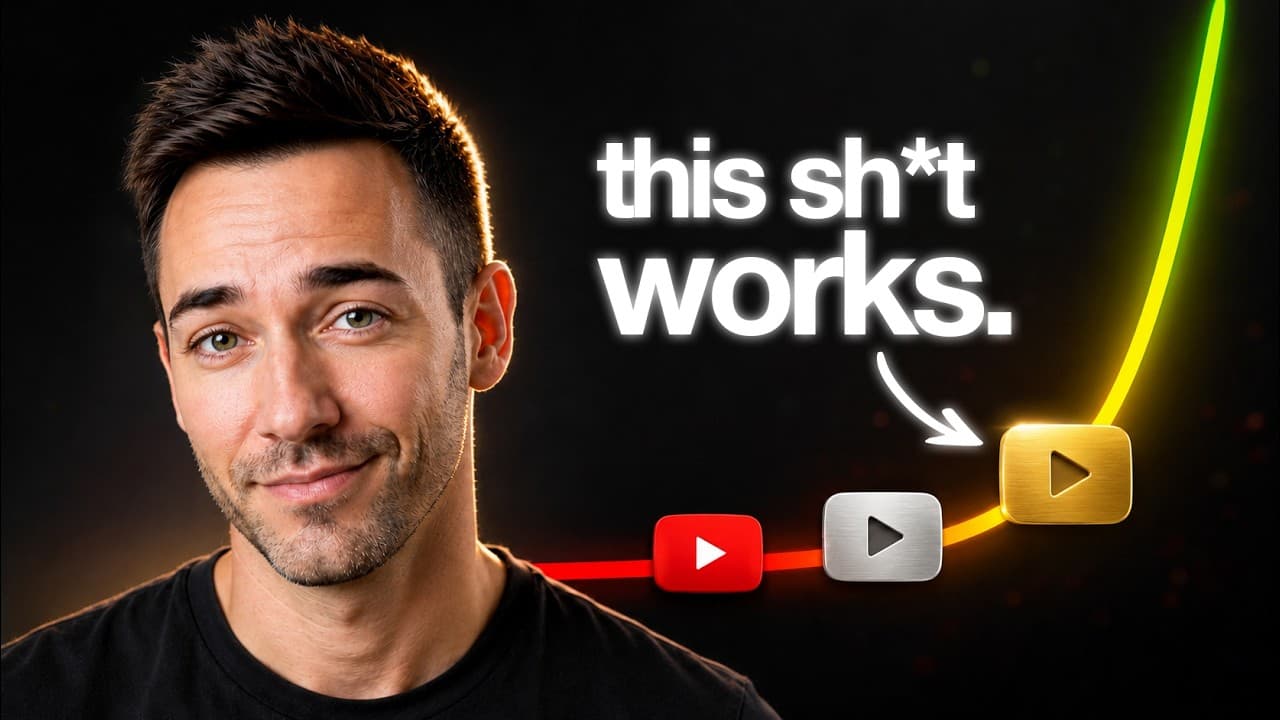
This YouTube funnel tripled my business revenue in the first 12 months. And the same system tripled it again in the years since. So, if you're an expert, a coach, a consultant, someone who sells what they know, and you've been thinking about YouTube, but wondering how it's actually supposed to turn into revenue, I'm about to connect every dot for y... Read More
Key Insights
- Every video should address one ideal client at a specific point in the buying journey. The same person searches differently when merely aware of a problem than when already aware of a solution, so a channel needs content designed for both stages.
- Problem-aware viewers form the larger audience at the top of the funnel. They feel a business or life problem but may not know the relevant method or expert exists, making broad questions, common mistakes, myths, predictions, and big-picture frameworks appropriate entry topics.
- Solution-aware viewers form a smaller audience that can convert more quickly. They already understand the kind of fix they need and use middle-of-funnel videos to evaluate an expert's reasoning, methods, perspective, process, and ability to explain a solution clearly.
- The binge-to-booked relay connects four sequential stages, with each video passing viewers toward another video and ultimately a booked call. A helpful standalone upload often loses viewers because it delivers value without giving them a specific and logically relevant next step.
- Top-of-funnel calls to action should recommend the next logical YouTube video. Asking for likes and subscriptions does little to advance the funnel, while immediately sending a newly introduced viewer to a website is premature and removes that person from the platform.
- Middle-of-funnel videos build trust by making the expert's distinctive approach central to the content. Framework walkthroughs, result explanations, live audits, teardowns, client-process footage, and method deep dives allow viewers to understand how the expert thinks before considering an engagement.
- Bottom-of-funnel content should emphasize evidence rather than additional education. Client case studies can describe or show real transformations and measurable outcomes, helping prospects see people like themselves succeeding through the expert's process and moving them from learning mode toward decision mode.
- A walk-up webinar is an ungated workshop-style YouTube video that presents the major milestones, sequence, and reasoning within an expert's system before transitioning to an offer. The creator reports that one such video sold 264 spots and generated $131,000 during a five-day launch window.
- More videos from this channel:
- More from this channel: Wes McDowell
Install to Summarize YouTube Videos and Get Transcripts
Explore YouTube Video Summarizer or Get YouTube Transcript Extractor
Questions & Answers
Q: How do you turn YouTube viewers into paying clients?
Create a connected sequence that moves an ideal client through distinct levels of awareness. Start with broad, searchable videos about the problem, direct viewers to videos explaining your specific approach, and then recommend proof-focused case studies or a workshop-style presentation. Only after viewers have gained awareness, trust, and evidence should the call to action invite them to leave YouTube and move toward a booked call.
Q: What is the difference between problem-aware and solution-aware viewers?
Problem-aware viewers feel a pain or recognize that something is wrong, but they do not yet know which method or professional can solve it. Solution-aware viewers already understand the kind of fix they need and are actively evaluating related guidance. The first group is larger and fills the funnel, while the second group is smaller but can convert more quickly.
Q: What topics work best at the top of a YouTube funnel?
Top-of-funnel topics should reflect questions an ideal client is already asking before discovering a specific solution. Suitable formats include explanations of why a problem occurs, myth-busting videos, common-mistake lists, broad frameworks, and industry predictions. The content should focus on the viewer's situation or problem, deliver complete value, and avoid depending on the creator's proprietary process or offer.
Q: What call to action should a top-of-funnel video use?
A top-of-funnel video should verbally direct the viewer to another YouTube video that represents the next logical step or explains a missing piece. It should not waste the transition on a generic request to like and subscribe, and it should not immediately send a new viewer to a website. The goal is to keep the person watching while moving from problem awareness toward solution awareness.
Q: What content belongs in the middle of a YouTube funnel?
Middle-of-funnel content should explain a specific approach to solving a recognized problem and derive its value from the expert's perspective. Formats can include breakdowns of how the creator achieved a result, signature framework walkthroughs, live audits, teardowns, behind-the-scenes client processes, and detailed explanations of particular methods. Each video should direct interested viewers toward a bottom-of-funnel proof video.
Q: Why should middle-of-funnel videos encourage binge-watching?
Sequential viewing allows prospects to learn more than isolated facts about a topic. By watching several method-focused videos, they see how the expert thinks, structures problems, explains decisions, and applies a distinctive approach. That familiarity builds the trust needed for proof-focused content to become persuasive. Each middle-of-funnel video should therefore pass the viewer toward a relevant bottom-of-funnel case study or complete process walkthrough.
Q: What should bottom-of-funnel YouTube videos include?
Bottom-of-funnel videos should provide evidence that the method works rather than continuing general education. One option is a client case study describing the client's starting point, the help provided, and the measurable result, either as a narrated story or an interview. Another is a walk-up webinar that outlines the complete system, explains its major milestones and reasoning, and then transitions into the offer.
Q: What is a walk-up webinar on YouTube?
A walk-up webinar is a classic webinar placed directly on a YouTube channel without a registration page or email gate. It walks through the creator's complete system for solving a client's main problem, covering the major milestones, logical sequence, and reasoning behind each step before presenting an offer. The creator reports that a five-day launch using this format sold 264 spots and generated $131,000.
Summary & Key Takeaways
-
The funnel begins with broad, searchable videos for ideal clients who recognize a problem but do not yet know the solution. These videos address situations, misconceptions, mistakes, frameworks, or predictions. Their purpose is to attract the right audience, provide complete value, and direct viewers toward a relevant middle-of-funnel video on YouTube.
-
Middle-of-funnel content serves viewers who understand their problem and are evaluating possible solutions. Effective formats include personal result breakdowns, signature framework walkthroughs, audits, teardowns, behind-the-scenes client processes, and method deep dives. These videos distinguish the expert's perspective, encourage sequential viewing, build trust, and direct viewers toward bottom-of-funnel proof.
-
Bottom-of-funnel content proves that the expert's method produces results. Client case studies show relatable transformations, while walk-up webinars explain the complete system and transition into an offer. This is the first funnel stage that sends viewers away from YouTube, inviting sufficiently informed and trusting prospects to take the next step toward working together.
Read in Other Languages (beta)
Share This Summary 📚
Summarize YouTube Videos and Get Video Transcripts with 1-Click
Try YouTube Summary with ChatGPT & Claude or YouTube Transcript Generator
Explore More Summaries from Wes McDowell 📚
Summarize YouTube Videos and Get Video Transcripts with 1-Click
Try YouTube Summary with ChatGPT & Claude or YouTube Transcript Generator