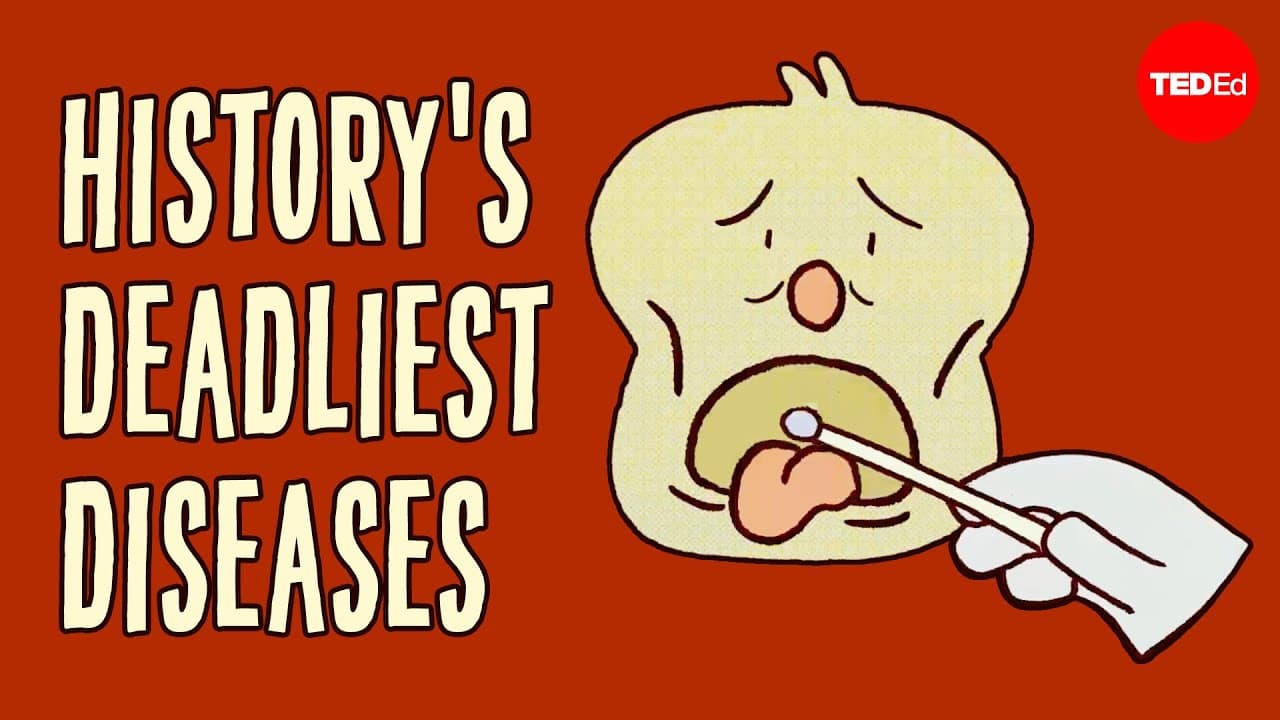
The diseases that changed humanity forever - Dan Kwartler
TL;DR
Throughout history, diseases have evolved, from ancient tuberculosis to the modern-day challenges of malaria and tuberculosis.
Transcript
Since humanity's earliest days, we’ve been plagued by countless disease-causing pathogens. Invisible and persistent, these microorganisms and the illnesses they incur have killed more humans than anything else in history. But which disease is deadliest varies across time and place. Because while the march of progress has made us safer from some in... Read More
Key Insights
- 👳 Diseases evolved as humans transitioned from hunter-gatherer societies to agricultural communities and urban populations.
- ❓ The bubonic plague and tuberculosis were devastating pandemics that thrived in densely populated regions.
- 😷 Class disparities in access to medical care exacerbated the impact of deadly diseases like tuberculosis.
- 😷 Vaccines and advancements in medical technology have helped combat historical diseases like smallpox.
- 🧑⚕️ Malaria and tuberculosis remain major global health challenges, particularly in regions with limited access to healthcare.
Install to Summarize YouTube Videos and Get Transcripts
Explore YouTube Video Summarizer or Get YouTube Transcript Extractor
Questions & Answers
Q: What are some diseases early hunter-gatherer societies likely faced?
Early hunter-gatherer societies likely faced diseases from animals they interacted with, such as tuberculosis and treponemal infections.
Q: How did the development of agriculture impact disease spread?
The development of agriculture brought new diseases like malaria and dysentery due to poor waste and water management practices.
Q: What role did urbanization play in the spread of deadly diseases?
Urbanization and overcrowding in densely populated regions led to the spread of fast-evolving viruses like the flu and the devastating bubonic plague.
Q: How has medical science advanced to combat deadly diseases?
Medical advances in vaccines, nutrition, and hygiene have helped combat diseases like smallpox and develop rapid testing and mRNA vaccines to tackle new outbreaks.
Summary & Key Takeaways
-
Early hunter-gatherer societies likely faced diseases from animals they interacted with.
-
The advent of agriculture brought new diseases like malaria and dysentery.
-
Urbanization and overcrowding led to pandemics like the bubonic plague and tuberculosis.
Read in Other Languages (beta)
Share This Summary 📚
Summarize YouTube Videos and Get Video Transcripts with 1-Click
Try YouTube Summary with ChatGPT & Claude or YouTube Transcript Generator
Explore More Summaries from TED-Ed 📚





Summarize YouTube Videos and Get Video Transcripts with 1-Click
Try YouTube Summary with ChatGPT & Claude or YouTube Transcript Generator