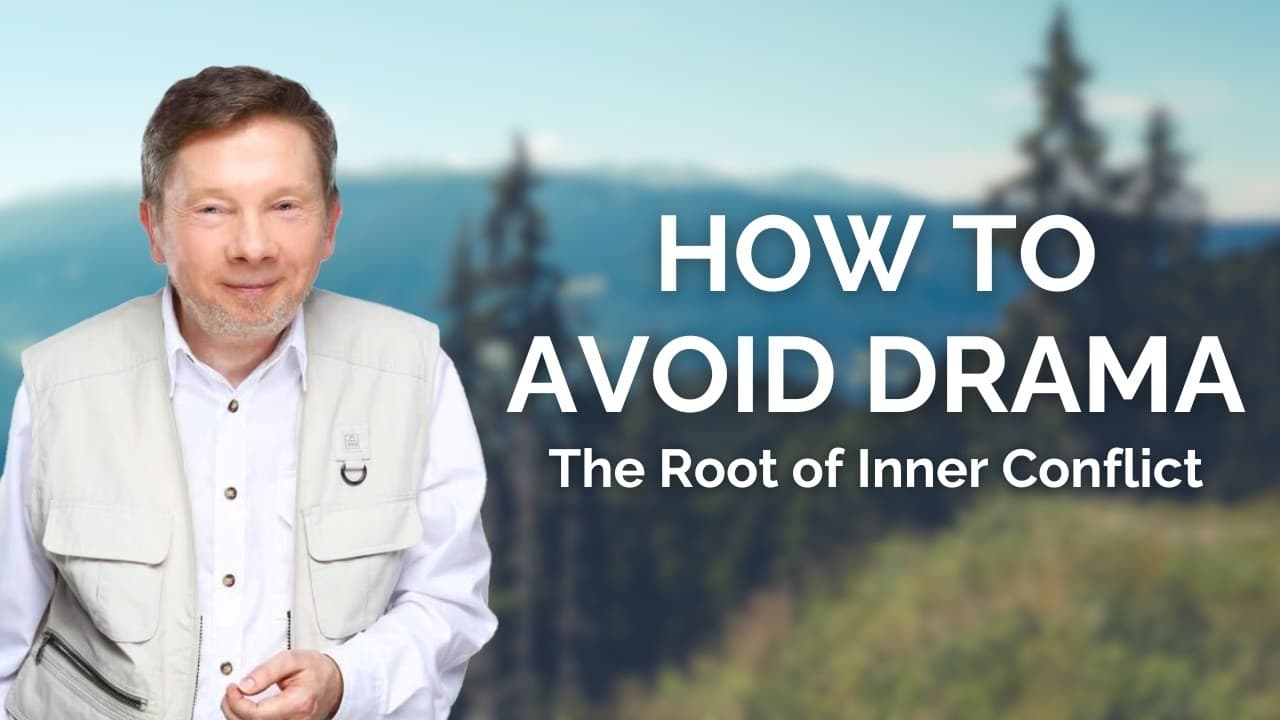
How to Stop Life's Challenges Becoming Drama
TL;DR
Separate an external difficulty from your mental and emotional reaction to it, because the reaction can amplify a manageable challenge into drama and unnecessary suffering. Conscious observation interrupts this pattern, while egoic identity feeds on anger, conflict, blame, and repeated negative thinking. New surroundings alone cannot create freedom if old conditioning still determines how each moment is experienced.
Transcript
the Greek philosopher EP epicus roughly 2,000 years ago said here comes another quote make sure I can remember it he said drama happens When Fools come face to face with the difficulties of Life life's difficulties drama happens when fools encounter difficulties what does that mean it means the way in which you react to the situations the so-called... Read More
Key Insights
- • Drama is created when a difficult situation becomes fused with an unconscious mental and emotional reaction. The external event may be genuinely challenging, but repetitive thinking, heightened emotion, and an inability to distinguish facts from reactions make the experience significantly worse.
- • A challenge does not need to become drama because objective circumstances and personal responses are distinct. Recognizing that distinction allows a person to address what is happening externally without adding blame, emotional escalation, or unnecessary psychological suffering.
- • The ego is the conditioned and unobserved mind that treats familiar emotional reactions as part of personal identity. When anger or suspicion becomes central to that identity, the ego unconsciously looks for circumstances that will reactivate and strengthen the pattern.
- • Drama strengthens the ego by creating conflict between a person who feels right and other people who appear wrong. Fighting the world through relationships gives the false self a stronger sense of identity, even when the resulting experience is painful.
- • Freedom from drama is different from suppressing emotional pain. A person who has merely deadened emotional feeling remains unfree because the unresolved pain can emerge again, while genuine freedom involves consciously experiencing the moment without being controlled by conditioned reactions.
- • New surroundings do not automatically produce a new inner experience. A person can leave home, enter another country, or attend a retreat while still carrying mental and emotional baggage that shapes the unfamiliar setting in ways resembling ordinary life.
- • Anger can become a self-reinforcing identity when it remains unobserved. Someone who habitually becomes angry over minor situations is likely to encounter fresh triggers because the conditioned mind interprets events through the same established emotional pattern.
- • Conscious nonreaction is practical training when another person appears dominated by anger or suspicion. Staying present and refusing to answer emotional provocation with another emotional reaction prevents the other person's conditioning from automatically activating the same pattern within oneself.
Install to Summarize YouTube Videos and Get Transcripts
Explore YouTube Video Summarizer or Get YouTube Transcript Extractor
Questions & Answers
Q: How does a difficult situation turn into drama?
A difficult situation turns into drama when a person unconsciously amplifies it through emotional reactions, repetitive thinking, blame, and continued discussion. The external challenge and the reaction become fused, so the person no longer recognizes how much suffering is being added internally. Separating the objective circumstances from the mental and emotional response makes it possible to address the challenge without escalating it.
Q: How can you separate a challenge from your reaction to it?
Begin by recognizing that the external event and your response are two different things. The event may require attention, but anger, blame, emotional intensity, and repetitive thoughts are reactions rather than the event itself. Observing those reactions without immediately acting on them creates space for a conscious response and prevents the conditioned mind from transforming a practical difficulty into prolonged drama.
Q: Why does the ego thrive on conflict and drama?
The ego becomes stronger through drama because conflict reinforces a separate identity that feels right while treating others as wrong. Emotional struggle gives the conditioned self something to defend, discuss, and repeatedly think about. Although the ego would not explicitly declare that it wants suffering, it unconsciously seeks situations that preserve its familiar identity through opposition, blame, anger, and emotional intensity.
Q: Can a peaceful relationship feel unfamiliar after repeated conflict?
A relationship without fighting can feel unfamiliar when conflict has become part of the partners' sense of identity. The ego may question whether the relationship is still real after a long period without arguments, or whether life lacks intensity when emotional pain is absent. Such questions reveal how drama can become confused with connection, vitality, and evidence that a relationship exists.
Q: What is the difference between emotional freedom and emotional numbness?
Emotional freedom means that conditioned reactions no longer control how a person meets the present situation. Emotional numbness means the person has deadened feeling to avoid pain rather than becoming free from it. Suppressed pain remains unresolved and can emerge again. The absence of immediate emotional pain therefore does not necessarily indicate presence, especially when it results from refusing to feel.
Q: Why do old patterns continue in a new environment?
Old patterns continue because a person carries mental and emotional conditioning into every environment. Leaving home, entering a different country, or attending a retreat changes external circumstances but does not automatically dissolve inner baggage. Deep patterns can make a new situation feel much like ordinary life because anger, suspicion, expectations, and other conditioned responses still determine how events are interpreted and experienced.
Q: How does anger become part of egoic identity?
Anger becomes part of egoic identity when repeated, unobserved reactions are treated as an essential part of the person. Once anger is established within the conditioned self, the mind appears to wait for another trigger because renewed anger strengthens that identity. Even minor situations may then be interpreted as reasons for outrage, allowing the familiar mental and emotional pattern to continue.
Q: How should you respond to someone driven by anger or suspicion?
Stay conscious and avoid reacting emotionally to what the person says or does. Someone heavily conditioned by anger or suspicion may be waiting unconsciously for another person to provide a trigger. Answering with anger feeds the interaction and creates more drama. Maintaining presence instead turns the encounter into practice, allowing you to observe the conditioned energy without letting it determine your own response.
Summary & Key Takeaways
-
Life inevitably presents external challenges, but drama arises when unconscious reactions amplify those challenges. A person may merge the objective situation with anger, blame, emotional intensity, and repetitive thinking until the reaction feels inseparable from reality. Recognizing this distinction makes it possible to face difficulty without creating additional suffering.
-
The ego is described as an unobserved collection of mental and emotional conditioning. It becomes stronger through conflict, particularly when a person feels right and treats others as wrong. Longstanding patterns may even wait for new triggers because anger, suspicion, and emotional pain have become important parts of personal identity.
-
Changing locations does not automatically remove inner conditioning. Even in an unfamiliar retreat environment, people may recreate the same experiences they have at home because they carry their mental and emotional baggage with them. Conscious presence allows relationships and difficult encounters to become opportunities for observing reactions instead of automatically expressing them.
Read in Other Languages (beta)
Share This Summary 📚
Summarize YouTube Videos and Get Video Transcripts with 1-Click
Try YouTube Summary with ChatGPT & Claude or YouTube Transcript Generator
Explore More Summaries from Eckhart Tolle 📚

Summarize YouTube Videos and Get Video Transcripts with 1-Click
Try YouTube Summary with ChatGPT & Claude or YouTube Transcript Generator