Why Use Next.js for Side Projects and Startups?
TL;DR
Next.js enhances development for side projects and startups by offering server-side rendering and static site generation, leading to better SEO and faster performance. Its file-based routing simplifies the development process, making it beginner-friendly. Moreover, Next.js allows for easier deployment and management of applications, enabling developers to focus on building rather than configuration.
Transcript
hi how's it going everyone i kind of want to give a little talk about why i'm kind of starting to use next gs for like all of my little prototype apps um if you haven't heard of nexjs it's basically just a framework on top of react that provides server-side rendering it provides static site generation um it does like image optimization and stuff li... Read More
Key Insights
- 🛟 Next.js provides a framework on top of React, enabling server-side rendering and static site generation which can enhance both performance and SEO.
- 😄 The ease of file-based routing in Next.js simplifies the development process and is a major draw for beginners looking to build applications quickly.
- 🈸 While single-page applications offer a seamless user experience, they can face challenges with SEO and initial load performance, making Next.js a preferred choice for searchable applications.
- 🧑🤝🧑 Developers should focus on keeping component design loosely coupled to any framework to maintain flexibility in future projects and avoid unnecessary complications.
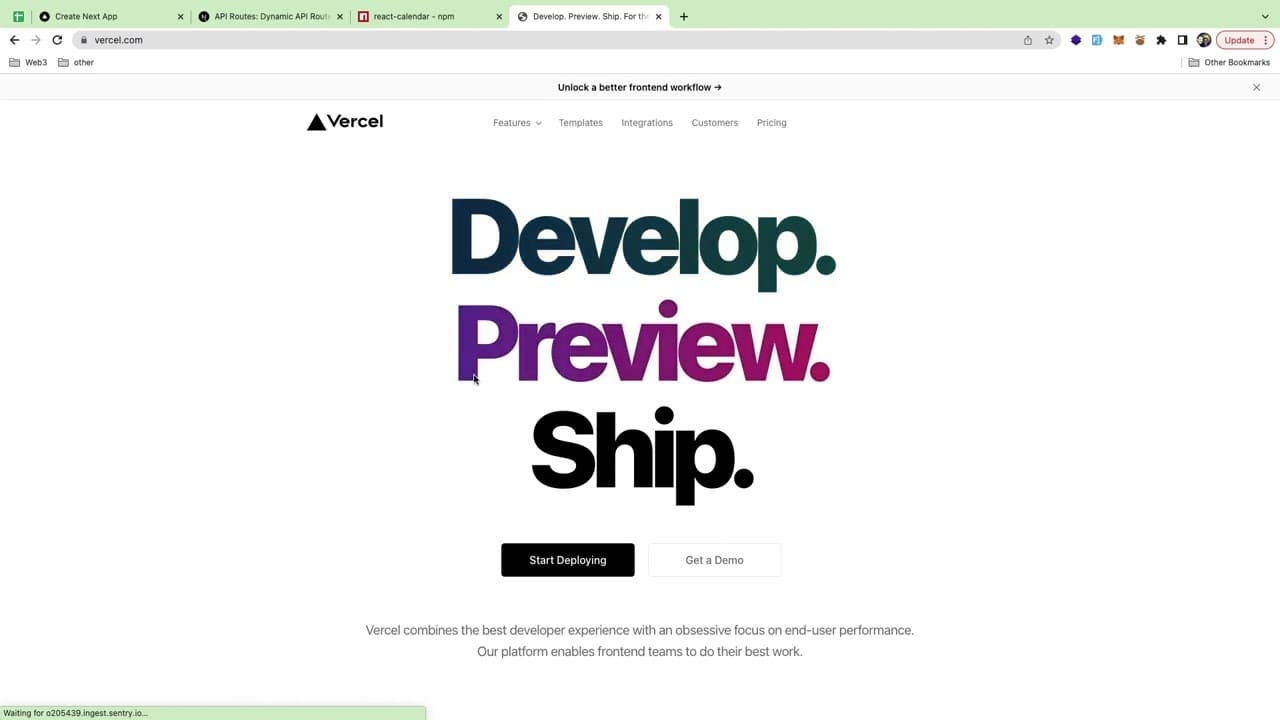
- 👾 The convenience of deployment platforms like Vercel enables quick hosting of Next.js applications, supporting fast-paced startup environments.
- 🧑🦽 Next.js includes optimizations for performance and image delivery that can save development time and improve application experience without extensive manual configurations.
- 📽️ It's essential for developers to weigh the pros and cons of different approaches, as both Next.js and single-page applications have unique advantages that can cater to specific project needs.
Install to Summarize YouTube Videos and Get Transcripts
Explore YouTube Video Summarizer or Get YouTube Transcript Extractor
Questions & Answers
Q: What are some core features of Next.js?
Next.js combines React with server-side rendering and static site generation, making it effective for building dynamic web applications. It also offers file-based routing which simplifies navigation and state management by avoiding extensive router setups that are common in traditional single-page applications, making it beginner-friendly.
Q: How does Next.js improve SEO for web applications?
Unlike traditional single-page applications which require web crawlers to execute JavaScript to load content, Next.js sends fully rendered HTML pages on request. This method ensures that all visible content is indexed correctly, improving the application's visibility and ranking on search engines without additional configurations.
Q: What are the disadvantages of single-page applications mentioned in the content?
The content emphasizes that single-page applications can lead to issues with SEO due to how content is loaded dynamically, potentially leaving web crawlers unable to index key information effectively. Additionally, routing in SPAs can complicate user navigation, and the entire application must be downloaded upfront, which can impact initial load times.
Q: Why is Next.js considered advantageous for startups?
Next.js streamlines the development process, featuring out-of-the-box optimizations and deployment conveniences that let startups focus on writing code instead of managing complex configurations. Moreover, its compatibility with various hosting platforms simplifies deployment, allowing teams to launch applications quickly and efficiently.
Q: What concerns does the speaker express about using frameworks like Next.js?
The speaker mentions the risk of components being too tightly coupled to frameworks, which can complicate future transitions to other technologies. To mitigate this, they suggest designing components carefully to ensure they remain reusable and not overly dependent on Next.js-specific implementations.
Q: What is file-based routing in Next.js and how is it beneficial?
File-based routing in Next.js allows developers to create routes by simply creating files and directories within the project structure. This eliminates the need for separate routing configurations, making it straightforward for beginners and increasing development speed, ultimately enhancing the overall developer experience.
Summary & Key Takeaways
-
Next.js is a powerful framework for building applications with React, providing server-side rendering, static site generation, and other performance optimizations that are beneficial for SEO and user experience.
-
Single-page applications (SPAs) have their advantages but can struggle with SEO since web crawlers may find it difficult to index content loaded via JavaScript, making Next.js a superior alternative for visibility.
-
The ease of deployment and built-in features of Next.js make it an attractive option for startups, allowing developers to focus on building applications instead of spending time on configurations and server management.
Read in Other Languages (beta)
Share This Summary 📚
Summarize YouTube Videos and Get Video Transcripts with 1-Click
Try YouTube Summary with ChatGPT & Claude or YouTube Transcript Generator
Explore More Summaries from Web Dev Cody 📚



Summarize YouTube Videos and Get Video Transcripts with 1-Click
Try YouTube Summary with ChatGPT & Claude or YouTube Transcript Generator