How to Sell AI Digital Products on Instagram
TL;DR
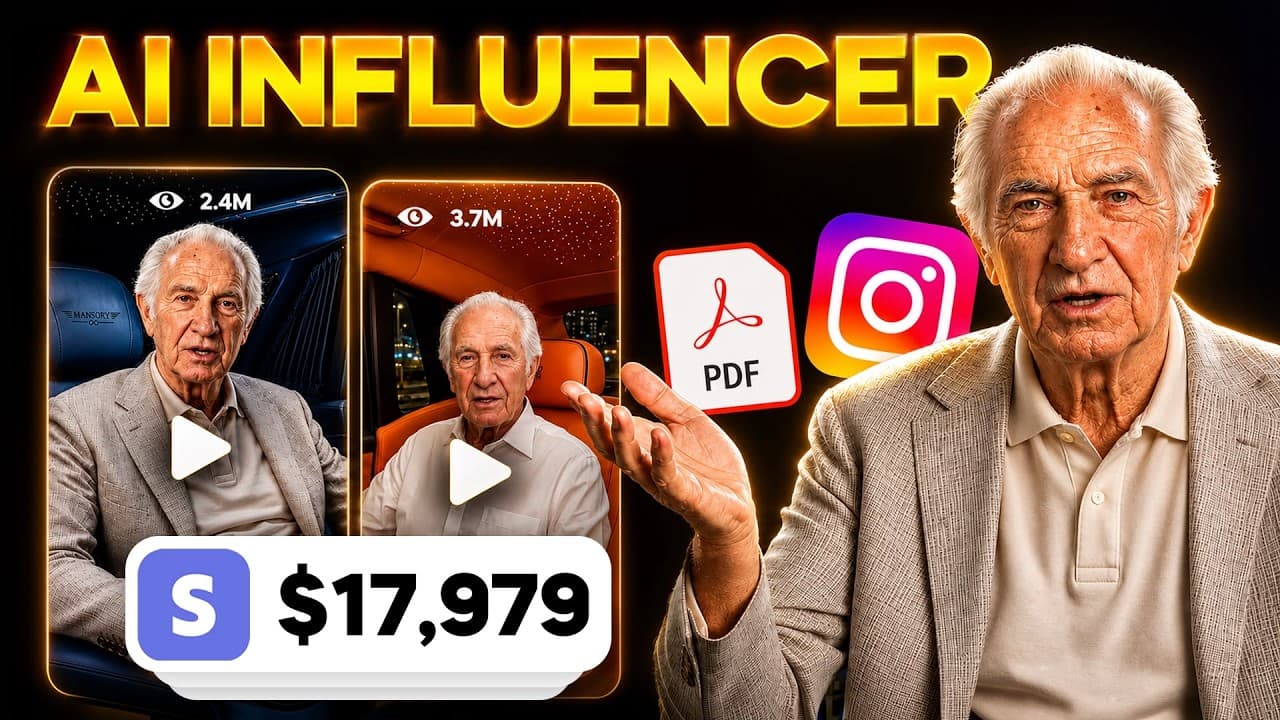
Start by choosing a digital product that fits your resources, then use AI to build the product and landing page, automate checkout delivery, and send targeted Instagram traffic to the offer. The demonstrated funnel combined organic reels, automated direct messages, and a $20 paid ad, although no sale had occurred after the first six and a half hours.
Transcript
[music] I've made seven figures selling simple digital products on social media and now AI can do almost 90% [music] of the work for you. But I've noticed that most people are still building and selling digital products the complete [music] wrong way. So today we're fixing that. I'm going to show you the four best types of digital products to build... Read More
Key Insights
- Ebooks are the lowest-barrier digital product discussed, with automated delivery and no ongoing fulfillment. The suggested selling range is $9 to $97, and the challenge selected an ebook because it was considered faster to build and easier to sell than the other options.
- Templates are practical products such as spreadsheets, planners, dashboards, content calendars, and budget trackers. Their value comes from giving buyers a useful structure without requiring them to create the underlying system themselves, and the transcript points to Etsy as evidence that customers purchase these time-saving resources.
- Courses carry higher prices and perceived value than simpler digital products, but they also require more work to build. The stated conditions for selling them successfully are having knowledge worth teaching and an audience that already trusts the person offering that knowledge.
- Apps have the highest ceiling among the four product types because they are software, although they are usually the hardest to create. One cited mental-health app gained almost 30,000 users in six months through Instagram marketing and was later acquired.
- Manus is presented as an AI execution tool that can plan, research, and build digital products rather than only answer questions. It produced the first version of a 20-page ebook and generated an editable landing page from a detailed prompt within the demonstrated workflow.
- The ebook offer was priced at $27 after comparing it with other ebooks selling for $9. The checkout was connected through Stripe, while Woo and Kajabi were also named as possible platforms capable of processing purchases and delivering an ebook.
- Automated fulfillment is essential to the demonstrated funnel because customers should receive an email containing the ebook immediately after purchase. The product, landing page, checkout, and delivery process were therefore configured before traffic was sent to the offer.
- Instagram traffic can come from both organic content and paid advertising. The organic approach linked reels, profile visits, comment-triggered messages, and the landing page, while the paid approach used a $20 Facebook ad aimed at men aged 30–55 with specified financial interests.
Install to Summarize YouTube Videos and Get Transcripts
Explore YouTube Video Summarizer or Get YouTube Transcript Extractor
Questions & Answers
Q: What are the best AI digital products to sell?
The four digital product types highlighted are ebooks, templates, courses, and apps. Ebooks have the lowest barrier to entry, templates provide ready-made structure, courses support higher prices and perceived value, and apps offer the highest ceiling while usually requiring the most work. The description also identifies software as a service as part of the app category.
Q: How do you create an ebook with AI?
Start with a detailed prompt that defines the ebook title, target reader, desired length, writing voice, chapter topics, and style. The example requested a 20-page wealth ebook for men over 30, written in the voice of a distinguished older man. Manus generated the chapters and sections, after which the initial version could be revised to change its appearance.
Q: How do you build a landing page for a digital product?
The demonstrated method uses Manus and a detailed written prompt to generate the landing page. After generation, its edit mode lets the creator select an element, describe the desired change, and run the instruction. The finished page then needs a purchase button connected to a checkout page so visitors can buy the digital product.
Q: How should an ebook checkout and delivery system work?
The checkout should process the purchase and immediately send the buyer an email containing the ebook. Stripe was used in the demonstration, while Woo and Kajabi were mentioned as alternatives. The essential requirement is automated delivery after payment, because a customer who does not promptly receive the purchased product is likely to be unhappy.
Q: How can Instagram organically sell a digital product?
An organic Instagram funnel can use reels to reach potential customers, direct viewers to the account profile, and present a product link in the bio. The demonstrated approach also asked viewers to comment a keyword. An automation tool then sent those commenters a message containing a link to the ebook landing page, creating a path from content to purchase.
Q: How do comment-triggered Instagram messages drive sales?
A reel ends with a call to action asking viewers to comment a chosen word if they want the ebook or blueprint. When someone submits that comment, an automation sends a direct message leading to the product landing page. This connects audience engagement to the sales page without requiring the account owner to message each interested viewer manually.
Q: How was the paid ad for the ebook configured?
The paid campaign required a Facebook Ads Manager account, an ad creative, and a budget. The creator allocated $20 and targeted men aged 30–55 who were interested in wealth, investing, and financial independence. The ad and the organic Instagram funnel both directed traffic to the same landing page, allowing one offer to receive visitors from two sources.
Q: Did the AI ebook make a sale during the experiment?
After the first six and a half hours, the ebook had not generated a sale, although traffic had begun reaching the landing page. The creator interpreted this early result as a reason to consider changing the paid advertising creative. The supplied transcript ends during that assessment, so it does not establish whether a sale occurred later in the experiment.
Summary & Key Takeaways
-
Digital products offer a low-overhead model because they require no physical inventory or shipping and can be sold repeatedly after creation. The four highlighted formats are ebooks, templates, courses, and apps. Ebooks have the lowest entry barrier, while apps offer the highest potential ceiling but are typically harder to create.
-
For the challenge, a 20-page wealth ebook targeting men over 30 was created with Manus. The AI tool generated the chapters and initial design, then produced an editable landing page from a detailed prompt. The offer was priced at $27 and connected to a checkout system with automated email delivery.
-
Traffic was generated through organic and paid Instagram marketing. The organic funnel used an AI influencer account with almost 200,000 followers and automated messages triggered by comments. A separate Facebook ad targeted men aged 30–55 interested in wealth, investing, and financial independence, using a budget of $20.
Read in Other Languages (beta)
Share This Summary 📚
Summarize YouTube Videos and Get Video Transcripts with 1-Click
Try YouTube Summary with ChatGPT & Claude or YouTube Transcript Generator
Explore More Summaries from DIGITAL INCOME PROJECT 📚





Summarize YouTube Videos and Get Video Transcripts with 1-Click
Try YouTube Summary with ChatGPT & Claude or YouTube Transcript Generator