What Are the Types of Damages in Contract Law?
TL;DR
In contract law, the three main types of damage remedies are expectation damages, reliance damages, and restitution damages. Expectation damages aim to put the plaintiff in the position they would have been had the contract been fulfilled, reliance damages reimburse for losses incurred from relying on the contract, and restitution damages require the breaching party to return any benefits received. Courts often view medical cases skeptically regarding expectation damages due to the subjective nature of health outcomes.
Transcript
today we're going to learn about the three types of contractual damage remedies through the case of Sullivan versus O'Connor which was decided by the Supreme Judicial Court of Massachusetts in 1973 Alice Sullivan was a professional entertainer and she had a problem her nose was excessively long and prominent she found a plastic surgeon dr. James O ... Read More
Key Insights
- 🧘 Courts generally grant expectation damages in breach of contract cases to put the plaintiff in the position they would have been if the contract had been fulfilled.
- 😷 In medical cases, courts are skeptical about awarding expectation damages due to the difficulty of calculating the value of hypothetical outcomes.
- 🌸 Reliance damages aim to reimburse the plaintiff for losses caused by relying on the contract, and they are becoming more prevalent in patient-physician contract cases.
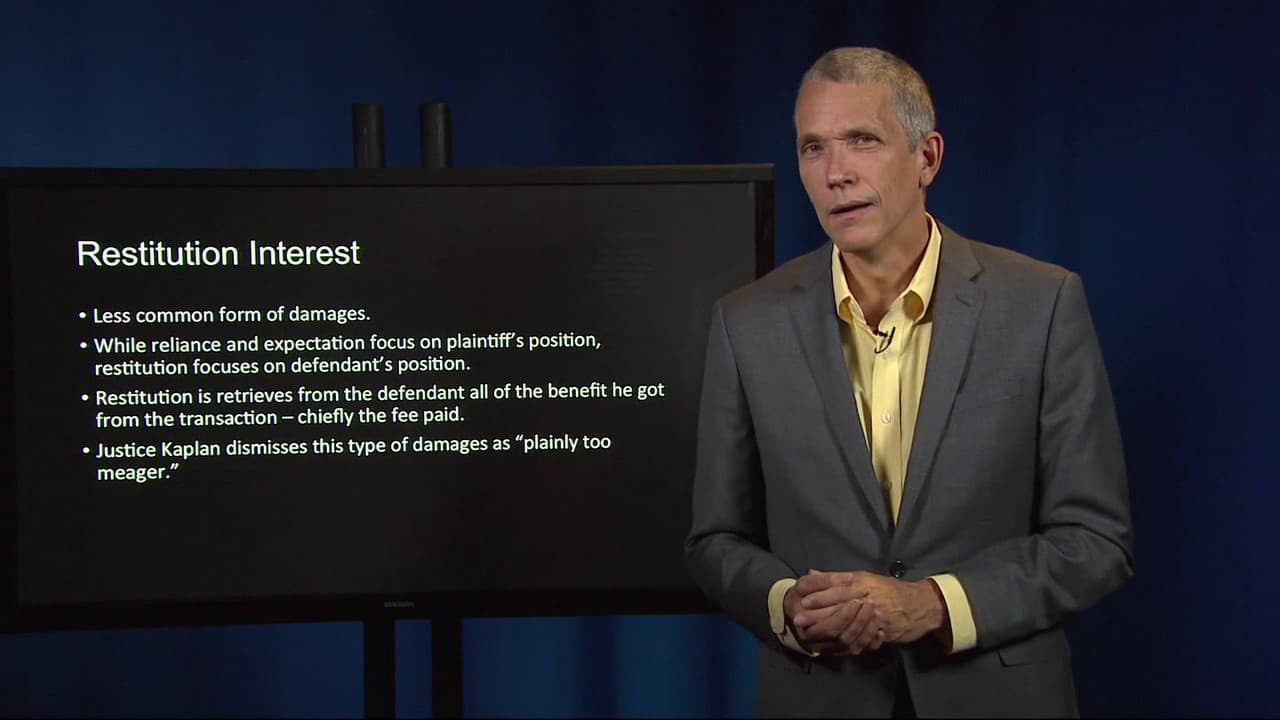
- 🥳 Restitution damages focus on making the breaching party return any benefits received from the contract.
Install to Summarize YouTube Videos and Get Transcripts
Explore YouTube Video Summarizer or Get YouTube Transcript Extractor
Questions & Answers
Q: What was the central issue in Sullivan v. O'Connor?
The central issue was whether a patient could receive damages for anything other than direct expenses in a contract case, particularly for pain and suffering and the failure to achieve the promised result.
Q: Why are courts skeptical about enforcing doctor's promises of specific results?
Courts are skeptical because doctors rarely make such promises in good faith, and turning every statement about a procedure into a guarantee would lead to litigation. Moreover, enforcing these promises could encourage defensive medicine and make it difficult to calculate the value of hypothetical outcomes.
Q: What are the three main interests that contract damages protect?
The three main interests are the expectation interest, which aims to put the plaintiff in the position they would have been if the contract had been performed; the reliance interest, which seeks to reimburse the plaintiff for losses caused by relying on the contract; and the restitution interest, which ensures the breaching party doesn't benefit from the contract.
Q: What are the differences between expectation damages and reliance damages?
Expectation damages focus on the difference between the promised outcome and the actual outcome, while reliance damages aim to put the plaintiff back in the position they were in before entering the contract.
Summary & Key Takeaways
-
Alice Sullivan, a professional entertainer, underwent three unsuccessful surgeries to alter her nose as promised by Dr. James O'Connor.
-
Sullivan sued O'Connor for breach of contract and medical malpractice, and the jury awarded her damages for breach of contract.
-
The court analyzed different measures of damages, including expectation damages, reliance damages, and restitution damages, to determine what Sullivan was entitled to receive.
Read in Other Languages (beta)
Share This Summary 📚
Summarize YouTube Videos and Get Video Transcripts with 1-Click
Try YouTube Summary with ChatGPT & Claude or YouTube Transcript Generator
Explore More Summaries from YaleCourses 📚


Summarize YouTube Videos and Get Video Transcripts with 1-Click
Try YouTube Summary with ChatGPT & Claude or YouTube Transcript Generator