How Russia Sabotaged China's Rise: Sarah Paine Explains
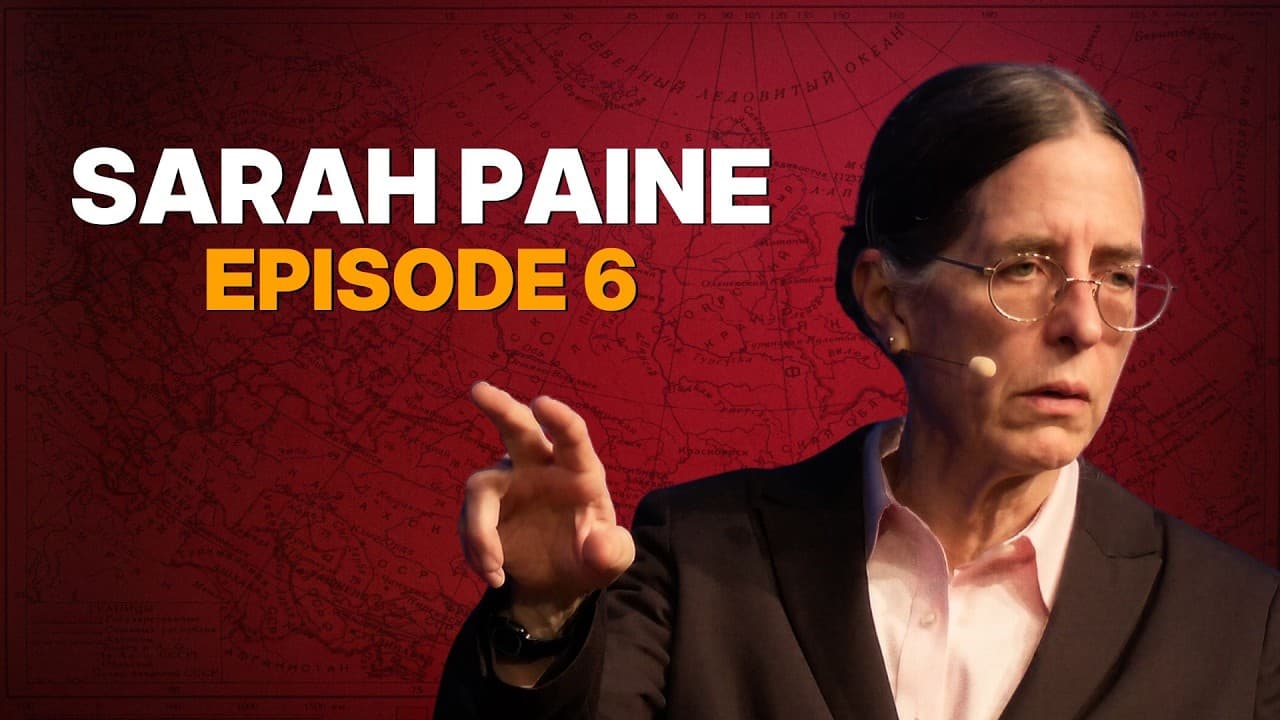
TL;DR
Russia repeatedly derailed China's rise for over a century by posing as a mediator against Britain, France, and Japan while quietly seizing Chinese territory for itself. Through the Opium War treaties, the Triple Intervention, and the Karakhan Manifesto, Russia extracted the largest foreign concessions in China while its propaganda steered Chinese anger toward other imperialists.
Transcript
People are worried about whether there's going to be an enduring relationship with China and Russia. If you look at this picture, the relations look more glacial than cordial and the little one's hauling on the arm of the big one. One wonders about that. It turns out my expertise is on Russo-Chinese relations. That's what I studied in graduate s... Read More
Key Insights
- Continental empires follow fixed rules: avoid two-front wars, tolerate no great powers on the border, take on neighbors sequentially, destabilize the rising, ingest the failing, and set up buffer zones while waiting for the moment to pounce. Sarah Paine calls this Vladimir Putin's game.
- Russia derailed China's rise by scripting the Chinese into actions detrimental to Chinese interests but favorable to Russia, exploiting a period when China was beset by civil wars like the Taiping and Nian Rebellions that it mislabels as mere rebellions.
- The Treaties of Aigun (1858) and Peking (1860) ceded large swaths of Central Asia and the Pacific coastline to Russia after Russia offered to handle the British and French; the vague Qing wrongly assumed they could reclaim the land later.
- In the Triple Intervention after the First Sino-Japanese War, Russia rallied France and Germany to force Japan off the Liaodong Peninsula, then promptly took that very territory for itself, triggering wider foreign carve-ups across China.
- Strategic communication was Russia's cheapest and most effective weapon; the Bolsheviks understood other peoples' emotional lives and issued propaganda that made the Chinese despise the Japanese and Europeans while Russia's greater predations went unnoticed.
- The 1919 Karakhan Manifesto promised to return all lands from the unequal treaties for free, but once the Bolsheviks were winning their civil war they walked the offer back to mere negotiations, birthing the myth of Sino-Soviet friendship.
- Russia held by far the largest concession area of any country in China and did not return the concessionaries until the 1950s, long after Western powers had returned almost all of theirs, though Russia's concessions made no money.
- Russia funded the Whampoa Military Academy in Canton with aid, arms, and expertise, educating both Communist and Nationalist officers, including those who led Chiang Kai-shek's Northern Expedition that reunified China.
Install to Summarize YouTube Videos and Get Transcripts
Explore YouTube Video Summarizer or Get YouTube Transcript Extractor
Questions & Answers
Q: How did Russia sabotage China's rise?
Russia repeatedly derailed China by scripting the Chinese into decisions that harmed Chinese interests but benefited Russia. Posing as a mediator against Britain, France, and Japan, Russia extracted territory through the Opium War treaties, seized Liaodong after the Triple Intervention, and reneged on the Karakhan Manifesto. Meanwhile its propaganda directed Chinese anger toward other imperialists, keeping China in turmoil for over a century while Russia's own predations went unnoticed.
Q: What are the rules of continental empire according to Sarah Paine?
Continental empires must avoid two-front wars because they have multiple neighbors who can attack at any time, and they must tolerate no great powers on their borders since today's friend can be tomorrow's foe. To manage this, they take on neighbors sequentially: destabilize the rising, ingest the failing, and set up buffer zones in between, waiting for the opportune moment to pounce and absorb. Paine identifies this as Vladimir Putin's game.
Q: What did the Treaties of Aigun and Peking do to China?
The Treaty of Aigun of 1858 and the Treaty of Peking of 1860 ceded to Russia large swaths of territory in Central Asia and along the Pacific coastline. Russia obtained them by offering to deal with the British and French while China handled its internal rebellions. The Qing Dynasty was vague on geography and did not understand that Europeans treated these papers as permanent, wrongly assuming they could reclaim the land once they restored internal order.
Q: What was the Triple Intervention and how did Russia exploit it?
After Japan defeated China in the First Sino-Japanese War and sought territory on the Liaodong Peninsula, China asked Russia to help counterbalance Japan. Russia gathered its allies France and Germany in the so-called Triple Intervention to gang up on Japan, which backed down against three great powers. Russia then promptly took for itself the very Liaodong territory that had just been denied to Japan, and further foreign powers carved out concession areas across China.
Q: What was the Karakhan Manifesto and why does it matter?
In 1919 Bolshevik deputy foreign minister Lev Karakhan sent a manifesto to the Chinese Foreign Ministry claiming the Bolsheviks were not imperialists and would return all lands from the unequal treaties for free, with no payments necessary. This offered the Chinese hope and a model to follow. But as the Bolsheviks began winning their civil war, they dialed the offer back to mere negotiations. It became the origin of the myth of Sino-Soviet friendship.
Q: Why did Russia use propaganda against China?
Propaganda, which Paine calls strategic communication, was a cheap but incredibly effective strategy for a Russia devastated by World War I and its own civil war until 1922. The Russians understood other peoples' emotional lives and what set them against each other. They served out propaganda that made the Chinese despise the Japanese and Europeans, while Russia's even greater predations, such as its territorial seizures, went unnoticed and unpunished.
Q: How large were Russia's concession areas in China compared to others?
Russia had by far the largest concession area of any country in China, far bigger than well-known British concessions like Hong Kong, which is actually quite small and famous mainly because it made money. Russia's concessionaries did not make money, but were huge in size. Russia did not return them until the mid-20th century, the 1950s, long after Western powers had returned almost all of their own concession areas in China.
Q: What role did Russia play in the Whampoa Military Academy?
Previous South China attempts to reunify or secede had failed for lack of a proficient military, but Russia changed that by providing aid, arms, expertise, and structures to fund the Whampoa Military Academy in Canton, also known as Guangzhou. That institution educated the officers, both Communist and Nationalist, who would lead Chiang Kai-shek's Northern Expedition reunifying China by defeating or co-opting the warlords, as well as officers active during the civil war era.
Summary & Key Takeaways
-
Sarah Paine, whose expertise is Russo-Chinese relations, frames history as the only database for predicting the future. She examines three eras: Russia strong and China weak (mid-19th to mid-20th century), the reversal, and the recent period of a strong China and weak Russia, beginning her story in the mid-19th century.
-
Continental empires like Russia and China survive by avoiding two-front wars and refusing great-power neighbors. They take neighbors on sequentially, destabilize the rising, ingest the failing, and build buffer zones, surrounding themselves with failing states. This overextension helps explain their periodic bloody implosions and the ruins scattered across Eurasia.
-
Russia repeatedly played mediator to seize Chinese land: the Opium War treaties, the Triple Intervention where it took Liaodong itself, and the Karakhan Manifesto that promised then withheld the return of concessions. Propaganda redirected Chinese anger elsewhere, while Russia funded the Whampoa Academy training future Nationalist and Communist officers.
Read in Other Languages (beta)
Share This Summary 📚
Summarize YouTube Videos and Get Video Transcripts with 1-Click
Try YouTube Summary with ChatGPT & Claude or YouTube Transcript Generator
Explore More Summaries from Dwarkesh Patel 📚




Summarize YouTube Videos and Get Video Transcripts with 1-Click
Try YouTube Summary with ChatGPT & Claude or YouTube Transcript Generator