Why Do Some Gifted Adults Refuse to Grow Up?
TL;DR
Chronic avoidance of commitment protects the eternal child from failure, disappointment, inadequacy, and mortality, but it also traps genuine talent in unrealized potential. The way forward is to accept ordinary responsibilities, choose meaningful aims, and recognize that maturity can protect creativity rather than destroy it. Growth begins through self-initiated participation in work, relationships, and society.
Transcript
After hitting snooze three times, you wake up later than you'd like. You scroll on your phone, sickened with the world before you, influencers, celebrities. You're smarter, more creative, more beautiful than these false digital idols. And eventually, you emerge from your bed to greet the day with a coffee and a cigarette. You mean to do some work, ... Read More
Key Insights
- The puer aeternus is an archetype describing someone who refuses commitment because concrete choices bring responsibility, possible failure, disappointment, and awareness of mortality. Avoiding definite aims preserves imagined freedom, but it reduces lived experience to a provisional existence in which the person remains a spectator.
- The provisional life is characterized by opportunities remaining unrealized because stable work, housing, education, and relationships feel both overwhelming and beneath the individual. Refusing these commitments protects the fantasy of exceptional potential from the evidence that sustained participation, limitation, and ordinary effort would provide.
- Nostalgia for youth is attractive because beginnings contain abundant possibility before any choice closes alternatives. First love, emerging passions, travel, friendship, and imagined careers can feel more exciting than their daily realities, making endless anticipation seem preferable to maturity, contingency, aging, or possible disappointment.
- Economic uncertainty and an unclear job market can reinforce indecision by making concrete paths appear insecure or unrewarding. Under such conditions, the romantic idea of what might be can feel more sincere or heroic than choosing among imperfect options, even though continued noncommitment produces no stability or closure.
- Giftedness can become a trap when early talent allows success without sustained struggle. Once natural competencies are insufficient, the person must either tolerate mistakes and learn difficult skills or retreat into potential, preserving statements such as being capable of great art or writing without producing the work.
- Avoidance is often maintained through doomscrolling, sexual attention, drugs, alcohol, high-adrenaline experiences, and companions who share the same resistance to adulthood. These forms of escape numb dissatisfaction temporarily while creating a social environment that rationalizes stagnation and portrays participation in ordinary systems as pointless.
- Romantic instability can reflect the same contempt for actuality that disrupts vocational commitment. An imaginative, magnetic person may attract partners with ambitious promises, then fixate on small imperfections or new possibilities when closeness becomes sustained enough to require limitation, responsibility, and an actual choice.
- Maturity is presented as an integration of creativity with responsibility, not the destruction of vitality or potential. Ordinary work, classes, social participation, and difficult tasks provide contact with realities larger than the ego, while commitment supplies the structure through which dreams and values can become tangible.
Install to Summarize YouTube Videos and Get Transcripts
Explore YouTube Video Summarizer or Get YouTube Transcript Extractor
Questions & Answers
Q: What is the puer aeternus or eternal child?
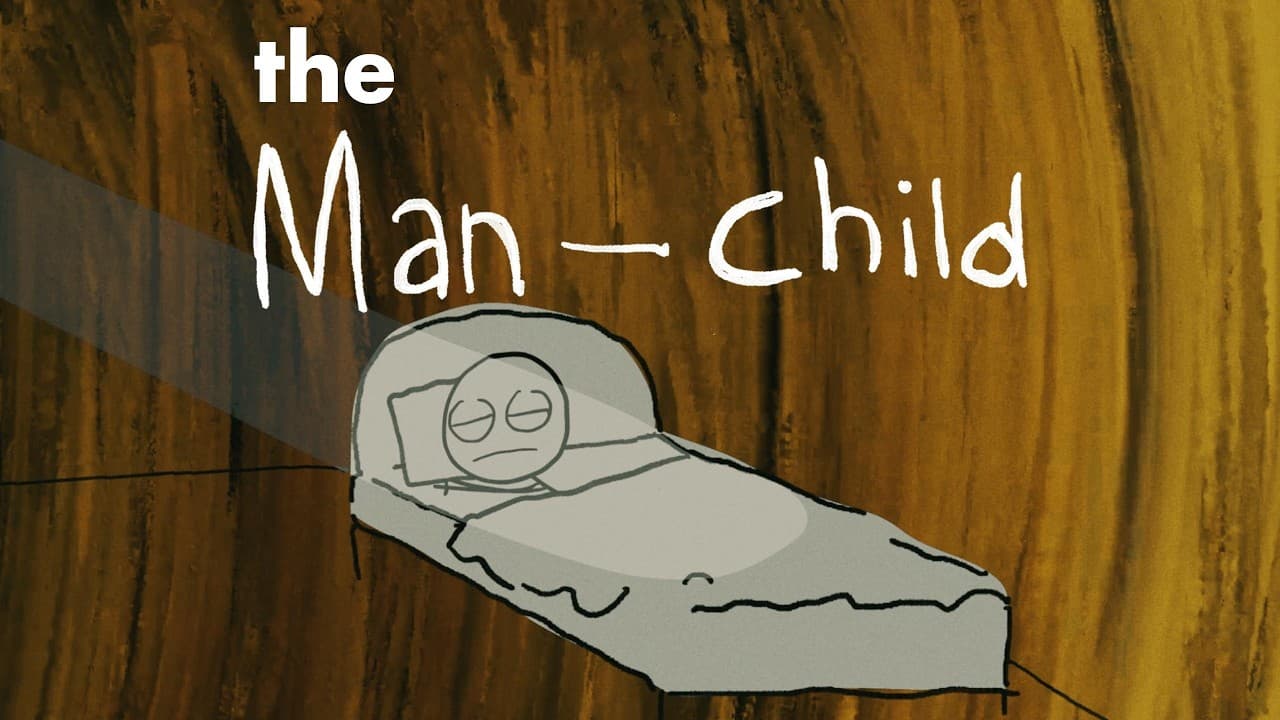
The puer aeternus, also called the child god, Peter Pan syndrome, the man child, or the eternal child, is presented as an archetype for a person who refuses sustained commitment. The person fears the realities attached to choosing, including responsibility, failure, disappointment, limitation, and mortality. As a result, work, education, housing, relationships, and personal aims may remain temporary or unrealized.
Q: Why does the eternal child avoid commitment?
The eternal child avoids commitment because every concrete choice eliminates other imagined possibilities and exposes ability to judgment. Choosing a career, relationship, education, or stable home means accepting contingency and discovering whether one's potential survives ordinary difficulty. Remaining uncommitted protects fantasies of exceptional talent from failure, inadequacy, disappointment, and the recognition that time passes and opportunities do not remain open forever.
Q: How does giftedness contribute to the man child pattern?
Giftedness contributes when early praise and natural competence allow someone to identify with being unusually talented. The person may have excelled in art, speaking, learning, or tasks that classmates found difficult. Later, when advancement requires mistakes, repetition, and the risk of disappointing others, retreating into imagined potential can feel safer than discovering the actual limits and possibilities of those abilities.
Q: What does it mean to live a provisional life?
A provisional life is an existence organized around waiting instead of fully participating. Experiences remain abstract and ghostlike because the individual avoids definite aims, stable obligations, and sustained contact with consequences. The person may watch life as a spectator, procrastinate through digital entertainment and social activity, and repeatedly end the day dissatisfied because little has moved from imagination into realized action.
Q: Why can modern uncertainty reinforce refusal to grow up?
Modern uncertainty reinforces avoidance because the economy and job market may offer little security, gratification, clarity, or closure. The transcript also describes threatened future jobs and rapidly shifting assumptions about the world. In that environment, keeping every possibility open can appear reasonable or even heroic. However, romanticizing what could be still leaves the person dependent on hopes and dreams rather than chosen commitments.
Q: How does the eternal child behave in relationships?
The eternal child may begin relationships through charm, imagination, ambitious ideas, and promises that resemble the dreams repeatedly told to oneself. As daily togetherness creates real commitment, minor objections can become reasons to withdraw, such as a partner snoring or living too far away. Dating apps make replacement readily imaginable, allowing loneliness to be followed by another possibility instead of sustained intimacy.
Q: What habits keep the eternal child stuck?
Procrastination, video games, texting, naps, doomscrolling, sexual attention, drugs, alcohol, and high-adrenaline pursuits can anesthetize dissatisfaction without resolving it. A group of similarly avoidant companions may strengthen the pattern by insisting that ordinary systems are rigged and commitment only leads to disappointment. These habits offer momentary escape while preserving fragmentation, restlessness, and movement toward no particular destination.
Q: How can someone escape the eternal child pattern?
Escaping the pattern begins by accepting that maturity does not require surrendering creativity, vitality, dreams, or values. Responsibility and commitment can instead guard those qualities by giving them durable form. The person must identify what matters, accept ordinary participation, attempt difficult or unwanted tasks, and act without waiting for rescue. Growth comes from self-initiated engagement with work, relationships, society, and concrete consequences.
Summary & Key Takeaways
-
The puer aeternus, also called the eternal child or man child, avoids commitments that would turn imagined possibilities into concrete realities. Work, housing, education, and relationships remain provisional because choosing exposes the person to responsibility, limitation, failure, disappointment, and mortality. Life consequently becomes passive, abstract, repetitive, and detached from purposeful action.
-
Giftedness can intensify this pattern because early praise allows natural ability to become part of a protected identity. When progress eventually requires difficult practice, mistakes, and possible insignificance, the person may retreat into claims about what could have been. Distraction, intoxicants, thrills, and similarly avoidant companions can help preserve that unrealized self-image.
-
Recovery requires integration rather than abandoning youthfulness, imagination, or creativity. Commitment and responsibility can serve as guardians of dreams by giving them structure and contact with reality. The person must accept ordinary participation, identify what genuinely matters, undertake unwanted or unglamorous tasks, and initiate action instead of waiting for rescue or perfect certainty.
Read in Other Languages (beta)
Share This Summary 📚
Summarize YouTube Videos and Get Video Transcripts with 1-Click
Try YouTube Summary with ChatGPT & Claude or YouTube Transcript Generator
Explore More Summaries from Sisyphus 55 📚



Summarize YouTube Videos and Get Video Transcripts with 1-Click
Try YouTube Summary with ChatGPT & Claude or YouTube Transcript Generator