How Do Dead Players Look Alive in Among Us?
TL;DR
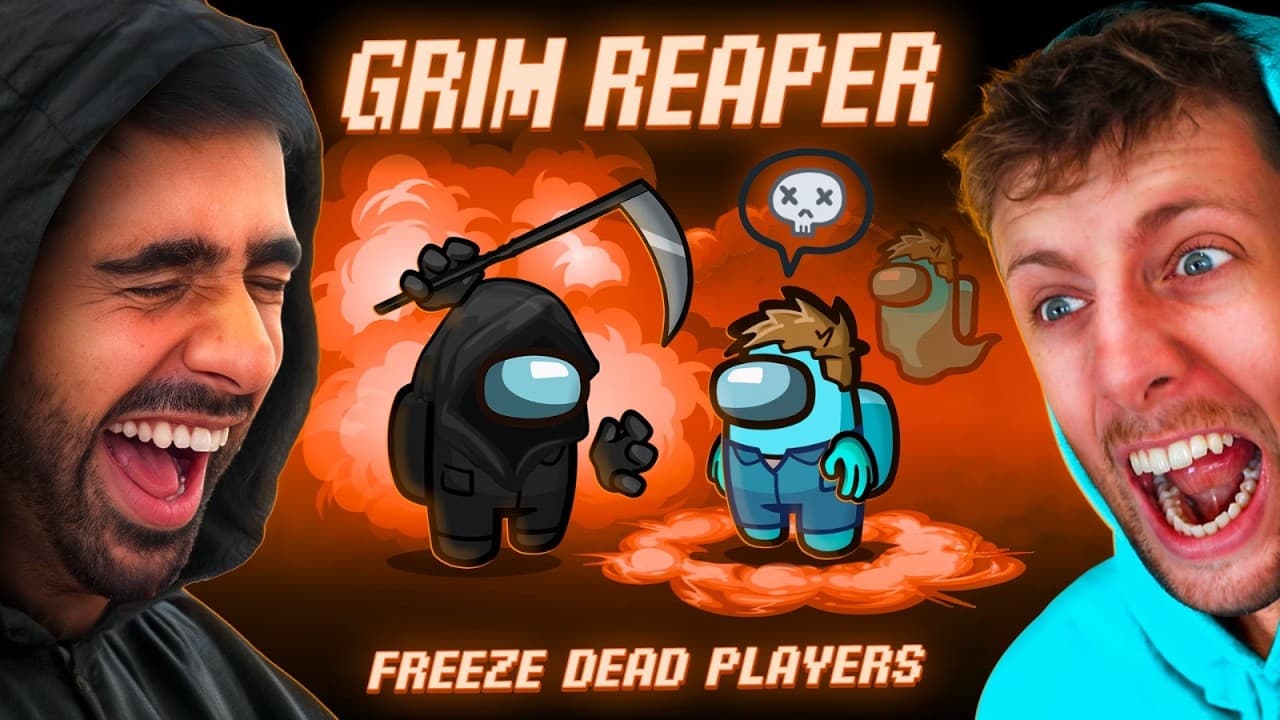
Dead players can remain standing and unreportable after the Soul Collector kills them, making ordinary movement checks crucial for identifying bodies. The Halloween session also introduces a Bomber who places pumpkin bombs, an Astral role that passes through walls, a Tracker who monitors movement, and a Vigilante who can guess impostor roles during meetings.
Transcript
Happy Halloween everybody. Today we have two Halloween themed killer roles. One is a soul collector. Whoever they kill does not move. Their body remains intact wherever they are and they are dead and they cannot be reported either. The other is a bomber who drops pumpkins as bombs instead. So I've been Among Us. Halloween special. It's me and Meus.... Read More
Key Insights
- The Soul Collector is a killer role whose victims remain visually intact and motionless at the location of death. These bodies cannot be reported, so players must recognize death through unusual inactivity rather than relying on the normal report mechanic.
- The Bomber is a Halloween killer role that drops pumpkins as bombs instead of using an ordinary kill. Successful play requires understanding where to place a bomb and how its effect triggers, which becomes difficult for a player returning after a long absence.
- The Halloween map is filled with environmental distractions, including animated bats, jump scares, a devilish table, Frankenstein imagery, and a skeleton-building area. These effects create atmosphere while also interrupting observation and making it harder for players to retain useful movement information.
- The Tracker gains information by following the movement of other players. Tracking can narrow possible routes and suspects, but the session shows that movement evidence remains uncertain when witnesses forget names, confuse rooms, or cannot tell whether a stationary character is alive.
- The Vigilante can attempt to kill an impostor during a meeting by correctly guessing that player's role. This ability rewards confident deduction, but an incorrect or premature choice can waste the role before enough evidence has been collected.
- The Astral role can pass through walls with ease. Wall movement changes the value of ordinary route-based reasoning because a player with this ability does not need to follow the same corridors and entrances that other participants must use.
- The central deception is that visible characters are not reliable proof of life. Players encounter motionless figures and must decide whether they were killed by the Soul Collector, are occupied with a task, have stopped playing, or are deliberately pretending to be dead.
- The group relies on sightings, task claims, room locations, and travel timing during meetings. These clues frequently conflict because participants misremember who passed them, correct themselves mid-explanation, and challenge claimed tasks such as the sandwich activity described as a burger task.
Install to Summarize YouTube Videos and Get Transcripts
Explore YouTube Video Summarizer or Get YouTube Transcript Extractor
Questions & Answers
Q: How do dead players still look alive in Among Us?
Dead players still look alive because the Soul Collector leaves a lasting image of each victim at the place where the kill occurred. The character remains standing and does not move, while the body cannot be reported through the normal mechanic. Other players therefore have to notice prolonged inactivity and use nearby sightings or movement history to infer that the visible character is dead.
Q: What does the Soul Collector role do in Among Us?
The Soul Collector kills players while leaving their visible characters intact and stationary. Its victims cannot be reported, removing one of the crew's standard ways to call attention to a death. The role creates uncertainty because observers may initially interpret a motionless character as someone doing a task, standing still, pretending to be dead, or experiencing a problem outside the game.
Q: How does the Bomber role work in the Halloween session?
The Bomber drops pumpkin bombs instead of performing a conventional kill. The player using it attempts to place a bomb beside another character and then waits to see whether it explodes, but admits that the mechanic is unclear and that too much is happening at once. The transcript therefore establishes the bomb placement concept, but does not provide a complete explanation of its trigger conditions.
Q: What special crew roles appear in the Halloween game?
The session mentions several special roles alongside ordinary crewmates. The Astral can pass through walls, the Tracker can follow everyone's movement, and the Vigilante can guess an impostor's role during a meeting to kill that target. A Spy is briefly mentioned before the player corrects the role to Tracker. Each ability changes how movement or meeting evidence can be used.
Q: Why are motionless players difficult to identify as dead?
Motionless players are difficult to classify because the Soul Collector's victims remain standing and cannot be reported. A living player can also stop moving during a task or deliberately stand still to imitate a hidden corpse. During the session, participants even joke that a stationary person might have died outside the game, showing how little direct confirmation the altered mechanic provides.
Q: How do players investigate kills when bodies cannot be reported?
Players investigate hidden kills by watching whether characters continue moving, remembering who entered or left nearby rooms, and comparing sightings during meetings. They discuss routes through navigation, electrical, admin, storage, and other locations. This approach is unreliable when memories conflict, so a player may need several consistent observations before deciding that a stationary figure is a victim or identifying who passed nearby.
Q: What makes the Halloween map distracting for deduction?
The Halloween map includes animated bats, sudden jump scares, a devilish table, Frankenstein being zapped, a skeleton-building area, and other themed visuals. Players repeatedly stop to react to these details, test environmental triggers, or admire the design. Those interruptions consume attention that could otherwise be used to track routes, remember encounters, complete tasks, and recognize when someone has stopped moving permanently.
Q: What evidence do players use to accuse suspects during meetings?
Players compare room locations, movement timing, task claims, and the order in which people passed one another. They question how someone reached navigation, note who was near electrical, and challenge whether a claimed burger task exists before clarifying that it is a sandwich-copying task. The evidence remains inconclusive because speakers revise sightings, confuse identities, and offer competing accounts of the same routes.
Summary & Key Takeaways
-
The Halloween session features two themed killer roles. The Soul Collector leaves victims standing where they died, prevents their bodies from being reported, and creates confusion about who is alive. The Bomber replaces ordinary attacks with pumpkin bombs, although the inexperienced player assigned the role struggles to understand their placement and effects.
-
A redesigned map supplies the Halloween atmosphere through animated bats, jump scares, a devilish table, Frankenstein imagery, skeleton construction, and themed tasks such as assembling a sandwich. Players repeatedly react to the environment while learning unfamiliar mechanics, and even experienced participants become distracted by the number of visual events happening around them.
-
Deduction becomes difficult because a motionless character may secretly be dead, pretending to be dead, or simply completing a task. Players compare routes through navigation, electrical, storage, admin, and other rooms, but uncertain memories and overlapping sightings produce weak accusations. Suspicion eventually focuses on several players without establishing a confirmed solution in the provided transcript.
Read in Other Languages (beta)
Share This Summary 📚
Summarize YouTube Videos and Get Video Transcripts with 1-Click
Try YouTube Summary with ChatGPT & Claude or YouTube Transcript Generator
Explore More Summaries from MoreSidemen 📚





Summarize YouTube Videos and Get Video Transcripts with 1-Click
Try YouTube Summary with ChatGPT & Claude or YouTube Transcript Generator