How to Build a Personal Brand That Creates Opportunity
TL;DR
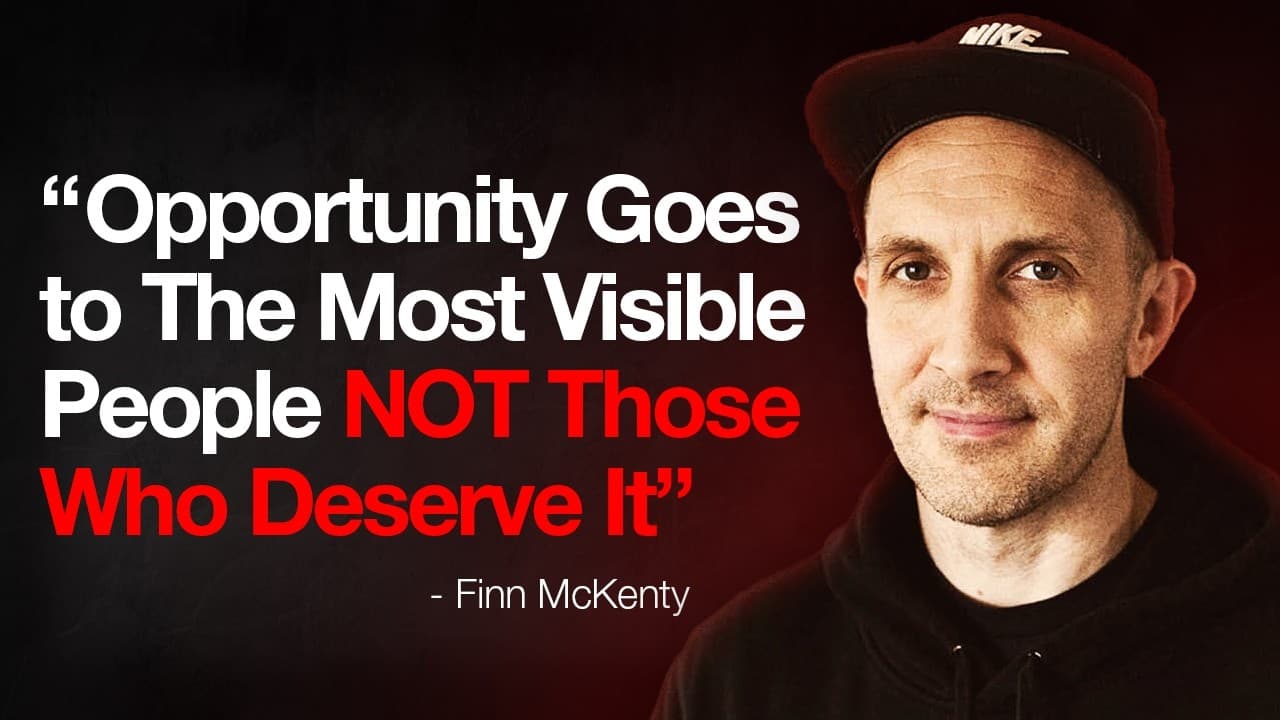
Visibility creates opportunity, so professionals should build a personal brand that repeatedly communicates their story, expertise, and value. Finn McKenty argues that marketing is applied psychology: understand what customers already believe, provide convincing reasons to act, and use emotionally engaging content on platforms such as YouTube and LinkedIn to earn attention as information becomes increasingly accessible.
Transcript
I felt like YouTube is the place for me 130 million views later like now that's a thing I can hang my hat on when you say like I'm a really good maybe a great marketer I don't know what that means I get people to buy opportunity goes to people who are the most visible not necessarily the people who quote unquote deserve it here's how the world work... Read More
Key Insights
- Visibility is a primary source of professional opportunity because people cannot select, hire, or support experts they do not recognize. McKenty argues that opportunity often goes to the most visible person, rather than automatically reaching the person who appears to deserve it most.
- A personal brand is a way to make a professional story, expertise, and value visible. Even attentive followers may miss important background details, as McKenty did not realize Chris Do was associated with Blind until roughly a year before their conversation.
- Marketing is applied psychology because purchasing decisions depend on how people think and what they already believe. McKenty defines strong marketing in practical terms as the ability to get people to buy, connecting strategy directly to observable customer action.
- Accepted Consumer Belief is a Procter & Gamble framework for identifying what customers already believe to be true about a product category. Marketing can begin from that existing mental position instead of assuming that customers approach the category without prior beliefs.
- Design and marketing are connected through the questions of what to make and how to persuade people to buy it. McKenty sees little practical distinction between product design and marketing because both contribute to creating an offer that customers will choose.
- Formal education is valuable when it supplies fundamentals that self-directed learning missed. McKenty returned to college at age 24, spent three years studying design, and credited a computer-free first year with addressing weaknesses hidden beneath his ability to produce flashy, trendy work.
- Career changes can follow an honest assessment of comparative strengths. McKenty concluded that he was a good designer but not a great one, while marketing felt like a natural strength, so he accepted the risk of switching his major from design to business.
- YouTube can support a meaningful second-stage career rather than requiring an early start. McKenty began creating on the platform at age 38, built channels around music history and entertainment, and later reached more than 130 million views.
Install to Summarize YouTube Videos and Get Transcripts
Explore YouTube Video Summarizer or Get YouTube Transcript Extractor
Questions & Answers
Q: How can a personal brand create more career opportunities?
A personal brand makes a person's expertise, experience, and story more visible to potential customers, employers, collaborators, and audiences. McKenty argues that opportunity often reaches the most visible people, not necessarily those judged most deserving. Consistently communicating what you know and what you have accomplished therefore helps others recognize when you are relevant to an opportunity.
Q: Why is visibility important for professional success?
Visibility is important because people cannot associate someone with a skill, service, or opportunity if they do not know that person's story. McKenty illustrates this problem by saying he followed Chris Do's content yet did not realize Do was Chris from Blind until roughly a year earlier. Information that feels obvious to its owner may remain unknown to the audience.
Q: What is Accepted Consumer Belief in marketing?
Accepted Consumer Belief, abbreviated ACB, is a Procter & Gamble framework for understanding what people already believe to be true about a product category. McKenty presents this as a foundational marketing idea. Instead of beginning with an internal company assumption, a marketer first identifies the customer's existing mental model and builds the marketing approach from that starting point.
Q: How does psychology influence effective marketing?
Psychology influences marketing because persuasion depends on understanding how people think, what they believe, and what motivates them to act. McKenty describes marketing as applied psychology and defines his own marketing ability in direct commercial terms: getting people to buy. This perspective treats customer understanding as the foundation for messages, products, and purchasing decisions.
Q: How are product design and marketing connected?
Product design and marketing are connected by two related questions: what should be made, and how can people be persuaded to buy it? McKenty says he sees no meaningful distinction between the disciplines in his work. His design background also helps him collaborate with designers because he understands their responsibilities while approaching projects with a marketer's commercial perspective.
Q: Is it too late to start a YouTube channel at age 38?
McKenty's experience shows that starting YouTube at age 38 can still lead to a substantial audience. He began later than many creators, developed channels focused on music history and more informal music content, and eventually accumulated more than 130 million views. His path demonstrates that a late start does not automatically prevent strong results on the platform.
Q: Why did Finn McKenty switch from design to business?
McKenty switched after recognizing that the problems he most wanted to solve belonged more to marketing than design. Work connected with Procter & Gamble exposed him to a marketing organization he deeply respected. He judged himself to be a good but not great designer, while marketing felt like a natural strength, so he changed his major despite the risk.
Q: What can self-taught designers gain from formal education?
Formal education can provide fundamentals that self-directed practice may overlook. McKenty could create flashy, trendy work, but he believed important foundations were missing. At the University of Cincinnati, his first design year involved no computer work, which helped address those gaps. Returning at age 24 also made him more engaged with classes, office hours, study sessions, and library resources.
Summary & Key Takeaways
-
Finn McKenty moved from self-taught design into formal design education, agency work, and business studies after recognizing gaps in his fundamentals. Experience with major brands and Procter & Gamble helped him discover that marketing problems suited his abilities and interests better than pursuing design as his primary professional identity.
-
McKenty started YouTube at age 38 and eventually accumulated more than 130 million views. His experience supports the argument that opportunity often reaches the most visible people, not necessarily those considered most deserving. A personal brand makes expertise, experience, and a professional story easier for an audience to recognize.
-
Effective marketing begins with psychology and an understanding of existing consumer beliefs. McKenty highlights Procter & Gamble frameworks, including Accepted Consumer Belief and Reason to Believe, alongside storytelling and emotional engagement. As information approaches a near-zero price and AI increases access, visibility and audience trust become increasingly important professional advantages.
Read in Other Languages (beta)
Share This Summary 📚
Summarize YouTube Videos and Get Video Transcripts with 1-Click
Try YouTube Summary with ChatGPT & Claude or YouTube Transcript Generator
Explore More Summaries from The Futur 📚
Summarize YouTube Videos and Get Video Transcripts with 1-Click
Try YouTube Summary with ChatGPT & Claude or YouTube Transcript Generator