What Are Homophones and How Do They Make English Fun?
TL;DR
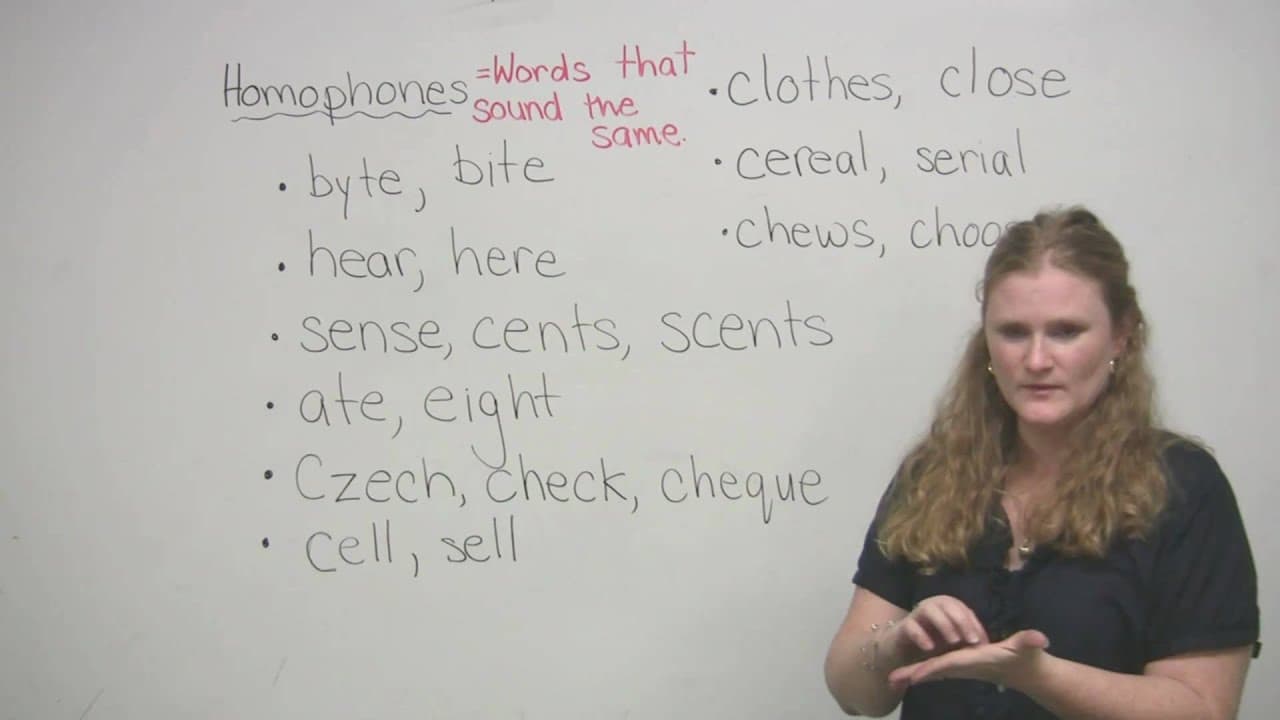
Homophones are words that sound the same but have different meanings, enriching English with opportunities for wordplay and humor. Examples include 'bite' and 'byte', 'hear' and 'here', and 'cereal' and 'serial'. Learning homophones can enhance language skills and improve understanding of jokes in English.
Transcript
Hello there. Today, I'm going to teach you about something that's kind of really fun and easy and entertaining, all in one in English. My name is Ronnie, and I'm going to teach you about homophones. I always like to sing this word. I don't know why. Homophones are words in English that sound exactly the same, but their meaning is completely differe... Read More
Key Insights
- 🔑 Homophones are words that have the same pronunciation but different meanings.
- ❓ Learning homophones can improve language skills and enhance communication in English.
- 🥺 Homophones can lead to laughter, as they provide opportunities for wordplay and jokes.
Install to Summarize YouTube Videos and Get Transcripts
Explore YouTube Video Summarizer or Get YouTube Transcript Extractor
Questions & Answers
Q: What are homophones and why are they important to learn?
Homophones are words that sound the same but have different meanings. They are important to learn because they can lead to confusion in communication if misunderstood. Additionally, understanding homophones allows for a deeper appreciation of wordplay and cultural references in the English language.
Q: How can learning homophones enhance my understanding of English?
Learning homophones can improve your vocabulary and comprehension skills. It allows you to differentiate between words that may have similar pronunciations but distinct meanings, enabling clearer communication and reducing the chances of misunderstanding.
Q: Can you provide examples of common homophones?
Some examples of homophones include: bite (to eat) and byte (computer memory unit), hear (to listen) and here (location), sense (smell) and cents (coins), ate (past tense of eat) and eight (the number), Czech (person from Czech Republic) and check (bill or money), cell (small unit) and sell (to vend), clothes (garments) and close (to shut), and cereal (food) and serial (sequence).
Q: How can understanding homophones enhance my sense of humor?
Understanding homophones allows you to appreciate wordplay and jokes that rely on the same pronunciation of different words. It opens up a world of puns, double entendres, and other forms of humor that native English speakers often enjoy.
Summary & Key Takeaways
-
Homophones are words with the same pronunciation but different meanings, allowing for wordplay and inside jokes in English.
-
Examples of homophones include bite and byte, hear and here, sense, cents, and sense, ate and eight, Czech and check, cell and sell, clothes and close, and cereal and serial.
-
Learning homophones can enhance understanding of English, improve comprehension of jokes, and broaden vocabulary.
Read in Other Languages (beta)
Share This Summary 📚
Summarize YouTube Videos and Get Video Transcripts with 1-Click
Try YouTube Summary with ChatGPT & Claude or YouTube Transcript Generator
Explore More Summaries from English with Ronnie · EnglishLessons4U with engVid 📚






Summarize YouTube Videos and Get Video Transcripts with 1-Click
Try YouTube Summary with ChatGPT & Claude or YouTube Transcript Generator