How to Build a Python GUI for Novel Q&A
TL;DR
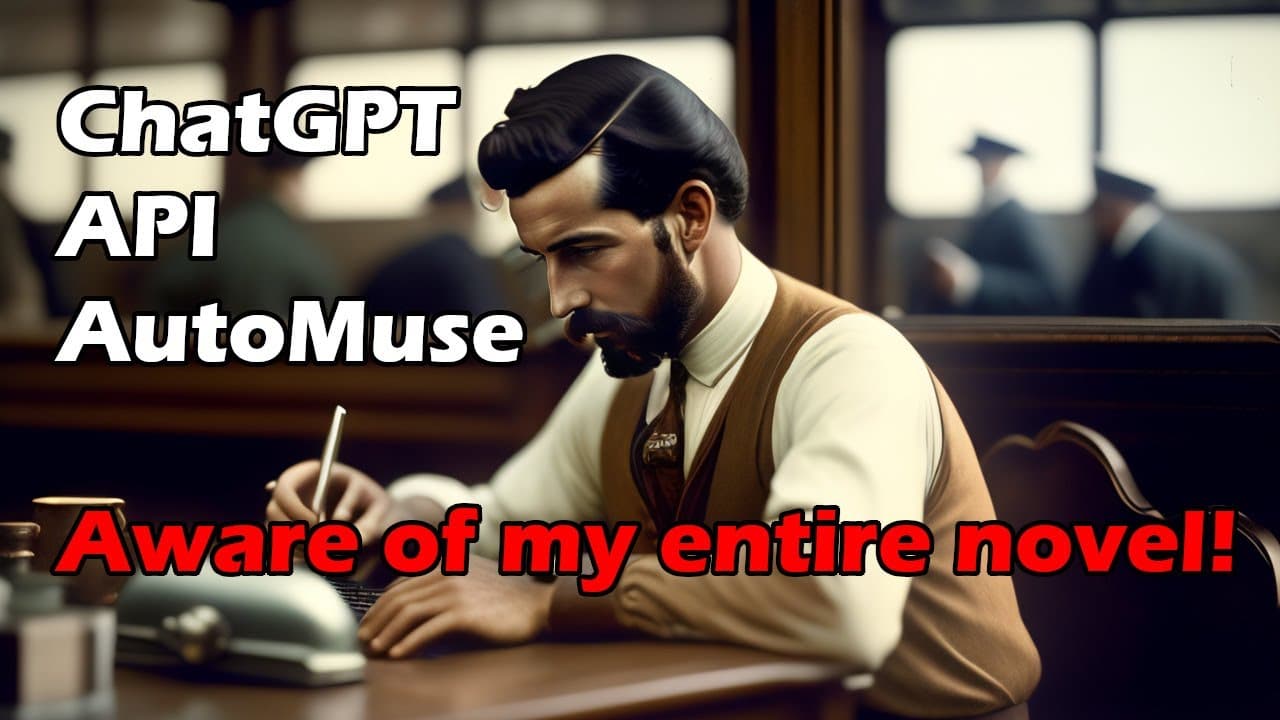
Build a Tkinter writing assistant by loading chapter summaries into a GPT system message, then preserving the conversation in local chat logs. A larger context window lets the assistant answer questions about the broader story, while threading, retry logic, and removal of older messages keep the graphical interface responsive and the conversation within the model’s content limit.
Transcript
hey everybody David Shapiro here with a video update um so this is super exciting let me just go ahead and show you right off the bat what I'm working on and I apologize that it's small um this is uh it's a it's a very primitive graphical user interface but as most of you are aware chat GPT has been in um let'... Read More
Key Insights
- Chapter summaries are the main mechanism for giving AutoMuse broad knowledge of a novel. Instead of placing every chapter’s full text into the prompt, the author copies condensed chapter information into a scratch-pad file that becomes persistent background context for the conversation.
- The system message is the assistant’s operating constitution. It defines the model as a writing coach that can brainstorm, plan, outline, edit story structure, develop characters and themes, and apply formal storytelling concepts while preserving the author’s authority over creative decisions.
- A larger context window expands the amount of story background and conversation that the assistant can consider together. The available GPT-4 window can hold substantial chapter summaries, while the larger endpoint discussed by the author would accommodate more of a completed novel and its working history.
- Local files preserve creative work independently of the ChatGPT website. AutoMuse stores chapter materials, summaries, scratch-pad context, and chat logs in the local repository, while ignore rules prevent those private files and the API key from being included when repository changes are shared.
- Threading keeps the Tkinter interface responsive during slow API calls. The original interface appeared frozen while waiting for a response, so the updated version performs response retrieval separately and displays a status message indicating that AutoMuse is thinking.
- Conversation trimming handles maximum-content-length errors by removing the oldest conversational message. Because the system instruction occupies the first position, the next position represents the oldest exchange that can be discarded when accumulated context becomes too long for the model.
- Exponential backoff makes repeated API failures more manageable. The completion function waits progressively longer between retries and eventually stops, addressing the network and service errors that were frequently interrupting the author’s work at the time of the demonstration.
- Purpose-built models with larger context windows could support different categories of complex work. The author argues that increasing working memory changes which problems are practical, and expects specialized models to emerge for particular tasks rather than forcing every problem into a small context window.
Install to Summarize YouTube Videos and Get Transcripts
Explore YouTube Video Summarizer or Get YouTube Transcript Extractor
Questions & Answers
Q: How do you build a Python GUI for novel Q&A?
Create a Tkinter interface with a conversation display, a text-entry area, and controls for sending messages. Load chapter summaries from a scratch-pad file and insert them into the initial system message before starting the conversation. Send later exchanges through the GPT API, use a background thread while waiting, show a thinking status, and save each exchange to a local chat log.
Q: How can GPT answer questions about an entire novel?
Condense the manuscript into chapter summaries and place those summaries in the model’s initial background context. AutoMuse loads the scratch-pad material into a system message, allowing later questions to refer to characters, plot threads, world building, themes, and previously summarized events. This approach depends on keeping the combined instructions, summaries, and conversation within the model’s available context window.
Q: What should a system prompt for a novel assistant include?
The prompt should define the assistant as a writing coach and describe the forms of help it may provide, including brainstorming, plotting, outlining, planning, developmental editing, character work, world building, themes, backstories, and subplots. It can also request professional storytelling concepts, instruct the model to teach when knowledge gaps appear, and require questions that leave the author in control.
Q: Why use chapter summaries instead of full novel chapters?
Chapter summaries reduce the amount of text placed into the model’s context while retaining enough information to discuss the larger story. In the demonstrated workflow, summaries from the existing manuscript fit within the available GPT-4 context and let the assistant identify major characters or plan upcoming scenes. Full chapters would consume the available working memory much faster and leave less room for conversation.
Q: How does AutoMuse protect private writing and API credentials?
AutoMuse keeps the working materials in local repository files and excludes sensitive paths through the repository’s ignore configuration. The ignored material includes the API key, chapters, summaries, chat logs, and scratch-pad content. This arrangement helps prevent private creative work from being included accidentally when repository changes are shared, while also preserving a local record when the ChatGPT website or its history is unavailable.
Q: How does the Tkinter interface avoid freezing during API requests?
The interface retrieves the model’s response through a background thread instead of making the graphical event loop wait for the API. This allows the window to remain responsive while a completion is being generated. The updated interface also presents an AutoMuse thinking message, giving the user visible feedback instead of leaving the application frozen with a not-responding appearance.
Q: What happens when the GPT conversation exceeds the content limit?
The completion function catches the maximum-content-length condition and removes the oldest conversational message before trying again. The system message remains at the beginning of the message list because it contains the writing-assistant instructions and novel background. The author notes that directly measuring tokens could permit more precise trimming, but that token-counting approach had not yet been integrated into this version.
Q: Why are larger context windows useful for writing assistants?
Larger context windows allow more chapter summaries, story details, and conversational history to remain available during a single exchange. That broader working memory helps the assistant reason across character arcs, plot threads, themes, and future scenes without repeatedly rebuilding context. The author expects increasing context capacity and specialized models to make complex, purpose-built workflows more practical than compressing every task into a small prompt.
Summary & Key Takeaways
-
AutoMuse is a local Python interface that sends requests to the GPT API while keeping novel materials and chat records in repository files. Chapter summaries are manually copied into a scratch pad, which supplies background context that allows the assistant to discuss characters, plots, themes, and future scenes across the broader manuscript.
-
The system message defines the assistant as a writing coach capable of brainstorming, outlining, developmental editing, and discussing finer details such as backstories and subplots. It references formal storytelling approaches, asks the assistant to teach rather than push the author, and encourages questions that keep creative decisions under the author’s control.
-
The Tkinter interface supports resizable windows, color-coded conversation text, word wrapping, keyboard controls, and background processing so API requests do not freeze the application. The completion function also retries temporary failures with exponential backoff, removes the oldest conversational message when the content limit is reached, and saves permanent local chat logs.
Read in Other Languages (beta)
Share This Summary 📚
Summarize YouTube Videos and Get Video Transcripts with 1-Click
Try YouTube Summary with ChatGPT & Claude or YouTube Transcript Generator
Explore More Summaries from David Shapiro 📚


![Claude 3 Review - LLMs are finally good at fiction and prose! [Cyberpunk Fanfic] thumbnail](/_next/image?url=https%3A%2F%2Fi.ytimg.com%2Fvi%2F3anercD5sLA%2Fhqdefault.jpg&w=750&q=75)
Summarize YouTube Videos and Get Video Transcripts with 1-Click
Try YouTube Summary with ChatGPT & Claude or YouTube Transcript Generator