How Is NVIDIA GTC Turning AI Simulations Into Real-World Applications?
TL;DR
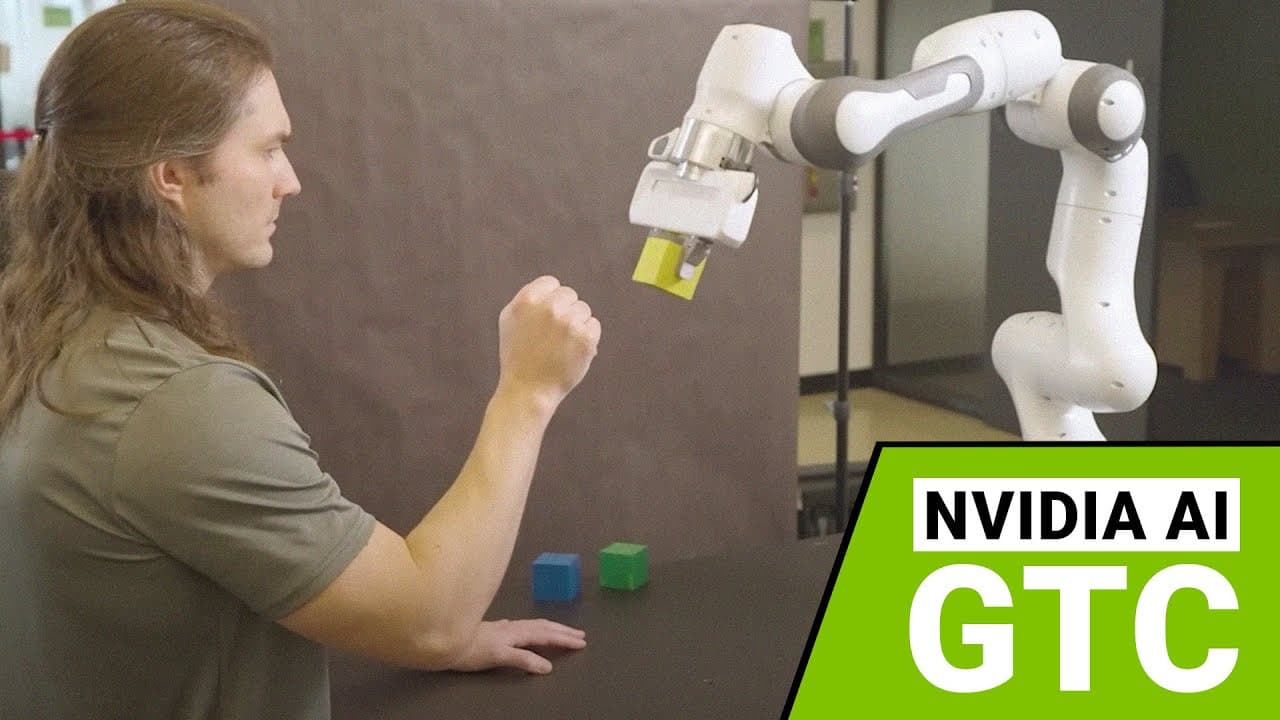
NVIDIA GTC shows that AI simulations are becoming practical tools for self-driving cars, robotics, weather prediction, infrastructure planning, fulfillment centers and virtual assistants. One Isaac Gym example simulates the physics and connections of 5,400 parts so a virtual robot behaves like its real counterpart. The projects reveal how research moves into deployed systems, and why increasingly accurate virtual worlds matter for real decisions, training and investment.
Transcript
Dear Fellow Scholars, this is Two Minute Papers with Dr. Károly Zsolnai-Fehér. Today we are going to see that the research papers that you see here in these videos are real. So real that a ton of them are already seeing use in NVIDIA’s AI projects, some of which are so advanced they seem to be straight out of a science fiction movie, and ev... Read More
Key Insights
- Research can transfer rapidly: The 2017 transformer neural network paper provides the clearest timeline in the discussion. Only a few years after publication, the technology was being used in real self-driving cars deployed around the world. For the presenter, that short path from paper to operating product demonstrates extraordinary technology transfer.
- Synthetic eye contact is practical: AI can compensate for unusual computer-camera placement by recreating a person’s image so the person appears to maintain eye contact. Some portions remain real while other portions are synthesized on the fly. The result is described as already almost impossible to notice, showing how generated imagery can become part of ordinary communication.
- Weather modeling fits one card: FourCastNet is presented as a physics model that predicts outlier weather events. Its notable operational change is that it no longer needs to run in a data center for the demonstration described. Instead, it can operate on a single NVIDIA graphics card, illustrating how demanding research systems can become more accessible.
- Infrastructure gains precise virtual copies: NVIDIA’s virtual worlds can represent infrastructure projects with accuracy down to a millimeter. That precision turns simulation into more than a loose visual preview. It supports examining a digital version of a planned physical system before construction or alteration, connecting virtual modeling with decisions that affect real-world assets.
- A virtual Jensen responds live: The demonstrated assistant understands questions in English and answers using the voice of Jensen Huang, NVIDIA’s CEO. It also synchronizes mouth animation and gestures with the response, all in real time. The distinctive advance is the combination of language understanding, voice synthesis and animated embodiment in one interactive system.
- Cars combine several AI capabilities: NVIDIA’s vehicle system does more than perceive roads and drive. Its assistant can see and identify a passenger, understand natural language, recognize particular buildings and determine which shows are playing there that day. The example supports the third lesson by joining driving, perception, conversation and location-related information within one experience.
- Highway replicas expand simulation scale: NVIDIA expected that, by the end of 2024, it would have virtual, video-game-style versions of all major North American highways, along with highways in Europe and Asia. These replicas provide environments where vehicle systems can encounter modeled roads and scenarios without requiring every learning event to happen on an actual highway.
- Domain randomization improves safe practice: A virtual road is useful because developers can reenact real situations and generate arbitrarily complex new ones. Self-driving AIs can learn from these variations within a safe environment. The value therefore comes from controlled diversity, including situations that might be difficult, dangerous or impractical to arrange deliberately in the physical world.
- Fulfillment layouts precede investment: A real fulfillment center can be recreated digitally, simulated and optimized before anyone changes the physical facility. Companies can use the model to identify an optimal planned layout before committing money to physical modifications. This makes the virtual environment a planning instrument, not merely a visual copy of an existing warehouse.
- Warehouse systems respond dynamically: NVIDIA’s vision system can observe conveyor belts and adjust their speed based on congestion. The self-driving engine can also be placed inside a small robot so it can navigate a warehouse. Together, these examples show the reuse of perception and navigation capabilities across vehicles, material-handling equipment and mobile robots.
- Robot physics can mirror reality: One detailed simulation models the physics and connections of 5,400 parts. As a result, the virtual robot operates exactly like the real robot in the example. This level of correspondence supports the expectation that when the robot Anymal passes a test in simulation, it is very likely to pass the test in reality.
- Cloud access reduces hardware barriers: The featured applications depend on elements including light-transport simulation, cloud streaming and collaboration with an AI assistant. Users without a powerful graphics card at home can stream the results from the cloud. The demonstrated workflow also allows scene changes through spoken requests, such as adding trees or increasing variation, without requiring expertise in 3D modeling.
Install to Summarize YouTube Videos and Get Transcripts
Explore YouTube Video Summarizer or Get YouTube Transcript Extractor
Questions & Answers
Q: How is NVIDIA GTC turning AI simulations into real-world applications?
NVIDIA connects research-driven simulations to deployed or practical systems in transportation, robotics, infrastructure, weather and logistics. Virtual roads let self-driving AIs rehearse real and newly generated situations safely. Digital fulfillment centers allow companies to optimize layouts before changing physical facilities or investing in them. Detailed robot models make simulated tests more predictive of real behavior because the virtual physics and connections closely match the physical machine.
Q: What three AI lessons does the NVIDIA GTC discussion identify?
The first lesson is that AI is already widespread and improving very quickly. The second is that AI opens frontiers such as millimeter-accurate infrastructure simulations and real-time embodied virtual assistants. The third is that everything is connected, as shown when self-driving, passenger recognition, natural-language understanding and virtual-world technology operate together. These connections let one research advance contribute to applications beyond the field where it first appeared.
Q: Why use virtual roads instead of only real roads?
Virtual roads allow developers to reenact situations that occur in real driving. Through domain randomization, they can also construct arbitrarily complex new situations. The AI can practice those scenarios in a safe environment, avoiding the need to stage every case in the physical world. This makes the virtual road useful as a controlled training space rather than merely a visual replica.
Q: How does NVIDIA combine self-driving technology with a virtual assistant?
The vehicle first uses NVIDIA’s system to perceive the surrounding world. Its assistant can identify the passenger and understand natural-language requests. It can also recognize buildings and know which shows are playing in them that day. The combined experience demonstrates why the presenter’s third lesson is that AI systems, data and virtual copies of real places are increasingly connected.
Q: How can digital fulfillment centers reduce investment risk?
A company can create a digital version of its real fulfillment center. It can simulate and optimize that virtual facility before altering the physical one. This process helps the company identify an optimal layout before making physical investments. Vision systems can then monitor conveyor congestion and adjust belt speeds, while small robots can reuse self-driving technology to navigate the warehouse.
Q: Why might a robot trained in Isaac Gym work in reality?
Isaac Gym lets robots train safely before they are deployed into the real world. The simulations can represent physical systems with extremely fine detail, including an example with 5,400 simulated parts and connections. In that example, the virtual robot works exactly like the real one. Because the simulation is nearly the same as reality, an Anymal robot that passes a simulated test is described as very likely to pass it physically.
Q: What does the Jensen Huang virtual assistant demonstrate?
The assistant understands English and the questions directed to it. It synthesizes its answers in the voice of Jensen Huang, NVIDIA’s CEO. At the same time, it animates the mouth and gestures to match the response in real time. The demonstration matters because language comprehension, voice synthesis and visual animation are integrated into a single responsive digital person.
Q: Which NVIDIA examples show faster or more accessible simulation?
FourCastNet predicts outlier weather events while running on one NVIDIA graphics card rather than in a data center. A cell-visualization system displays real cells splitting in real time, although such a simulation would have taken days not long before. Cloud streaming also lets people access simulation results without having a powerful graphics card at home. These examples show demanding computations moving toward immediate interaction and broader hardware access.
Summary & Key Takeaways
-
Research reaches practical systems: Dr. Károly Zsolnai-Fehér examines NVIDIA GTC from a scholarly angle, focusing on research papers that already support NVIDIA AI projects. As a precedent, a transformer neural network paper from 2017 was used only a few years later in self-driving cars deployed around the world. This rapid technology transfer answers a recurring viewer question about when impressive research becomes usable, while introducing three lessons about AI’s speed, new frontiers and interconnected applications.
-
AI improves across domains: The first lesson is that AI is everywhere and advancing quickly. Demonstrations include virtual warriors trained from scratch and camera software that synthetically alters part of an image to create apparent eye contact. FourCastNet extends the theme beyond visual applications. It is a physics model capable of predicting outlier weather events, and the demonstrated system runs on one NVIDIA graphics card instead of requiring a data center.
-
Virtual worlds create new frontiers: The second lesson is that AI enables previously unexpected applications. NVIDIA can create virtual environments that simulate infrastructure projects with millimeter accuracy. A virtual assistant understands spoken English, answers in NVIDIA CEO Jensen Huang’s voice, and animates its mouth and gestures in real time. NVIDIA’s self-driving work connects perception with an assistant that identifies passengers, understands natural language, recognizes buildings and knows which shows are playing in them.
-
Connected simulations support training: The third lesson is that these technologies become more useful when combined. NVIDIA expected to build virtual, video-game-like versions of major North American highways, plus Europe and Asia, by the end of 2024. Through domain randomization, developers can reenact real driving situations or invent arbitrarily complex ones. Self-driving systems can then learn inside a safe environment instead of depending exclusively on events encountered in the real world.
-
Digital copies guide physical action: NVIDIA also applies simulation to cells, fulfillment centers and robots. Cell division that once would have taken days to simulate can be visualized in real time. Companies can model and optimize fulfillment-center layouts before making physical investments, adjust conveyor speed according to congestion, and use driving technology to navigate warehouse robots. Isaac Gym adds safe robot training, while detailed simulations can make results from a virtual Anymal robot likely to transfer to the real machine.
Read in Other Languages (beta)
Share This Summary 📚
Summarize YouTube Videos and Get Video Transcripts with 1-Click
Try YouTube Summary with ChatGPT & Claude or YouTube Transcript Generator
Explore More Summaries from Two Minute Papers 📚


Summarize YouTube Videos and Get Video Transcripts with 1-Click
Try YouTube Summary with ChatGPT & Claude or YouTube Transcript Generator