How to use shapes and forms in art effectively
TL;DR
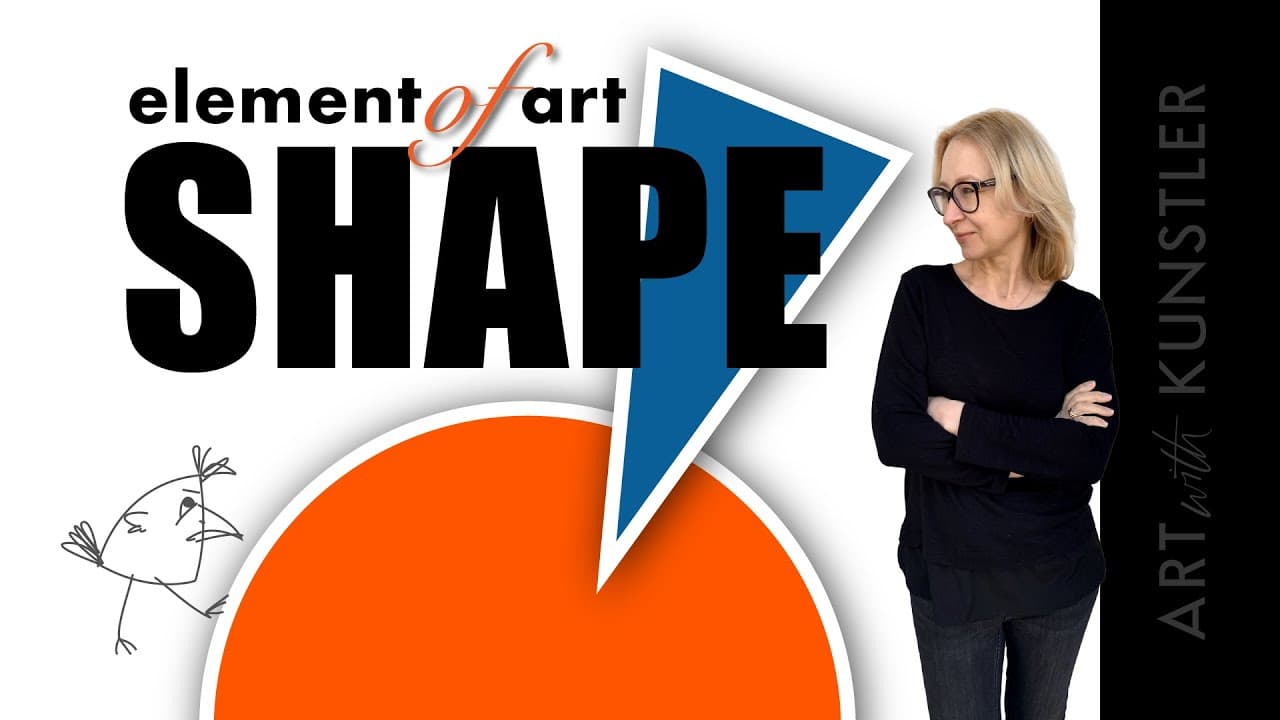
Shapes define objects by positive and negative space while forms add depth. Geometric shapes are precise and often man made, while organic shapes are irregular and often found in nature. By using line, value, texture, and background, artists convey meaning, mood, and structure across media.
Transcript
everything we see around us is a shape or a form shapes and forms define objects in space what do we know about them shape is a defined area that is flat or two-dimensional form is a defined space that has depth or has a third dimension in visual arts shape and form are defined by other elements of art shape and form can be defined by line line and... Read More
Key Insights
- Shapes define space by creating a defined area that can be flat or three dimensional when form is involved.
- Line, value, color, texture, and pattern can define shapes and forms, altering perception and mood.
- Positive shape is the defined area while the surrounding area is the negative space, and both are interdependent.
- Geometric shapes are precise and often man made, while organic shapes are irregular and natural.
- Shapes can be defined by changing the background or by cutting out shapes, leading to many possible compositions.
- Complex shapes and forms are built from combinations of simpler shapes, expanding variety in art.
- Shapes are used across traditional and modern art forms from painting and drawing to graphic design and architecture.
- Shapes elicit emotional responses, with rectangles conveying stability, triangles suggesting direction, circles representing wholeness, and curves implying grace.
Install to Summarize YouTube Videos and Get Transcripts
Explore YouTube Video Summarizer or Get YouTube Transcript Extractor
Questions & Answers
Q: What is the difference between a shape and a form in art?
A shape is a defined area that is flat or two dimensional, while a form is a defined space with depth or a third dimension. Shapes can become forms when they are interpreted or viewed in a way that suggests volume. This distinction helps artists plan compositions and convey spatial relationships.
Q: How can shapes be defined by other elements of art?
Shapes can be defined by line, value, color, texture, or pattern. By altering any of these elements around or within a shape, the edge becomes clearer and the shape stands out against its background. This interplay allows artists to control emphasis and mood in a piece.
Q: What are positive and negative shapes, and why are both important?
The positive shape is the defined area, while the negative space surrounds it. They are interdependent and both are necessary to perceive a single shape. This relationship also underpins optical illusions, which rely on how viewers interpret both areas together.
Q: How are geometric and organic shapes different?
Geometric shapes are precise and often named like square, circle, or triangle and are typically man made, though they appear in nature. Organic shapes are irregular, curved, and free flowing, usually found in nature, and they offer a more natural or expressive feel in art.
Q: How can creating a background help define a shape?
You can define a shape by subtracting it from its surroundings or by creating a background and leaving the inner area blank. Either method results in the same final shape, demonstrating how composition can be manipulated to highlight a form without changing its essence.
Q: Why are shapes important across different art forms?
Shapes are foundational tools in painting, drawing, sculpture, decorative arts, architecture, and photography. They help depict what we see, plan observations, and organize layouts. Shapes also enable pattern creation and provide a vehicle for symbolic meaning in graphic design and product development.
Q: What emotional meanings can different shapes convey?
Rectangles and squares can suggest stability and reliability, triangles can convey direction and power, inverted triangles can create tension, circles symbolize wholeness and harmony, and curves imply grace and movement. These associations help artists communicate mood and intent through shape selection.
Q: How does abstraction relate to shapes in art?
Abstract or non objective art relies on shapes and forms as dominant elements, sometimes reducing subject matter to essential geometric or organic shapes. This approach uses shapes to express ideas or emotions directly, without detailed likeness, while still relying on the viewer to interpret the spatial and visual relationships.
Summary & Key Takeaways
-
Shapes and forms help define space by separating positive shapes from negative backgrounds, creating visual clarity across art forms.
-
Geometric shapes are precise and named like square or circle, while organic shapes are irregular and flow naturally, offering different expressive possibilities.
-
Artists use shapes to plan, depict, and decorate, employing positive negative relationships to guide composition and emotion across painting, drawing, sculpture, design, and photography.
Read in Other Languages (beta)
Share This Summary 📚
Summarize YouTube Videos and Get Video Transcripts with 1-Click
Try YouTube Summary with ChatGPT & Claude or YouTube Transcript Generator
Explore More Summaries from Art with Kunstler 📚
Summarize YouTube Videos and Get Video Transcripts with 1-Click
Try YouTube Summary with ChatGPT & Claude or YouTube Transcript Generator