Building The Robot Brain
TL;DR
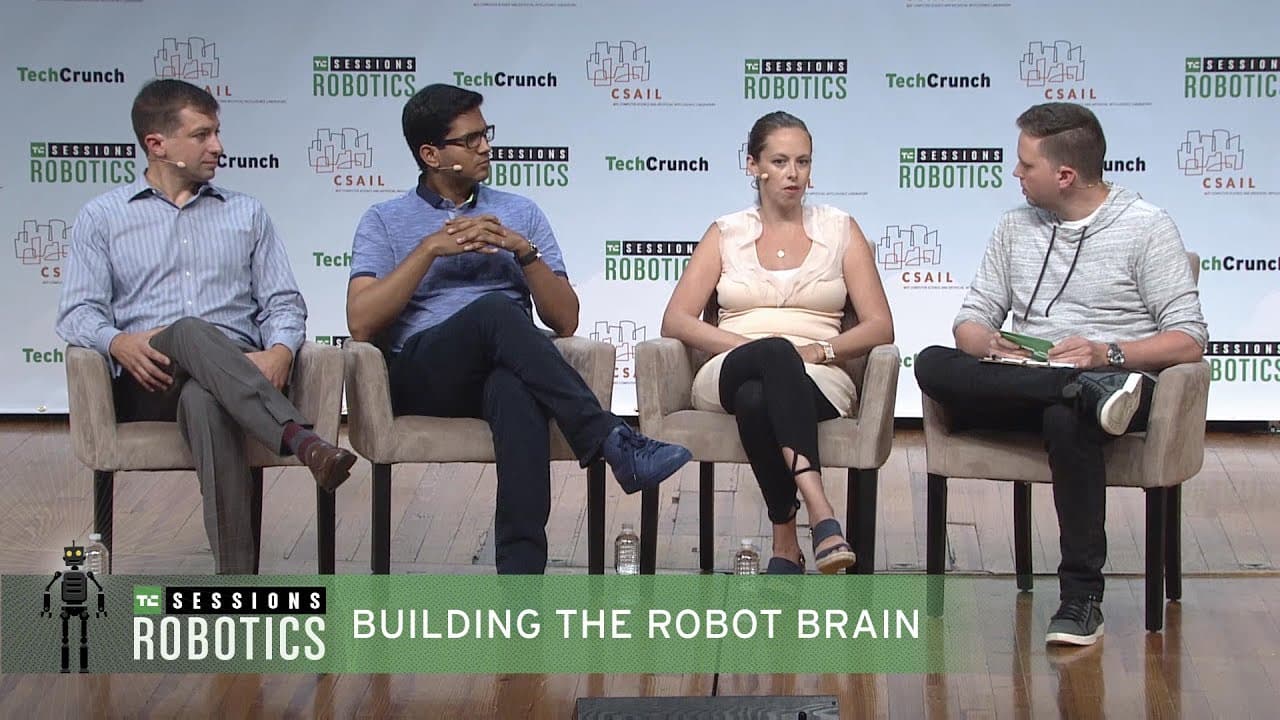
Experts discuss the current state of robot brains, the need for AI in robotics, and the potential dangers and benefits of AI technology.
Transcript
so I know that you've already gotten their names and perhaps their titles I don't know if Jordan mention the titles but I've noticed I'm sitting out the audience but as soon as these phenols are starting anybody with a laptop open is going on Google and typing a name and seriously looking just for the sake of context so I want to give you guys the ... Read More
Key Insights
- 👻 The emergence of deep learning has revolutionized the field of robotics, allowing robots to learn and adapt through exposure to data.
- 🤖 Advances in hardware enable AI to be embedded directly into robots, facilitating real-time learning and interaction with the world.
- 🤖 Standardization is crucial for effective collaboration between robots from different manufacturers, and simulation systems can accelerate the development process.
Install to Summarize YouTube Videos and Get Transcripts
Explore YouTube Video Summarizer or Get YouTube Transcript Extractor
Questions & Answers
Q: What is the current state of robot brain technology?
The current robot brain relies on traditional rule-based computer vision algorithms, but there has been a shift towards deep learning methods, allowing robots to learn and adapt through exposure to data.
Q: Is AI best implemented on the hardware itself or in the cloud?
There is no one-size-fits-all approach, as it depends on the application. A hybrid architecture, combining AI on the edge devices, on-premise appliances, and the cloud, is ideal for various use cases.
Q: How can robots from different manufacturers work together effectively?
Standardization is needed to enable communication and coordination between robots from different manufacturers. Simulation systems, like the Isaac lab, can help accelerate the development and testing of robotic systems.
Q: What are the potential dangers of AI in robotics?
While fears of AI rebellion are unlikely in the near future, there are risks associated with over-promising and putting unsafe technology on the market. Human error, both by operators and in interactions with robots, is also a concern.
Summary
In this video, a panel of experts discuss the current state of robot brains and artificial intelligence (AI). They emphasize the shift from traditional rule-based programming to the adoption of deep learning algorithms in robotics. They also explore the idea of where AI should reside, whether on the edge hardware or in the cloud, and discuss the benefits of a hybrid architecture. The panelists also touch on the challenges of standardizing communication between robots from different manufacturers and the importance of simulation in AI development. They address the potential risks of AI and highlight the need for ethics and responsible development. The panel concludes with a discussion on the role of openness in AI and the opportunities for students entering the field.
Questions & Answers
Q: Who are the panelists and what are their roles?
Heather Ames is the co-founder and CEO of NeuroMesh, a Boston-based AI software startup. Deep Tewari is responsible for Segre and Jetsam product lines at Nvidia, a tech company focusing on AI and intelligent machines. Brian Gerkey is the co-founder and CEO of Open Robotics, a company that develops open-source software for the robotics industry.
Q: What does the current robot brain look like?
The current robot brain is a combination of traditional rule-based programming and the adoption of deep learning algorithms. Previously, robots were largely programmed by humans using traditional computer vision code. However, in the past five years, there has been a shift towards using deep learning networks to allow the robot's brain to learn and adapt through reinforcement learning, imitation learning, or convolutional neural networks.
Q: How does the panel define the concept of the "edge" when it comes to AI?
The concept of the "edge" refers to having AI capabilities embedded within the hardware of the robot itself, allowing it to learn and interact in real time with the world. However, the panel also emphasizes that a hybrid architecture, combining both edge-based learning and cloud-based learning, is ideal. The cloud can serve as an aggregate thought repository, where many devices within the same network can collaborate to solve problems.
Q: Is there a need for standardization in the field of robotics and AI?
The panel agrees that standardization is essential, but the details of how to achieve it remain uncertain. They highlight the importance of transitioning from physical prototypes to virtual simulators, such as Nvidia's Isaac lab, which allows for rapid innovation and experimentation without the limitations and risks of the physical world. They also mention the need for standardizing communication across robots from different vendors, using abstraction and common interfaces.
Q: What are the potential hazards and risks of AI in the near future?
The panel acknowledges that with any technology, there are always risks and trade-offs. However, they believe that the benefits of robotics and AI outweigh the risks, especially if ethical considerations are taken into account. They emphasize the need for collective efforts from policymakers, research institutes, and companies to address the ethical implications of AI. They also note that the biggest dangers in the near term may come from human operators making mistakes or robot-human interaction.
Q: How can students entering the field of AI make a significant impact? Are there any low-hanging fruit opportunities?
The panel encourages students to take advantage of open simulation systems, such as Isaac, OpenAI Gym, or Gazebo, to start building meaningful robot applications in software. They emphasize that starting with simulation enables experimentation and learning without the need for physical robots. They also highlight the need for increased diversity and inclusion in the AI and engineering community to enhance the development of technologies.
Takeaways
The panel discussion highlights the current state and challenges of AI in the field of robotics. It emphasizes the shift towards deep learning algorithms and the ongoing need for standardization and ethics in AI development. The panelists also stress the importance of open systems and simulation in driving innovation and the potential impact that students can make by leveraging these resources. Overall, the discussion portrays a future where AI and robotics work in harmony, augmenting human capabilities rather than replacing them, to create safer and more efficient communities.
Summary & Key Takeaways
-
Experts discuss the emergence of artificial intelligence, specifically deep learning, in the field of robotics, which allows robots to learn and adapt.
-
Advances in hardware, such as those made by Nvidia, enable AI to be embedded directly into robots, allowing for real-time learning and interaction with the world.
-
While rule-based programming has been successful for robots in structured environments, the use of deep learning methods is promising for less structured environments, like self-driving cars.
Read in Other Languages (beta)
Share This Summary 📚
Summarize YouTube Videos and Get Video Transcripts with 1-Click
Try YouTube Summary with ChatGPT & Claude or YouTube Transcript Generator
Explore More Summaries from TechCrunch 📚






Summarize YouTube Videos and Get Video Transcripts with 1-Click
Try YouTube Summary with ChatGPT & Claude or YouTube Transcript Generator