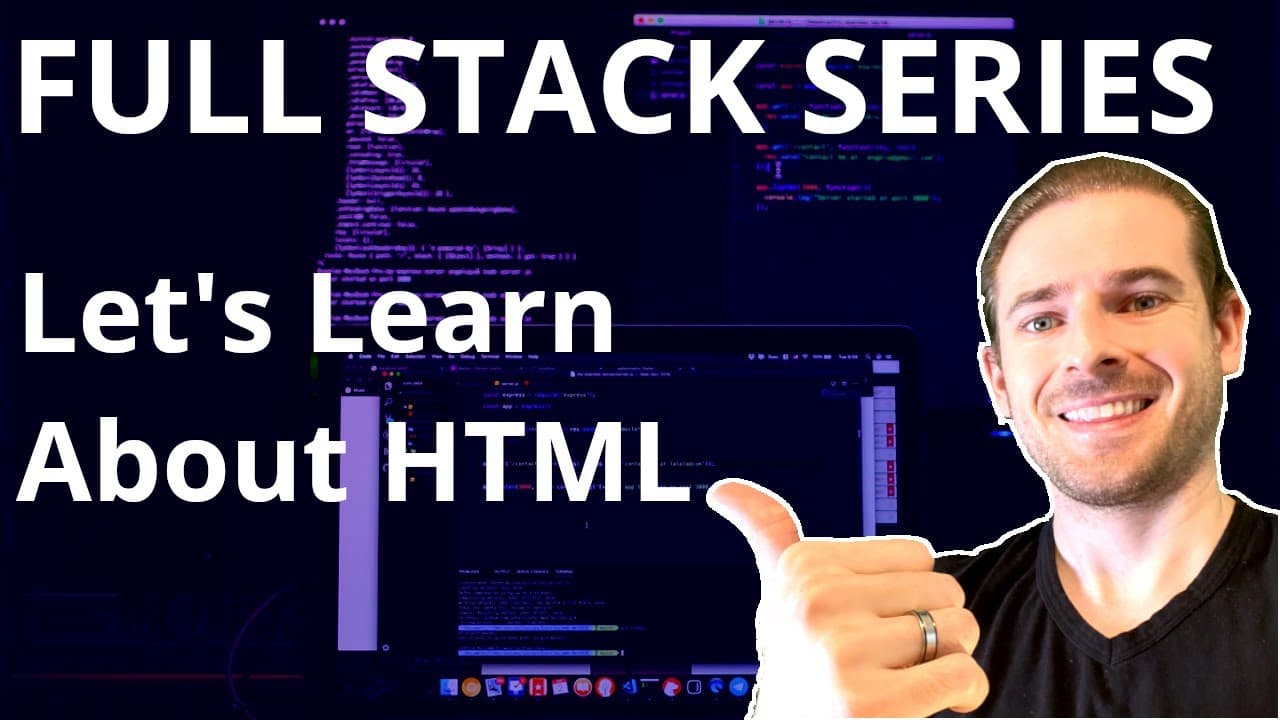
How to Start Coding in HTML with VS Code
TL;DR
To start coding in HTML, install and use VS Code as your IDE. Begin by creating a basic HTML structure with key elements like <html>, <head>, and <body>. Learn essential tags such as <p> for paragraphs, <h1> for headings, and <img> for images to effectively structure your web content.
Transcript
so at this point we are going to actually start learning a little bit about html which is one of the most basic building blocks of building out a website our web application and in this tutorial i am going to be using vs code which is an ide which stands for integrated developer environment it's really just a fancy term for a text editor but it has... Read More
Key Insights
- 🕸️ HTML is essential for building and structuring web pages and applications, being the fundamental markup language for the web.
- 🙃 Using an IDE like VS Code enhances the coding experience by providing tools for file management and syntax assistance.
- 😫 Familiarizing oneself with common HTML tags allows developers to set up content structure and presentation effectively.
- 🕸️ Learning to nest HTML tags is integral to building complex web layouts that are semantically meaningful and organized.
- 📂 Practical skills, such as opening HTML files in a browser for testing, are crucial for beginners to understand how their code works.
- 💁 Tags like 'p', 'h1', and 'img' serve specific purposes, helping to format text, create headings, and include visuals in web content.
- 💁 Attributes within HTML tags enhance functionality and provide additional information to improve usability and accessibility.
Install to Summarize YouTube Videos and Get Transcripts
Explore YouTube Video Summarizer or Get YouTube Transcript Extractor
Questions & Answers
Q: What is the primary function of HTML in web development?
HTML, which stands for HyperText Markup Language, serves as the backbone of web development by providing a structured format for creating and displaying content on the web. It uses tags to define elements such as headings, paragraphs, links, images, and more, allowing browsers to render and present the content correctly to users.
Q: Why is VS Code recommended for coding HTML?
VS Code, or Visual Studio Code, is recommended for coding HTML due to its plethora of features designed to improve developer productivity. It supports extensions, has a rich feature set including file management tools, syntax highlighting, and a built-in terminal, making it easier for beginners to write, test, and debug their code efficiently.
Q: What are some common HTML tags introduced in the tutorial?
The tutorial discusses several common HTML tags including the 'html' tag for defining an HTML document, 'head' and 'body' tags for organizing content, 'h1' through 'h6' for headings, 'p' for paragraphs, 'img' for images, 'a' for links, and 'form' for user inputs, each serving distinct functions in web page structure.
Q: What is the significance of nesting tags in HTML?
Nesting tags in HTML is crucial for organizing content and defining the hierarchical structure of a web page. By placing tags within one another, developers can create complex layouts and ensure elements are properly formatted. This creates a logical flow for both the browser's rendering engine and for users navigating the content.
Q: How can a beginner test their HTML code?
Beginners can test their HTML code by saving their work as an HTML file and opening it directly in a web browser. This allows them to see how their code is structured visually and ensures that elements like text, images, and links are rendered as intended. Tools like the developer console in browsers can also help in debugging.
Q: What is the purpose of the 'img' tag in HTML?
The 'img' tag is used to embed images in HTML documents. It requires a 'src' attribute to specify the image's source URL, and additional attributes such as 'alt' can provide accessibility information. This makes images part of the web experience, enriching the content and improving user engagement.
Summary & Key Takeaways
-
The tutorial introduces HTML as the fundamental language for building websites and highlights the use of VS Code as an integrated development environment (IDE) for coding.
-
Key HTML concepts such as tags, attributes, and nesting are explained, emphasizing their roles in structuring web pages effectively.
-
Various essential HTML tags like paragraph, header, image, and form tags are demonstrated, alongside practical tips for beginner developers to enhance their learning experience.
Read in Other Languages (beta)
Share This Summary 📚
Summarize YouTube Videos and Get Video Transcripts with 1-Click
Try YouTube Summary with ChatGPT & Claude or YouTube Transcript Generator
Explore More Summaries from Web Dev Cody 📚

Summarize YouTube Videos and Get Video Transcripts with 1-Click
Try YouTube Summary with ChatGPT & Claude or YouTube Transcript Generator