How Can Robots Learn Faster Using AI Techniques?
TL;DR
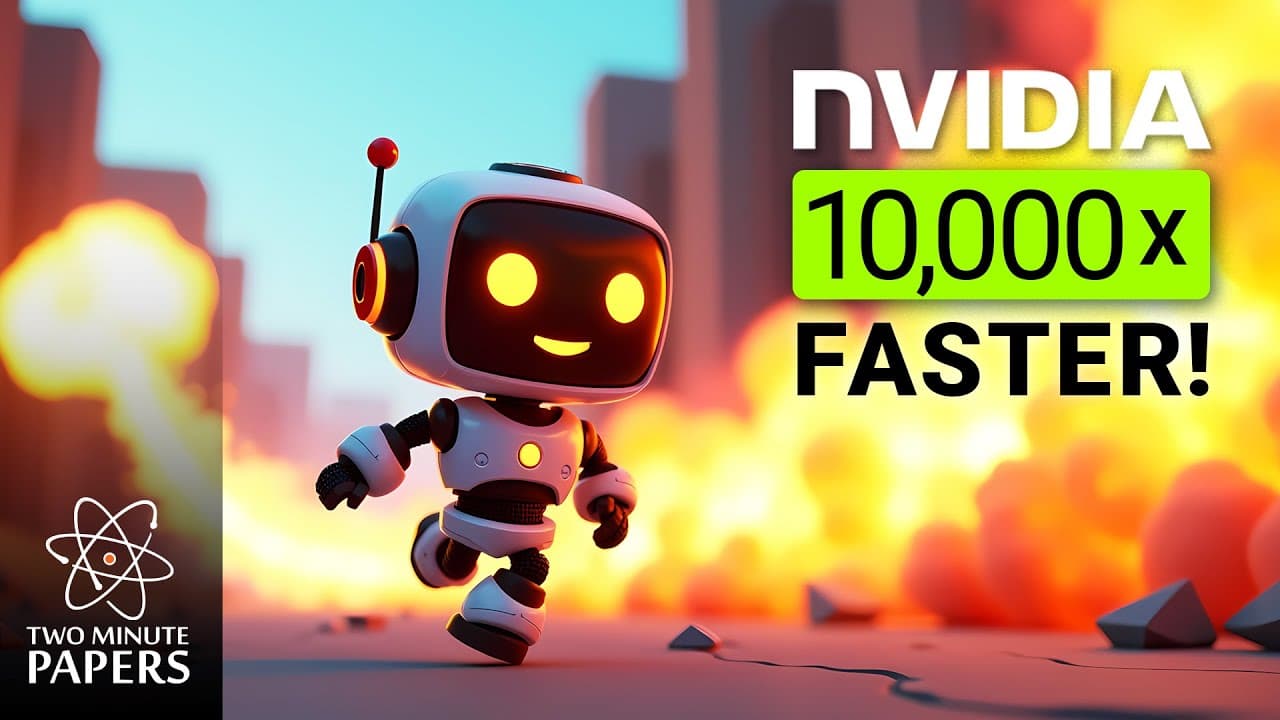
Robots can learn tasks significantly faster through AI techniques that generate synthetic demonstrations from a few human examples, leading to enhanced learning success rates. Advanced simulation environments allow robots to accelerate their training to 10,000 times real-time, making it possible for them to learn complex tasks efficiently and using minimal data.
Transcript
Robotics is not really working. Yet. And one of the reasons why is that there is simply not enough data for robots to learn from. And the other problem is that we, humans don’t have time. But no matter, because this work speeds up time by 10,000 times. Yes, really, but not in the way you think. To teach an AI English, it can read the wh... Read More
Key Insights
- 🤖 The scarcity of human demonstration data hampers the effectiveness of robot learning, impacting AI task performance.
- 🤖 Synthetic demonstration generation from a limited number of human examples can greatly enhance robot task learning efficiency.
- 🤖 Simulation environments accelerate learning for robots, enabling them to process extensive training in a fraction of the time.
- 👻 Hover's framework consolidates varied data inputs, allowing for unified control training for robots across different modalities.
- 💄 The reduced parameter requirement in robotic learning models makes advanced training feasible on everyday devices, increasing accessibility.
- 🥺 The advancements in robotics could lead to enhanced productivity across multiple sectors including domestic, industrial, and healthcare environments.
- 🤖 Fast robot learning could revolutionize human-robot interaction, freeing humans for more complex and creative tasks.
Install to Summarize YouTube Videos and Get Transcripts
Explore YouTube Video Summarizer or Get YouTube Transcript Extractor
Questions & Answers
Q: What are the main challenges facing robotics today?
One key challenge is the lack of sufficient data for training robots effectively. Unlike AI language models that can utilize vast data sets, robotic tasks often don't have the same level of detail available. This limitation can hinder the functionality and learning potential of robots, making it difficult for them to perform tasks reliably.
Q: How does SkillGen improve the training process for robots?
SkillGen addresses the problem of inadequate demonstrations by analyzing a limited number of human examples and generating a substantially larger number of synthetic demonstrations. This process allows robots to learn more effectively by encountering variations of the task without requiring humans to repeat demonstrations extensively, ultimately improving task performance.
Q: What role does simulation play in enhancing robot learning?
Advanced simulations allow robots to learn at an accelerated pace by simulating real-time events significantly faster. This approach can translate a year of learning into just one hour, enabling robots to practice and refine their skills efficiently. It provides a safe environment where robots can experiment with various scenarios without real-world risks.
Q: How does the Hover approach unify diverse data sources for robot training?
The Hover framework is designed to consolidate various human control input data, such as VR, cameras, and exoskeleton tracking, into a single training system. This unification simplifies the learning process for robots, allowing them to adapt to different types of input and control methods while enhancing their overall functionality and versatility.
Q: Why is the parameter count in the Hover system significant?
The proposed system in Hover operates with only 1.5 million parameters, which is remarkably low compared to existing heavyweight neural networks that use hundreds of billions. This efficiency allows the model to run on standard consumer devices, such as smartphones, making advanced robot training more accessible and practical.
Q: What potential future applications could arise from these developments in robotics?
As robots become more adept at learning from fewer human demonstrations and adapting quickly to tasks, they could be employed in various sectors. This includes domestic assistance like laundry folding, industrial automation, healthcare, and service industries, ultimately improving productivity and quality of life through advanced robotic helpers.
Q: What impact could these advancements have on human-robot collaboration?
Enhanced robot learning capabilities and efficiency could lead to better collaboration between humans and robots. As robots become more responsive and capable of performing a range of tasks autonomously, humans can focus on more complex responsibilities, leading to a more integrated working environment that leverages the strengths of both parties.
Summary & Key Takeaways
-
The effectiveness of robotic learning is hindered by insufficient human demonstration data, which limits AI training for tasks requiring precision.
-
Recent studies propose methods for generating numerous synthetic demonstrations from just a few human examples, significantly enhancing robot learning success rates.
-
Using advanced simulation environments can speed up robot training time dramatically, enabling robots to learn tasks quickly and efficiently.
Read in Other Languages (beta)
Share This Summary 📚
Summarize YouTube Videos and Get Video Transcripts with 1-Click
Try YouTube Summary with ChatGPT & Claude or YouTube Transcript Generator
Explore More Summaries from Two Minute Papers 📚





Summarize YouTube Videos and Get Video Transcripts with 1-Click
Try YouTube Summary with ChatGPT & Claude or YouTube Transcript Generator