How to Practice Presence Throughout Your Day
TL;DR
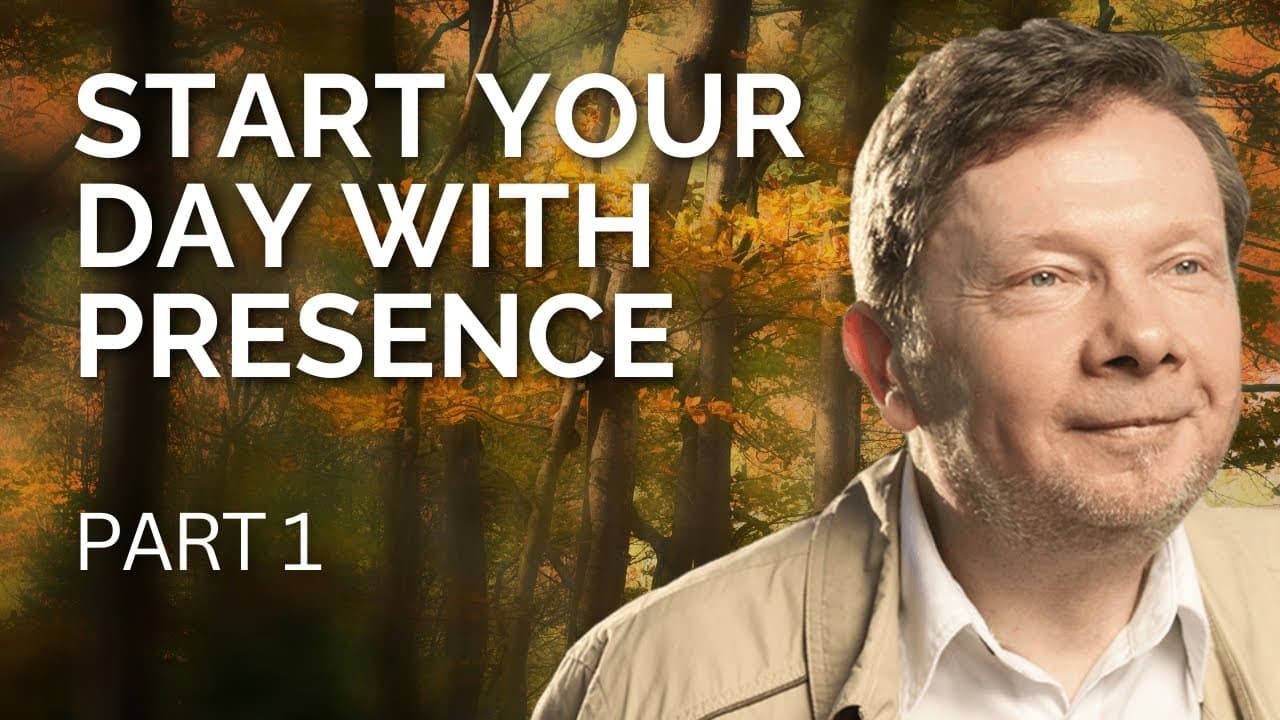
Begin each morning with five minutes of sensing presence throughout your body before getting out of bed or reaching for your phone. Reinforce that awareness before sleep, while sitting in your car, and during brief pauses throughout the day by observing your surroundings, feeling your inner body, or taking several deep belly breaths.
Transcript
When you wake up in the morning, give yourself 5 minutes of pure presence. Be present in your entire energy field, every cell of the body. and you lie on your back and you sense just not you can be a person once you get up out of bed you start becoming a person but while you're still there be the presence so there's nothing to think about there's o... Read More
Key Insights
- Morning presence is a five-minute practice of lying on your back and sensing awareness throughout your entire energy field and every cell of the body. The practice occurs before getting out of bed, beginning daily activities, or becoming absorbed in personal thoughts.
- Reaching for a phone immediately after waking interrupts the opportunity to begin the day with presence. The stated reasons for checking weather or social updates can be resisted, with direct observation, such as looking through a window, offered as an alternative.
- Bedtime presence is practiced during the final five to ten minutes before sleep. Avoiding digital devices in bed and resting in presence rather than thought is presented as a way to change the nature of sleep.
- A driving pause is a 30-to-60-second period of simply being after entering the car and closing the door. Its purpose is to interrupt the continuous flow of doing, without internally waiting for the pause to end.
- Window meditation works by giving full attention to whatever is visible outside while simultaneously feeling your own being. In this practice, ordinary surroundings can be perceived with the attention normally given to a painting, revealing beauty in everyday views.
- Closed-eye meditation is the realization of being rather than an activity that must be performed. Attention moves away from deliberate sensory focus and toward the power of presence, which is described as deeper than the physical body.
- Deep inner-body awareness can loosen the visual image of oneself as a body. What remains is described as an extensionless point of awareness without shape, form, space, or time, identified with the transcendent sense of self.
- Belly breathing restores contact with the inner body when attention drifts. Two or three deep breaths are suggested, allowing the abdomen to expand while breathing in and contract while breathing out before returning attention to presence.
Install to Summarize YouTube Videos and Get Transcripts
Explore YouTube Video Summarizer or Get YouTube Transcript Extractor
Questions & Answers
Q: How do you practice presence immediately after waking?
Remain on your back for five minutes before getting out of bed and sense presence throughout your entire energy field and every cell of the body. There is nothing that needs to be analyzed or mentally completed. Resist reaching for your phone, including to check the weather or social updates, and give your attention to directly sensing and being present.
Q: Why should you avoid reaching for your phone in the morning?
Reaching for a phone draws attention into information and thought before you have established a sense of presence. The suggested alternative is to remain still for five minutes and feel presence throughout the body. If you want to know the weather, looking through the window keeps attention connected to immediate experience instead of beginning the day with a digital device.
Q: How can presence be practiced before going to sleep?
Use the final five to ten minutes before sleep to rest in presence rather than continuing in thought. Digital devices should be avoided in bed during this period. The practice consists of quietly sensing your being instead of consuming information or following mental activity, and it is presented as something that can change the nature of your sleep.
Q: How can you interrupt constant doing during a workday?
Create short pauses in which you stop doing and recognize being. One example is to sit for 30 to 60 seconds after entering your car and closing the door. Do not spend the pause waiting for it to finish. Simply remain there, allowing the interruption to break the momentum that normally carries you from one activity into another.
Q: What is the window meditation and how does it work?
Look through any window and give full attention to whatever appears outside, whether it is a tree, the sky, or another ordinary view. At the same time, feel the being within you. The practice combines clear perception with inner presence, shifting the experience from a person merely observing an object to presence itself perceiving what is there.
Q: How can ordinary surroundings become objects of meditation?
Give an ordinary scene the concentrated attention you would give a painting. An empty picture frame can be directed toward the floor or any nearby view, making that selected scene the complete focus of attention for several seconds. A window serves a similar purpose by framing what is outside and helping you discover beauty through full attention.
Q: What should you do when thoughts arise during presence meditation?
Do not give incoming thoughts additional attention. Their appearance is treated as acceptable, and without attention they can drift away again. Continue sensing the presence within you instead of following or resisting the thoughts. If you lose contact with that presence, use two or three deep belly breaths to reconnect with the inner body.
Q: How does belly breathing help restore presence?
Take two or three deep breaths into the belly when you notice that attention has drifted. Let the abdomen expand as you breathe in and contract as you breathe out. This physical rhythm puts you back in touch with the inner body, after which you can again sense awareness more deeply and allow the usual image of the body to recede.
Summary & Key Takeaways
-
Spend the first five minutes after waking on your back, sensing presence throughout the body before beginning to think of yourself as a person with tasks. Resist reaching for your phone. At night, avoid digital devices in bed and spend the final five to ten minutes resting in presence rather than thought.
-
Interrupt the momentum of daily activity with short periods of simply being. After entering your car, sit quietly for 30 to 60 seconds without waiting for the pause to finish. Similar moments can be introduced throughout the day by observing a plant, tree, sky, or view through a window while sensing your own presence.
-
Formal meditation can involve closing your eyes, releasing attention from sensory perceptions, and sensing the presence underlying the physical body. Thoughts may arise, but they can be left without attention until they pass. If awareness drifts, two or three deep belly breaths can restore contact with the inner body and presence.
Read in Other Languages (beta)
Share This Summary 📚
Summarize YouTube Videos and Get Video Transcripts with 1-Click
Try YouTube Summary with ChatGPT & Claude or YouTube Transcript Generator
Explore More Summaries from Eckhart Tolle 📚




Summarize YouTube Videos and Get Video Transcripts with 1-Click
Try YouTube Summary with ChatGPT & Claude or YouTube Transcript Generator