Why Do Gas Prices Vary by State, and What Do Venezuela’s Oil, Netflix-Warner, Taxes, and Oracle–OpenAI Reveal? | Number Scream Ep. 3
TL;DR
Gas prices differ across states largely because state tax policies vary, according to Number Scream Ep. 3. The episode compares California at 459 with Oklahoma at 250, examines Venezuela’s 19.4% share of known global oil reserves, assesses how much income tax the top 1% pays, argues Paramount should acquire Warner Bros instead of Netflix, and scrutinizes Oracle’s relationship with OpenAI. Read on for the specific figures and arguments.
Transcript
Hello everyone, Tom with the Bisto with this week's numbers scream. We're going to dive through several items this week. First of all, gas prices by state, all the discussion of inflation. Where is it high and where is it ain't? Then we're going to drop into Venezuela. Is all this stuff about drugs or is about oil? And then tax the rich. Don't they... Read More
Key Insights
- Gas prices are highest in states with higher taxes, like California, due to additional green energy taxes.
- Texas and Oklahoma have some of the lowest gas prices due to lower taxes on fossil fuels.
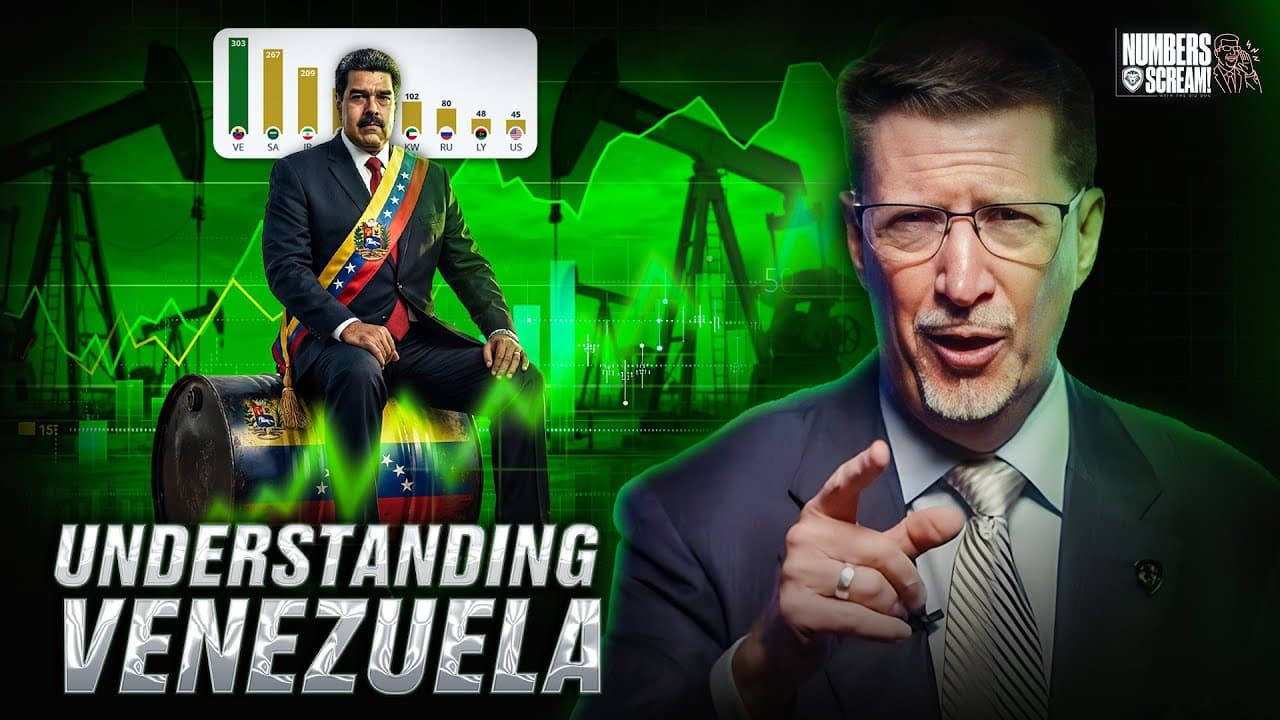
- Venezuela holds the largest oil reserves globally, making its political stability crucial for global energy markets.
- The top 1% in the U.S. pay a significant portion of income taxes, with variations across states.
- Netflix and Paramount are competing for Warner Bros, with Paramount seen as the more likely acquirer.
- Oracle is involved in a financial loop with OpenAI, raising concerns about its cash flow sustainability.
- Bob Iger of Disney raises concerns about a potential Netflix-Warner duopoly in the streaming market.
- Oracle's stock fluctuations are tied to its partnerships and investments in AI and infrastructure.
Install to Summarize YouTube Videos and Get Transcripts
Explore YouTube Video Summarizer or Get YouTube Transcript Extractor
Questions & Answers
Q: Why are gas prices different across states?
The episode attributes much of the difference to state taxes on gasoline and oil. It says California’s taxes add nearly a dollar per gallon, while Texas and Oklahoma maintain lower-tax policies on fossil fuels and energy.
Q: Which states have the highest and lowest gas prices discussed in the episode?
California is presented at 459, Washington at 419, and Oregon at 382. Texas is listed at 265, while neighboring Oklahoma is the lowest at 250.
Q: Does the episode attribute state gas-price differences solely to inflation or crude-oil prices?
No. It argues that inflation, the price per barrel, and foreign oil do not fully explain the differences between states. Its central explanation is the varying tax burden placed on consumers.
Q: Why are Venezuela’s oil reserves significant?
The episode says Venezuela holds 19.4% of known global oil reserves, compared with 17% in Saudi Arabia, 13% in Iran, and 9.3% in Iraq. It argues that this makes Venezuela’s political stability and leadership important to the oil business.
Q: How does the United States compare in oil reserves and refining?
The episode places known U.S. oil reserves at roughly 3% to 5% while suggesting additional oil may remain undiscovered. It also calls the United States the world’s number-one oil refiner, converting crude into gasoline, aviation fuel, diesel fuel, and heating oil.
Q: How much income tax does the top 1% pay in Wyoming and Florida?
The episode says the top 1% pays 55% of income tax in Wyoming, totaling $2.5 billion. In Florida, it says the top 1% pays 54%, totaling $96.3 billion.
Q: Who does the episode favor as the buyer of Warner Bros: Netflix or Paramount?
The episode favors Paramount as the buyer of Warner Bros rather than Netflix. It also presents concerns from Disney CEO Bob Iger that a Netflix-Warner combination could concentrate the streaming market into a duopoly.
Q: Why is Oracle’s relationship with OpenAI under scrutiny?
The episode describes Oracle and OpenAI as participating in a circular financial relationship in which Oracle invests in OpenAI and OpenAI purchases Oracle services. It says Oracle is spending more cash than it generates, raising concerns about the sustainability of its AI and infrastructure strategy.
Summary & Key Takeaways
-
Gas prices vary by state primarily due to tax differences, with California having high taxes and Texas having low ones. This affects consumer costs significantly.
-
Venezuela's massive oil reserves make it a key player in global energy, with political stability impacting oil markets. The U.S. remains a top refiner despite lower reserves.
-
The top 1% in the U.S. pay a large share of taxes, with debates on whether they pay their fair share. Netflix and Paramount vie for Warner Bros, with Paramount favored.
Read in Other Languages (beta)
Share This Summary 📚
Summarize YouTube Videos and Get Video Transcripts with 1-Click
Try YouTube Summary with ChatGPT & Claude or YouTube Transcript Generator
Explore More Summaries from Valuetainment 📚






Summarize YouTube Videos and Get Video Transcripts with 1-Click
Try YouTube Summary with ChatGPT & Claude or YouTube Transcript Generator