LM317-based high-current adjustable power supply
TL;DR
Overview and demonstration of a basic LM317 voltage regulator circuit.
Transcript
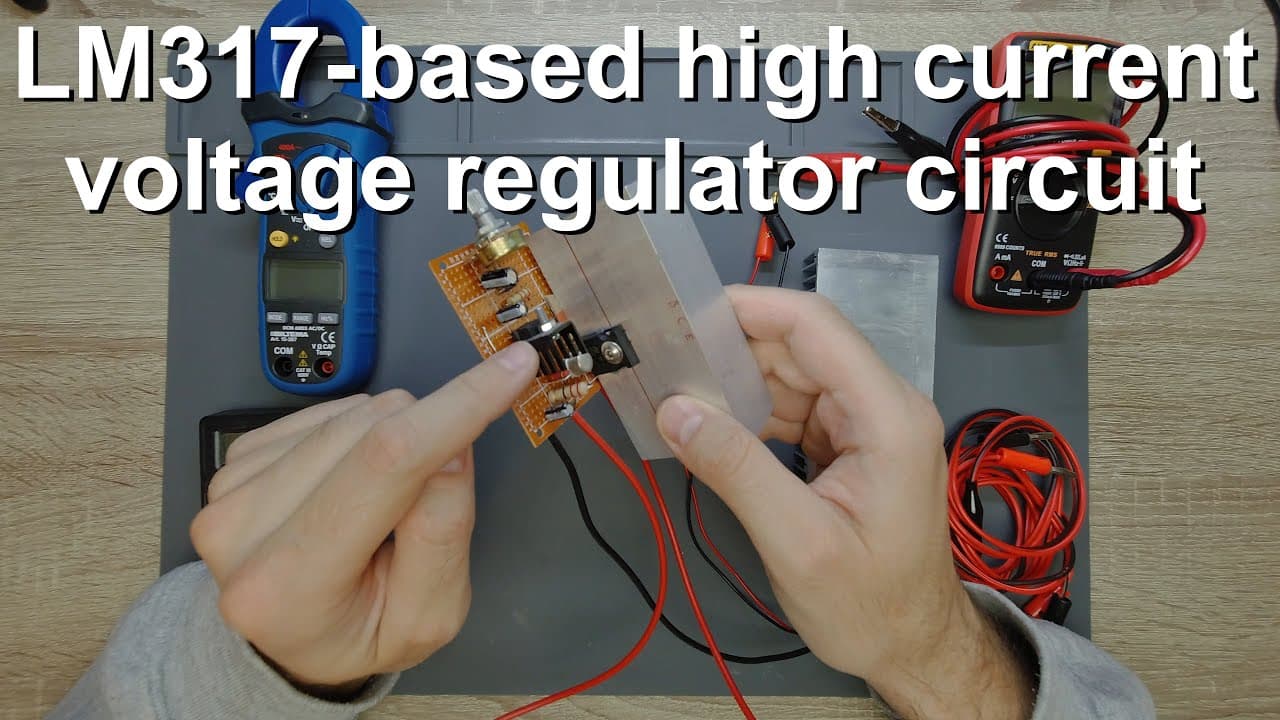
welcome everyone in this video we are going to look at a very simple power supply so that very simple power supply will be this circuit here so as you can see the biggest part in this circuit is the heatsink and i will explain you why you need this huge heatsink but the sole of this circuit is this chip here which is an lm 317 t what voltage regula... Read More
Key Insights
- ⚡ The LM317 voltage regulator is pivotal in adjusting the output voltage based on user input, making it flexible for various applications.
- 🥵 Understanding the physical properties of components is crucial for circuit design, especially regarding heat management for reliability and longevity.
- 💨 Building on a breadboard provides a practical way to prototype electronics; however, compromises in soldering quality can impact performance if the circuit is not finalized.
- 🤗 Learning through hands-on experience emphasizes the importance of troubleshooting and iterating on design, highlighting growth in technical understanding.
- ✊ The efficiency of linear power supplies is lower compared to switching power supplies, which should be considered in electronic projects for improved energy use.
- 🏆 Testing different configurations and components, such as the potentiometer, will yield insights into effective circuit design and potential improvements necessary for specific functionalities.
- 🦺 Safety in electronics is paramount, and meticulous attention to detail in component selection and setup can prevent overheating and electrical failures.
Install to Summarize YouTube Videos and Get Transcripts
Explore YouTube Video Summarizer or Get YouTube Transcript Extractor
Questions & Answers
Q: What is the main purpose of the LM317 voltage regulator chip in this circuit?
The LM317 voltage regulator chip is used to adjust the output voltage within the circuit by utilizing an adjustable pin. It converts a higher input voltage into a lower output voltage. This allows the user to set the voltage to the desired level for powering various loads, effectively controlling the voltage while managing the heat generated by the chip.
Q: Why is a large heatsink necessary for this circuit?
A large heatsink is necessary because the circuit operates as a linear power supply. The LM317 dissipates heat when regulating voltage, which can lead to significant temperature increases. Without adequate cooling, the chip could overheat and potentially fail. The heatsink absorbs and dissipates this excess heat, maintaining safe operating temperatures for the components.
Q: What issues did the presenter encounter with the potentiometer?
The presenter noted that the 5k ohm potentiometer didn't function optimally, failing to vary the output voltage significantly when adjusted. The voltage reached maximum values too quickly, indicating possible quality issues with the component. They plan to investigate and possibly replace the potentiometer for better control over voltage output.
Q: How does the circuit manage the heat produced during operation?
The circuit manages heat through both design and component selection. The use of a substantial heatsink for the power transistor allows for efficient heat dissipation. Additionally, the wiring uses thicker gauge wire for sections handling higher current, reducing resistance and associated heating. The arrangement ensures that most components remain at safe temperatures during operation.
Summary & Key Takeaways
-
The video demonstrates the setup and functioning of a basic power supply circuit using the LM317 voltage regulator chip, which requires a heatsink due to significant heat dissipation.
-
Key components include transistors for switching, capacitors, resistors, and a potentiometer, which allows for voltage adjustment in the circuit, showcasing a proof of concept on a breadboard.
-
The presenter explains heat management, efficiency concerns with linear power supplies, and shares personal learning experiences throughout the construction of the circuit.
Read in Other Languages (beta)
Share This Summary 📚
Summarize YouTube Videos and Get Video Transcripts with 1-Click
Try YouTube Summary with ChatGPT & Claude or YouTube Transcript Generator
Explore More Summaries from Curious Scientist 📚

Summarize YouTube Videos and Get Video Transcripts with 1-Click
Try YouTube Summary with ChatGPT & Claude or YouTube Transcript Generator